The “census of bears” ended after three years. “We are obliged to come up with measures,” says Minister Fechet. What the data shows

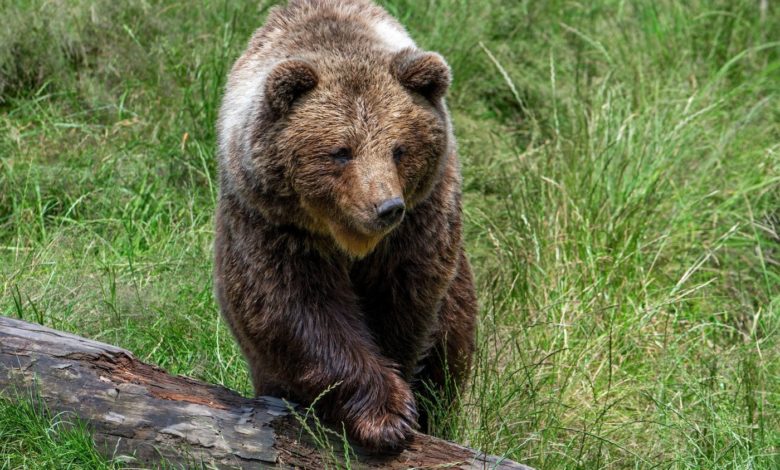
Romania has between 10,419 and 12,770 bears, shows the census of the DNA bear population, presented on Thursday, April 10, by the Ministry of Environment. An “optimal” number is, in the opinion of Minister Fechet, almost three times smaller, respectively 4,000 copies. The official has already announced that some changes would follow, but said he would not ask for the growth of the bear hunting.
Based on the new figures of the research, the minister Mircea Fechet says he intends to give the mayors more freedom about the killing of a bear, eliminating the gradual intervention, when the animal enters, for example, in the locality.
Currently, the legislation stipulates that a bear approaching the human settlements is first driven by the authorities, then, if he returns, relocated, and the last variant is his shooting. The minister wants to simplify these procedures and the direct jump at the last step.
“In the city of localities we have to give up the gradual intervention. We will facilitate this whole process of the intervention commission. In 2025, we can make faster decisions using phones, WhatsApp groups, SMS,” said Minister Mircea Fechet at a press conference.
He added that he would come with a minister's order for these measures.
“A new stage in the management of the brown bear population”
The study was done by the Ministry of Environment, through the National Institute for Research and Development in Forestry “Marin Drăcea” (INCDS) and cost 53.5 million lei.
Genetic monitoring involves a DNA sample count. That is, the researchers collected from faeces and hairs from the bear and then analyzed them in the laboratory, where they removed unique DNAs. Of the over 24,000 samples collected from 25 counties, a minimum number of 10,419 bears living in Romania resulted. The representatives of the ministry say that the degree of fairness is 95%.
The maximum given, of almost 13,000 bears, is an estimate. “This study opens a new stage in managing the brown bear population and I hope it will create a balance between conservation and safety of citizens. We are obliged to come up with intervention measures, especially in the context of tragedies,” said the Minister Fechet, reminiscent of the Salvamont chief attacked by a bear with chickens.
Fechet repeated that the bear population is “very large, the largest in Europe” and that the optimal number, respectively the number of bears that can be supported by the ecosystem without causing imbalances, would be around 4,000 copies.
Ask how they came to this issue, the representatives of the “Marin Drăcea” Institute, present at the conference, could not explain clearly.
“Of course, we do not start to take measures to reduce overnight, we are interested in the status of conservation of the species, but we are more interested in the safety of citizens,” said the Minister of the Environment.
The ministry will make maps with risk areas
The new data will be used to create a zoning of the brown bear management, that is, the way the bears are present on the map of Romania and how the population should be managed.
More specifically, the map is divided into four categories: conservation area (9.6% of the country's surface), where all measures will be for long -term preservation. This is where the national parks and the natural parks enter, “where the man has nothing to do”, the ecological corridors, the Natura 2000 sites.
Then, the sustainable management area (33.9%): forest fund, agricultural land, conflict management area: risk areas for people, urban, areas with orchards and agricultural cultures (3.2%) and marginal areas (51.7%), those outside the natural area, ie cities where there are now.
“There will be places where the bear has nothing to do and places where he will be left alone because he is at home,” said the minister.
The minister promises that he will not ask for the growth of the hunting quotas to the bear
Asked if, with the new data in front, he will ask the Parliament to modify the law so that the quotas of prevention and intervention will increase, as he proceeded last year, Fechet said no.
“These maps (at risk, no) will be made available to the public and the Parliament. In the future, no matter who will be at the ministry or in the Parliament, the decisions will also take into account this work,” Fechet said.
Currently, the bears are hunted by the prevention and intervention quotas adopted by law last summer.
The level of prevention, ie the number of bears hunted freely, is 426 and is divided between hunting funds.
The level of intervention is 55 – the number is valid at national level and there are bears that can be relocated or shot over the prevention quotas, with special derogation from the ministry.
The quotas through which the bears are hunted are based on a study made by the National Institute of Research and Development in Forestry “Marin Drăcea” (INCDS), which established that in Romania live between 7,000 and 8,000 bears. However, the research of the institution is incomplete, with wrong and without scientific basis, with errors that can leave light of abuse, as shown by the SNOOOOP investigation site.
Fechet also said that he will ask the European Commission to remove the bear from the list of protected species (the bear hunting is forbidden by the habitat directive in the European states, no), because “it makes no sense to remove the wolf and to remain the bear.” He has already made this request.
How was the “Bear Census” made
The project began in July 2021, but the effective collection of land samples was done between November 2022 – December 2024.
In the project, almost 700 genetic specialists worked, both from the “Marin Drăcea” Institute and international. Following dogs were used in the field. The Institute worked with an application specially created to ensure the traceability, with GPS coordinates.
The project team also included members of some hunter associations. For example, Ovidiu Ionescu, a professor at the University of Transylvania in Brasov, the one who conducted the study that was the basis of the bear hunting quotas before 2016 and who was at the same time a hunter and counselor in the Ministry of the Environment.
And at the conference on Thursday, he said that there is an “overcrowding” of the bear and that “these solutions with electric fence surrounded and cut the fruit trees-they are not realistic”.
Asked by journalists about this, the representatives of the ministry explained that this quality does not matter because all those who worked in the project have been trained for a long time, and the samples, being DNA, so unique, cannot be manipulated.