The former leader of Venezuela, captured by American special forces, appeared in court in New York on drug trafficking and terrorism charges. Its collapse calls into question the fate of loans and projects in which Russia has been engaged for more than a decade.
The text continues below the video
$17 billion from Russia to Caracas
According to Reuters calculations, in the years 2006–2017 Russia transferred a total of approximately $17 billion to Venezuela and the state oil company PDVSA. in the form of loans, investments and financial support.
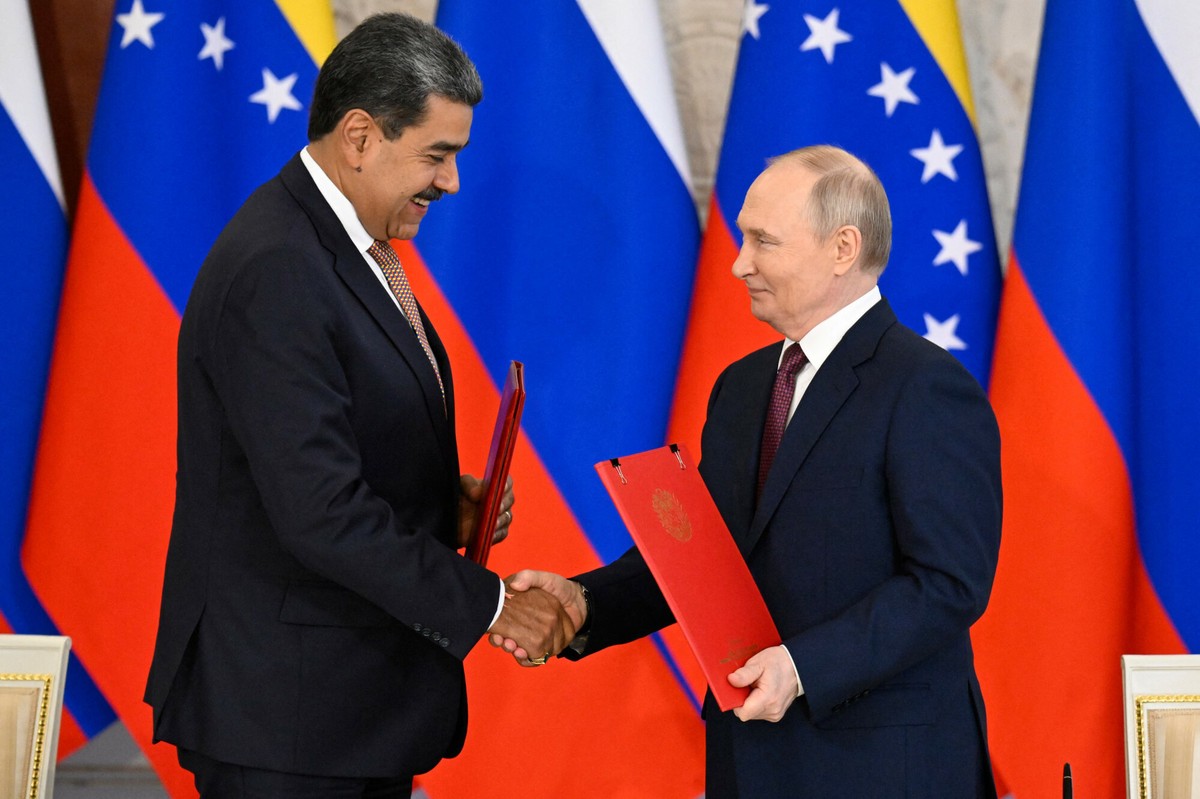
The first significant loan, amounting to $2.2 billionwent to Hugo Chávez. In 2009, it signed contracts for the purchase of Russian weapons, including T-72 tanks and S-300 air defense systems.
Debt deferral and oil instead of cash
Eight years later, Venezuela already owed Moscow $3.5 billionwhich it was unable to repay due to the deep economic crisis resulting from corruption, inept government and American sanctions.
As the rp.pl website reminds, in 2017 Vladimir Putin agreed to defer debt repayment for 10 years, with the deadline for settling the liabilities in 2024–2027. In return, Russia gained access to key energy assets.
The state-owned company Rosneft has become the main creditor of the Maduro regime, acquiring shares in the most important Venezuelan oil deposits. Caracas repaid Moscow with raw materials, which Rosneft then sold on world markets.
After PDVSA was placed under sanctions in 2020, Rosneft formally withdrew from Venezuela, selling its assets to a new entity – Roszarubezhnefta company wholly controlled by the Russian state. This was a measure intended to limit the effects of sanctions, but it did not solve the fundamental problem of political risk.
Read also: Maduro captured. Five signals that matter for the market
The oligarch predicts: the US will take control of oil
The fall of Maduro and the takeover of control over Venezuelan deposits by the Donald Trump administration caused anxiety in Russian business circles. Oleg Deripaska was particularly harsh in his remarks.
“If our American 'partners' reach the Venezuelan oil fields (and they have already reached Guyana), they will control more than half of the world's oil reserves.” — wrote Deripaska on social media, quoted by rp.pl.
In his opinion, Washington will strive to maintain the prices of Russian oil under $50 per barrelwhich will directly hit the budget of the Russian Federation.
Deripaska did not spare criticism of the Russian economic model:
“This means that it will be difficult for our holy state capitalism to leave everything unchanged: not to cut costs, not to get rid of non-core activities (i.e. war – editor's note), to continue ambitious projects without expertise and without the participation of private business.”
As rp.pl writes, the oligarch also noticed that the Kremlin will have an increasing problem with… further burdening the private sectorwhich has recently become the main source of budget revenues.
Read also: Donald Trump talks about “stolen oil”. What is his plan for Venezuela?
Cheap oil deepens the budget crisis
The situation is made worse by falling prices of Russian oil. In November 2025, the average export price was approximately $45 per barrelto drop even to $34, reminds rp.pl.
The Bank of Russia warned of the necessity budget cuts and allowed for an adjustment to the base oil price in the state's financial plans. It is set at $59 for 2026, with a plan to gradually reduce it to $55 in 2030.
Former vice-president of the Bank of Russia, Sergei Alexashenko, whose statement was quoted by rp.pl, admitted that it is not known where the Kremlin would compensate for the permanent decline in oil and gas revenues. Economist Kirill Rodionov warned that the negative scenario may come true as early as early 2026.
In his opinion, the only way to salvation would be to reduce the discount of Russian Urals oil to Brent and to increase production – which, however, would require ending the war and lifting sanctions.
Who will pay the bill?
For now, however, such a scenario does not seem realistic. As rp.pl writes, what Deripaska warns against is more likely: further draining of private businessnew “war levies” and limiting spending on education, culture and health care.
The cost of geopolitical failure in Venezuela may therefore ultimately be borne by Russian society.