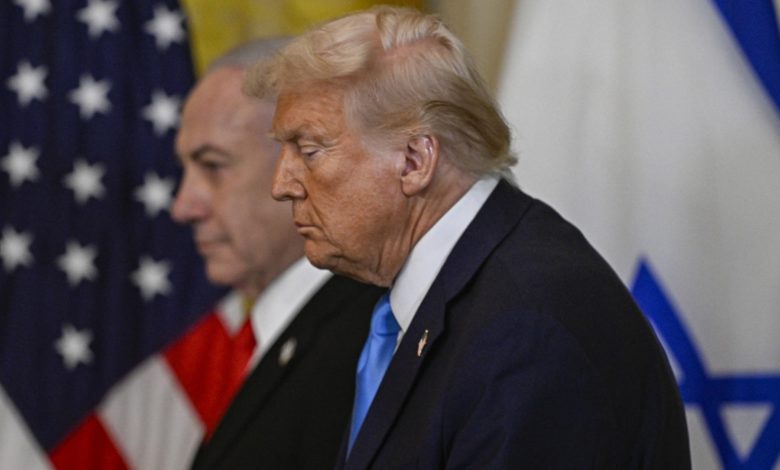
Israeli Prime Minister Benjamin Netanyahu has told aides in private talks that Israel has little ability to influence Donald Trump's decisions on Iran as the US president negotiates a deal for the nearly three-month-old conflict.
Netanyahu's comments, reported to Reuters by two Israeli officials familiar with the talks, come as Israel has been largely excluded from negotiations for an initial agreement to end hostilities in a war that began after joint bombing by the United States and Israel.
Both the United States and Iran have tempered expectations of quick progress in the talks, and the two sides remain at odds over Iran's nuclear program, Tehran's demands for sanctions relief and Israel's war in Lebanon against Hezbollah militants.
Netanyahu insists that Israel retains the right to continue operations against threats it perceives on all fronts, including in Lebanon. This condition could compromise an eventual deal if Iran demands a complete end to Israeli military operations in southern Lebanon.
Trump: “Netanyahu will do whatever I tell him to do”
One of the Israeli officials who attended Netanyahu's private talks said the prime minister expressed concern about the memorandum of understanding currently under negotiation. Both sources spoke on condition of anonymity in order to recount the content of private conversations.
The agreement would provide for Iran to reopen the Strait of Hormuz in exchange for the United States lifting its naval blockade. Later, new negotiations regarding the nuclear file would follow. The United States and Iran are currently holding indirect talks, mediated by Pakistan.
Iranian sources told Reuters that in the next stages, “feasible formulas” could be found to resolve the dispute over Iran's stockpile of highly enriched uranium, including by diluting the material under the supervision of the UN nuclear agency.
Netanyahu acknowledges that Israel “doesn't have the leeway at the moment to influence the (American, no)” president, the Israeli official said.
Netanyahu's office did not immediately respond to a request for comment.
Trump and Netanyahu have spoken by phone at least three times in the past week, during which Israeli officials said the country was preparing to resume joint airstrikes with the United States on Iran, which would have targeted energy infrastructure.
After the first of three talks on Tuesday night, Trump was asked by reporters what he had told Netanyahu.
“He's a very good man, he'll do anything I tell him to do,” the American president replied.
The two talked again on Friday evening. On Saturday, after Trump held a joint call with leaders of the Gulf states, Turkey and Pakistan to update them on the status of negotiations with Iran, the US president and the Israeli prime minister spoke for the third time.
After that conversation, Netanyahu, who had not publicly commented on a possible deal with Iran until then, said in a statement that he and Trump discussed “the memorandum of understanding on the reopening of the Strait of Hormuz and future negotiations for a final agreement on Iran's nuclear program.”
Netanyahu said he and Trump agreed that any final deal “must involve the dismantling of Iran's uranium enrichment facilities and the removal of enriched nuclear material from Iranian soil.”
He added that Trump “reaffirmed Israel's right to defend itself against threats on all fronts, including from Lebanon.”
Israel and Hezbollah have continued to clash despite the April 16 ceasefire, which ended after the United States and Iran agreed to a broader cessation of hostilities.
Israeli troops remained deployed in part of southern Lebanon, and the army continued airstrikes against Hezbollah targets. In turn, the group's militants launched drones at Israeli army positions and at towns in northern Israel.
Netanyahu under pressure before the elections
The emergence of the prospect of a deal comes at a sensitive time for Netanyahu, ahead of a national election that polls indicate he could lose. His opponents accuse him of failing to achieve his stated goals in the war.
At the start of the US-Israeli attacks on Iran, launched on February 28, Netanyahu claimed that Israel aimed to create the conditions for the removal of the clerical regime in Tehran, the elimination of Iran's nuclear and ballistic missile capabilities and the reduction of its influence in the region.
Reuters previously reported that Trump gave the final order to launch the operation against Iran after Netanyahu called in a discussion with the US president for the joint elimination of Iranian Supreme Leader Ali Khamenei. He was killed in the first attacks.
Since then, the war aims of Israel and the United States began to diverge. Washington has focused on reopening the Strait of Hormuz, a route through which, before the war, about a fifth of the world's oil and liquefied natural gas exports transited.
In an interview with CBS this month, Netanyahu stressed that further steps are needed to get enriched uranium out of Iran, for Tehran to end support for allied groups in the region and to halt production of ballistic missiles.
“We still have work to do,” Netanyahu said.