Trump splits the skin of a bear. The attack on Maduro will cost “nothing” at all

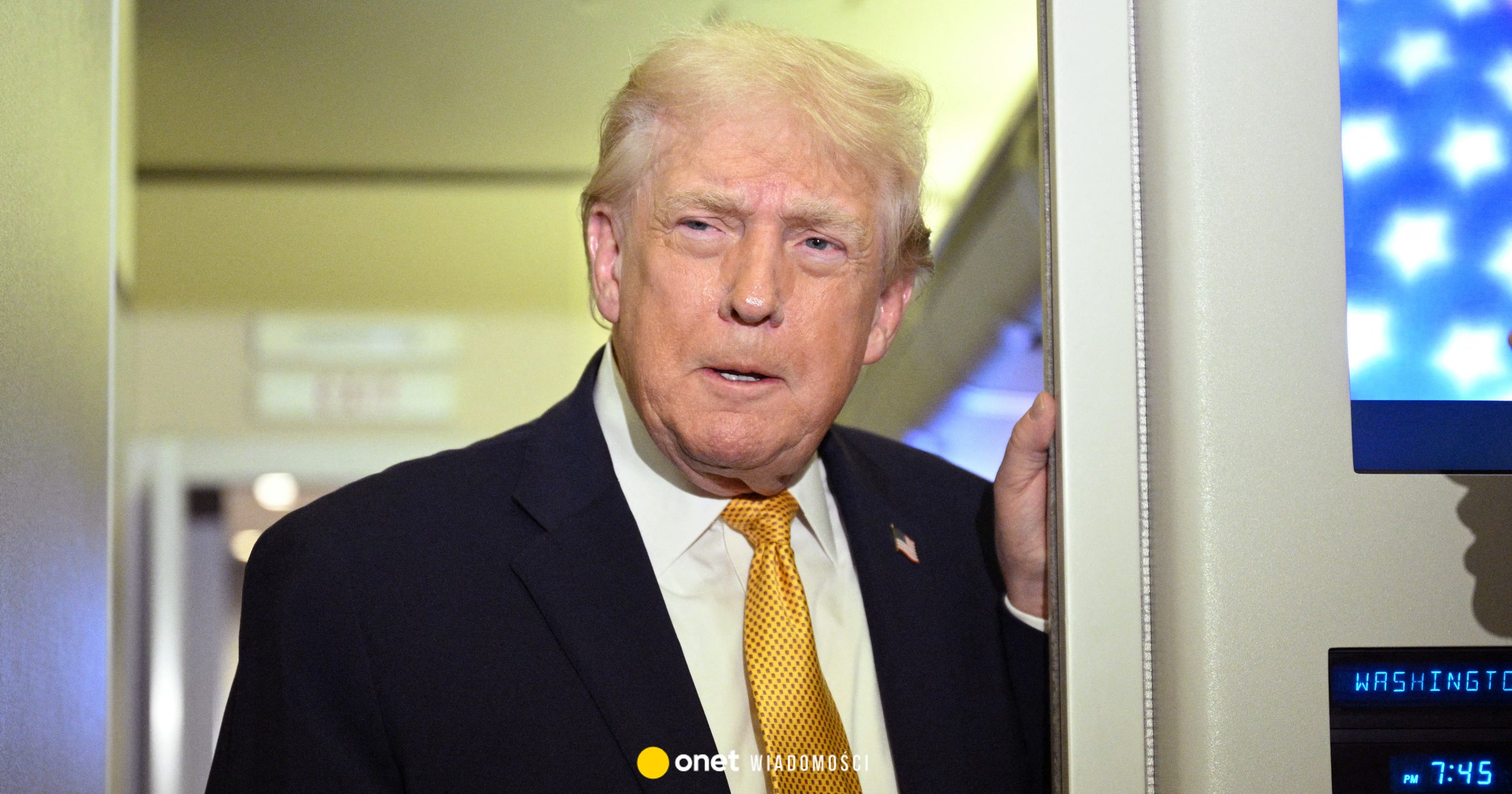
A visibly excited Trump, praising the “American success”, mentioned that he had dealt with the narco-terrorists who tormented “his” Americans, announced that the United States would now temporarily rule Venezuela, and recalled that the entire action clearly showed the entire world the US dominance. However, his show regularly focused on one resource: crude oil. And on the promise that American companies will now be able to reap greater benefits from Venezuela's fabulous – the world's largest – resources.
According to Trump, the money earned will help not only the people of Venezuela, but also American oil companies and “the United States in the form of compensation for the damage this country has done to us.” From his perspective, tens of thousands of people died in the US because of drugs from Venezuela (and the activities of local gangs). These claims are debatable, but they have been used to explain the president's enormous interest in Venezuela for several months. Trump also told reporters that oil deposits were a key factor not only in the decision to attack, but also in making the promise that the United States would “rule” Venezuela in the near future.
— It won't cost us anything because the money extracted from the ground is huge, Trump added, explaining that all “investments” would be returned to the United States. Lofty words about the benefits of a military operation do not, of course, obscure the fact that the effects of this attack on global politics are much more complex.
It is not at all certain how Trump intends to take control of Venezuela, as the government there, even without the president, is still in place. Analysts and leading media remind us that similar US actions in the past were rarely interpreted as a clear success (Iraq, Afghanistan, Libya or Syria) and that it is now almost impossible to predict the future consequences of an attack on Maduro. American analysts and world media remind us that the seemingly simple “magic” of Venezuelan oil is not clear.
Venezuela: 300 billion barrels of “dirty” oil
As is typical with an American president, on Saturday he did not say exactly how America intended to take control of Venezuela (and its oil). Analysts warn that a significant increase in oil production in this country could take years and cost tens of billions of dollars. According to estimates, Venezuela has over 300 billion barrels of oil, which is the largest reserves in the world (about 17 percent of global reserves). Currently, however, about one million barrels are produced in the country per day, which is approximately one percent. world production. Moreover, much of Venezuela's oil is extremely dirty, which increases the costs of processing it.
In 2019, the United States imposed sanctions on Venezuelan oil, which is now exported mainly to China, its largest recipient. Venezuela's key partner in oil extraction and processing is Russia. Of course, none of the powers like the intervention of the United States, but Donald Trump shrugs it off by saying that no one else in the world would be able to do something similar.
However, the president's critics warn that this may not be true and that if Trump continues to insist on American “influence” in Latin America, Moscow and Beijing may look at “their” region in the same way (currently this mainly applies to Ukraine and Taiwan). However, President Trump has put geopolitics aside for now and focused on the benefits that Venezuela's mining industry brings to American oil giants.
Before Venezuela nationalized the oil industry in 1976, American companies such as Exxon, Mobil and Gulf Oil played a major role in it. In the 1990s, the country reopened its oil industry to foreign mining companies, including from the US, but socialist dictator Hugo Chavez, Nicolas Maduro's predecessor, began another phase of nationalization in 2007. American companies ExxonMobil and ConocoPhillips then left the country and filed an international lawsuit against the Venezuelan government. Courts ordered Venezuela to pay ConocoPhillips more than $10 billion. [36 mld zł według aktualnego kursu]and ExxonMobil over USD 1 billion. [3 mld 607 mln zł] — both companies have so far received only a fraction of this amount.
This is exactly what the current administration is talking about when it seeks compensation from Venezuela, and it made that argument again before Saturday's attack. Stephen Miller, President Trump's top adviser on immigration policy, wrote on social media last month that “Venezuela's oil industry was built on American sweat, ingenuity and hard work.” Trump himself said a month ago, for example, that Venezuela “took America's oil” and that he wanted to get it back for his country.
The whole world is observing that President Trump in his foreign policy often focuses on oil and generally on mineral resources that he wants to “extract” for the United States. This perspective also influenced his current negotiations with Russia and Ukraine. This is not new in his second term. “I've been saying this for years. Let's take oil,” he said in a 2016 interview with The New York Times, for example, when asked how his strategy to fight Islamic State in the Middle East differed from then-President Barack Obama's approach.
Even if we ignore the issue of legality and justification for oil extraction in Venezuela, the feasibility of such a task also remains a problem. Venezuela's state oil company PDVSA does not have enough capital and expertise to increase production. The country's oil fields are neglected and suffer from long-term underfinancing, dilapidated infrastructure, frequent power failures and equipment theft (as, for example, the latest study by the British research company Energy Aspects reports).
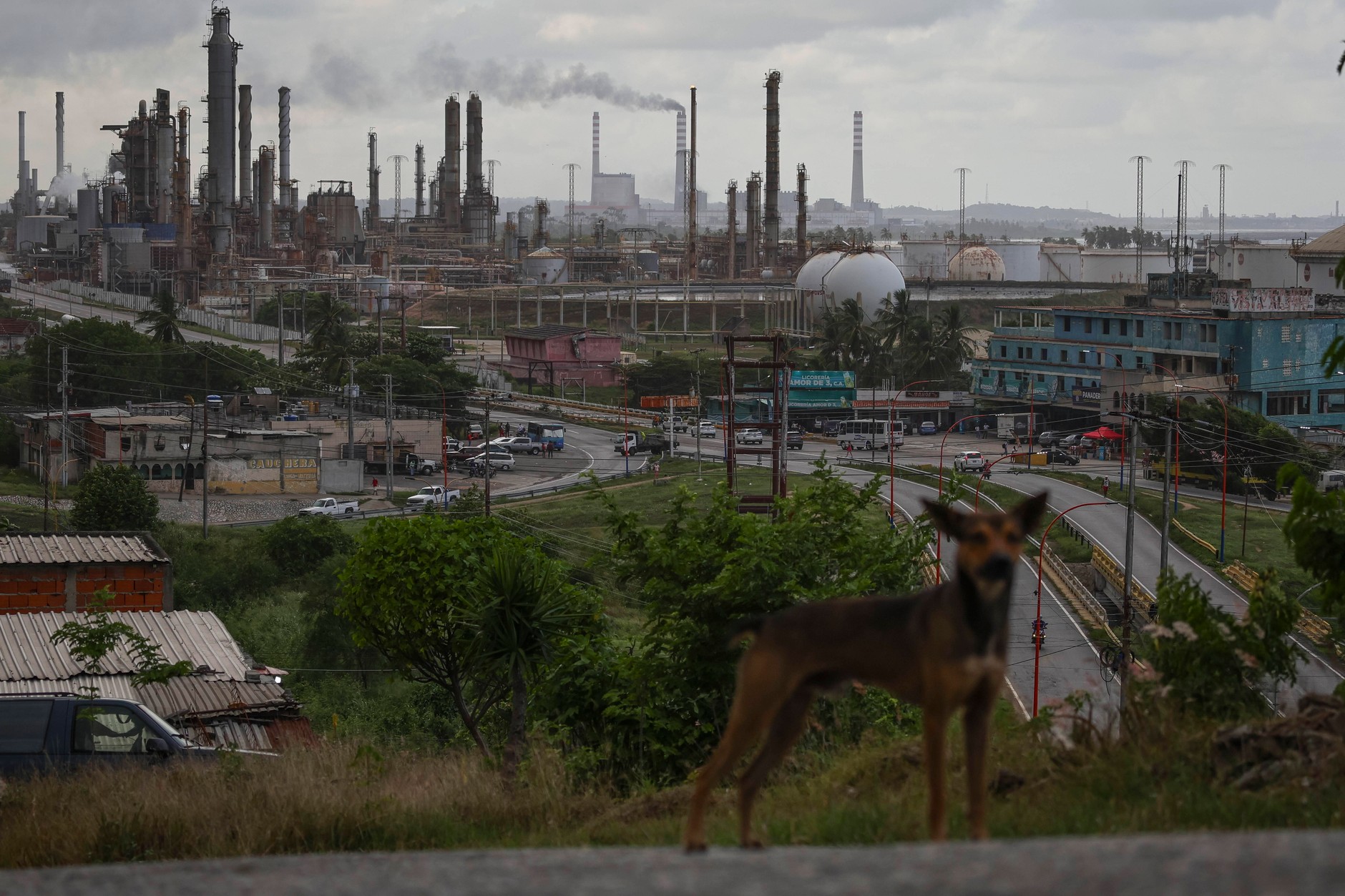
El Palito refinery of Venezuelan state oil company PDVSA, Puerto Cabello, Venezuela, December 21, 2025.Jesus Vargas / PAP
Theoretically, if U.S. oil companies gained greater access to Venezuela, they could help gradually increase production, although this would have a negative impact on air quality in the region and global warming on the planet. However, increasing production in Venezuela will not come cheap. The above-mentioned company Energy Aspects estimates that increasing production by another half a million barrels per day would cost USD 10 billion. [ponad 36 mld zł] and it would take about two years. Even more intensive mining in the coming years would cost tens of billions of dollars.
The rest of the world's perspective
The overthrow of the Venezuelan government could open up new opportunities for U.S. oil companies, but industry analysts say they too could find themselves in an unpleasant, chaotic situation. “The American government, which does not have clear plans for this country and does not yet know who to entrust its management, could put pressure on oil giants to represent it in Venezuela and help, for example, create or keep a new government in power,” Helima Croft, head of the commodities department at the investment bank RBC Capital Markets, wrote in an investment report on Saturday. Currently, Venezuela's oil industry is closely tied to the current government and army, and limiting the military's influence on the oil industry and the broader economy “may be difficult,” he adds.
With heavy investment, Venezuelan production could potentially double over the next decade to more than 2 million barrels a day, but that's still less than half of oil production in the US state of Texas, according to estimates.
So for now, only one American company remains in place – Chevron – which produces about a quarter of Venezuela's oil. In the early 2000s, when other companies were forced to leave, Chevron stayed, hoping that conditions would finally improve. In recent years, the company has faced a number of difficult challenges resulting from increasingly tense relations between the United States and Venezuela. Last year, for example, it fought to renew a President Joe Biden-era license that would have allowed it to expand its operations in Venezuela.
This oil giant is based in Houston [w Teksasie] has been operating in Venezuela since 1923 and has several onshore and offshore mining projects there. “We support a peaceful and lawful transition that will support stability and economic recovery,” spokesman Kevin Slagle said Saturday. — We are ready to cooperate constructively with the US government during this period and use our experience and presence to strengthen US energy security.
Washington's latest move will certainly have global consequences. “If we really step up and do something extraordinary — confiscate, nationalize, allow American companies to come in and use that as a leverage tool to extract huge rents from the new government — it will change the rest of the world's perception of the United States and American oil companies,” says Jason Bordoff, founding director of Columbia University's Center for Global Energy Policy.
Oil extraction could theoretically help the United States in its fight against Russia (which is currently financially dependent on oil sales) and China (which is trying to strengthen its position in Latin America). However, the White House is currently focused mainly on profits for American companies. However, they have no idea yet how they could be achieved.