December 23: The cargo “Bucuresti” completes the first trip around the Earth made by a Romanian crew

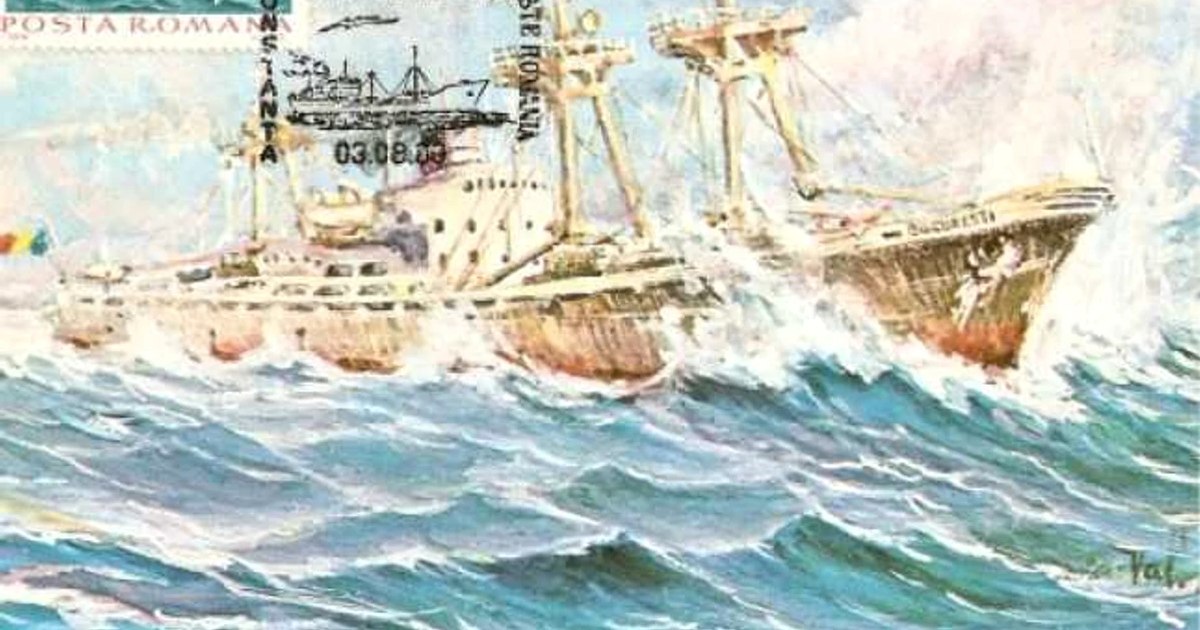
On December 23, 1963, the Cargo “București” completes the first trip around the Earth made by a Romanian crew. Also on December 23, in 1884, the businessman and engineer Nicolae Malaxa was born, an important name in the interwar period.
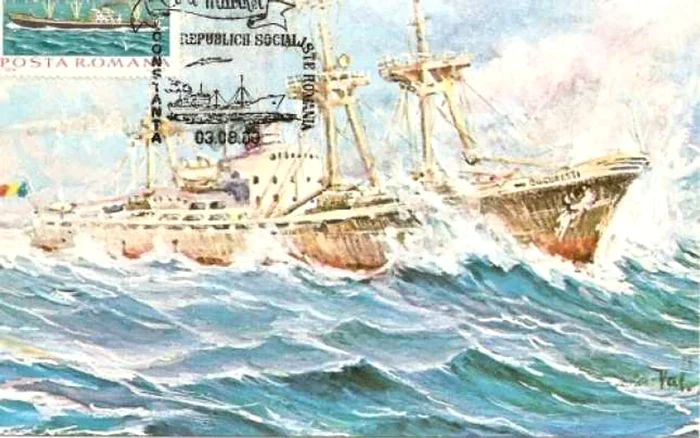
View with the Cargo “Bucuresti”/PHOTO: Archive
1823: Romanian composer Alexandru Flechtenmacher was born
Born on December 23, 1823, in Iasi, Alexandru Adolf Flechtenmacher was a composer, violinist, conductor and pedagogue from the Kingdom of Romania. He was also the author of the music for Hora Unirii.
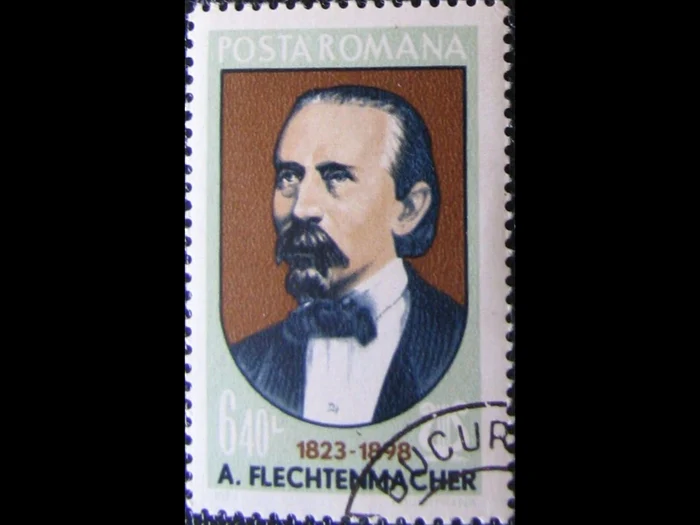
Alexandru Flechtenmacher/PHOTO: Wikipedia
According to the Houses of Musicians website, Flechtenmacher left for Austria at the age of 14, where he studied at the Vienna Conservatory of Music.
Violinist in the orchestra of the French Lyric Band from Iasi since 1834, first violinist of the band “Maria Therese Frisch” between 1842 and 1843, Alexandru Flechtenmacher also held concerts as a soloist, both in Romania and abroad.
In 1860, he became a violin and cello teacher at the Choral Institute in Bucharest, founded and led by the Russian Archimandrite Visarion, then from 1864 violin teacher and the first director of the newly established Conservatory of Music and Declamation in Bucharest, the current National University of Music.
Alexandru Flechtenmacher is the author of the first Romanian operetta, “Baba Hârca“, completed in 1848 and presented in Iaşi at the end of the same year. He is also the creator of Romanian vaudeville, a musical genre that was very popular at the time.
He also composed the opera “The girl from Cozia”chamber, choral and vocal music, making a valuable contribution by incorporating national tradition into classical forms. A representative symphonic work is the Moldavian National Overture, composed in 1846, shortly before Flechtenmacher became an active member of the Revolution of 1848.
Alexandru Flechtenmacher died at the age of 75, on January 28, 1889, in Bucharest.
1884: The Romanian entrepreneur Nicolae Malaxa was born
Born on December 23, 1884, in the city of Huși, Vaslui, Nicolae Malaxa was a Romanian engineer and entrepreneur, one of the most important industrialists of interwar Romania.
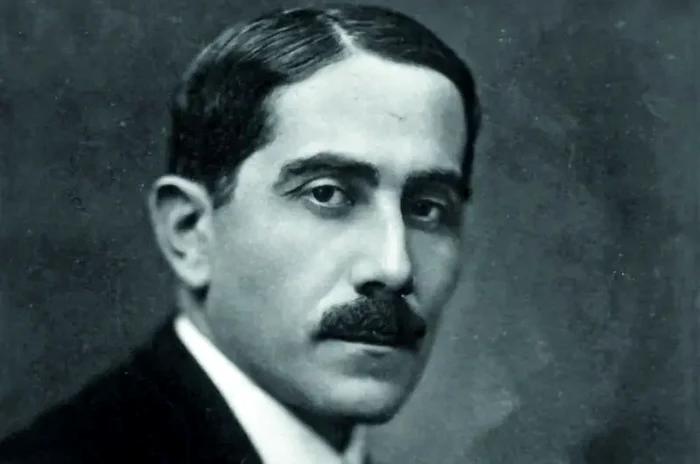
Nicolae Malaxa/PHOTO: Facebook
Malaxa attended primary school and high school at the Gheorghe Roșca Codreanu College in Bârlad. Later, with the support of his family, he went to Germany, where he studied at the Polytechnic University of Karlsruhe (today Karlsruher Institut für Technologie).
At 37, Malaxa was an experienced engineer with imagination and a shrewd businessman.
On August 3, 1921, Malaxa established a rolling stock manufacturing workshop on a plot of land on the outskirts of Bucharest. In that workshop, locomotives and railway carriages were repaired, Malaxa continuously expanding its business.
He builds a factory from the ground up between 1923-1927 near Halta Titan. Four years later, the Romanian industrialist benefits from the provisions of a law (published in the Official Gazette no. 57/13.03.1927) encouraging the development of national industry. Thus, in the same year, he concludes a contract with the company Căile Ferate Române, for the manufacture of locomotives of his own Romanian design, assuming sufficiently large risks.
In the interwar years, he founded and owned several of Romania's largest factories: the Malaxa Locomotive Factory in Bucharest, the Malaxa Tube and Steel Plant in Bucharest, the Armaments and Ammunition Factory in Tohanul Vechi (Zărnești, Brașov), which together had more than 12,000 employees at the end of the 1930s.
In the years preceding the Second World War, Malaxa patronized, together with other industrialists, such as Max Auschnitt (who later became his rival in business), Uzinele i de iron and domains Reșita, at that time the largest metallurgical complex in Romania, where locomotives, wagons, rolling stock were produced.
The factories, confiscated several times
The Malaxa plants went through two major confiscations: initially by the Germans and then by the Soviets and the Communist regime.
In January 1941, after the establishment of the Antonescu regime, Malaxa was arrested, the real purpose being, according to some CIA documents, the forced transfer of the factories to the Germans. Later, the factories were taken over by the Antonesian government and transferred to the Romanian-German company Rogifer, effectively controlled by the conglomerate Hermann Goering Werke, Malaxa being released after completing the formalities in October 1941.
After the Germans were driven out in 1945, Malaxa was briefly reinstated, but the Soviet-controlled communist regime seized the factories again.
They were nationalized by the communist regime and renamed the “23 August” Metallurgical Plants, remaining the largest in the Capital.
He immigrated to the USA in 1946, where he acquired citizenship, while in Romania he was sentenced to death in absentia by the communist regime on charges of manufacturing weapons for “enemies of the Soviet Union”.
Nicolae Malaxa died in 1965, in the American state of New Jersey.
1888: Painter Vincent van Gogh cuts off part of his left ear
Vincent Willem van Gogh was born on March 30, 1853, in Zundert, the Netherlands. He was a post-impressionist painter whose works had a profound influence on 19th century art. A produced more than 2,000 works of art, around 900 paintings and 1,100 drawings and sketches.
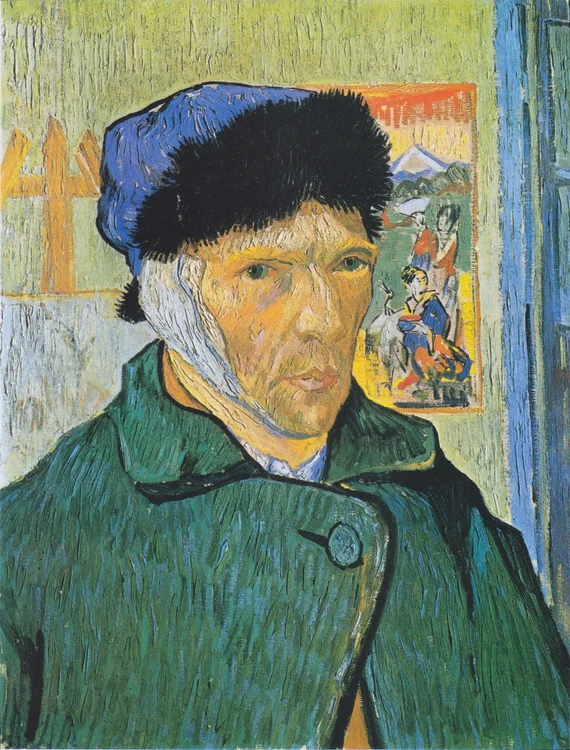
Vincent van Gogh with a bandaged ear/PHOTO: Wikipedia
He grew up in The Hague, after which he went to England, wanting to become a pastor, like his father. He worked as a missionary in a mining region in Belgium. There he began to flirt with art, making sketches of people from the local community, and in 1885 he painted his first successful work, “Potato eaters”.
A year later he moved to Paris, then moved to the city of Arles, southern France, where he collaborated with the painter Paul Gaugguin. Out of madness, van Gogh attacked Gauguin with a razor. Gauguin managed to escape, and van Gogh cut off his ear in the process.
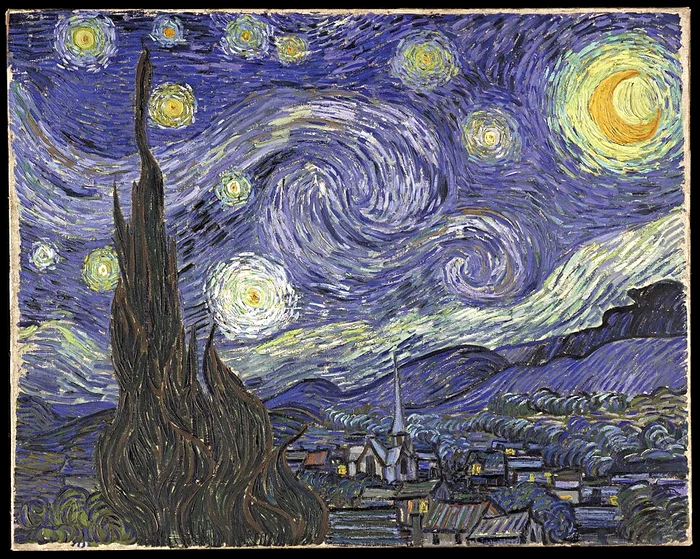
The famous painting “Starry Night”, painted by van Gogh in 1889/PHOTO: Wikipedia
He wrapped the ear in a piece of paper and offered it to a prostitute in a local brothel. The next morning, the police found Vincent at home and took him to the hospital, the Van Gogh Museum writes.
On July 27, 1890, van Gogh had left his room to paint in the field. There he shot himself in the shoulder with a pistol and died 2 days later.
1909: Princess Ileana, daughter of King Ferdinand and Queen Maria, was born
Princess Ileana was born on January 5, 1909, in Bucharest, an event celebrated, as tradition required, with 21 cannon volleys. About the moment of his birth, Queen Mary would recall the following:
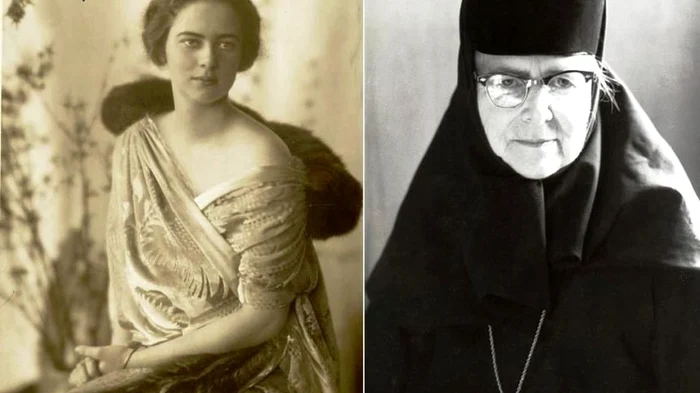
Princess Ileana, in her youth and in monastic clothes/PHOTO: Archive
“If Mignon was the child of my turmoil, Ileana was undoubtedly the one of my wholeness. […] The birth of Ileana was a great happiness for me and I was happy that I had another little girl. I remember lying on our backs after the battle was over, clutching the new little wanderer of life to my chest and listening to the cannon fire: twenty-one guns. Some may be disappointed that it wasn't a boy, but I certainly wasn't, and to me those cannons were the voice of my people rejoicing in the birth of our fifth child.“
Princess Ileana married Archduke Anton de Habsburg, whom she met in Spain and then met again in the spring of 1931, not by chance, but following an intervention by King Charles II.
After the establishment of the communist regime, going into exile was an extremely hard blow for Princess Ileana. After leaving Romania, Ileana went with her family to Switzerland, where she met again, after a few weeks, with King Mihai.
From Switzerland, the princess went with her family to Argentina, where she established a home for Romanian refugees. Then, in 1950, he settled in the United States of America, in Boston.
In 1967, she returned to the United States with the idea of fulfilling her dream of founding an Orthodox nunnery in Ellwood City, Pennsylvania.
In January 1991, the day before her birthday, Mother Alexandra suffered a fractured pelvis, and complications from the accident would lead to her death. Thus, Princess Ileana, the last living child of King Ferdinand and Queen Maria, died on January 21, 1991.
1963: Cargo “București”, the first Romanian ship to make a trip around the Earth
The “București” cargo ship is the first Romanian ship to make a trip around the Earth. On August 11, 1963, it left the port of Constanța, with a crew of 37 sailors under the command of Captain Liviu Neguț, and returned to the same place on December 23, 1963.
The freighter “Bucureşti” was, at that time, one of the best equipped ships, with modern equipment, in our commercial navy. The ships “Dobrogea” and “Bucureşti” were built in Yugoslavia, in 1962. Later, they became the property of Romania following commercial exchanges.
The crew visited Santiago de Cuba; Boquerón, Guantanamo Bay; Playa Girón (Pig Beach); The Panama Canal and China where they unloaded 10,000 tons of sugar from Fidel Castro's Cuba.
In September 1990 it was scrapped in Aliağa, Turkey.
1979: The Soviet army occupies the capital of Afghanistan
The invasion of Afghanistan by Soviet Union troops began in late December 1979. The Soviets intervened to support the Afghan communist government in its conflict with anti-communist Muslim guerrillas (Afghan War, 1978–92) and remained in the country until mid-February 1989, Britanica writes.
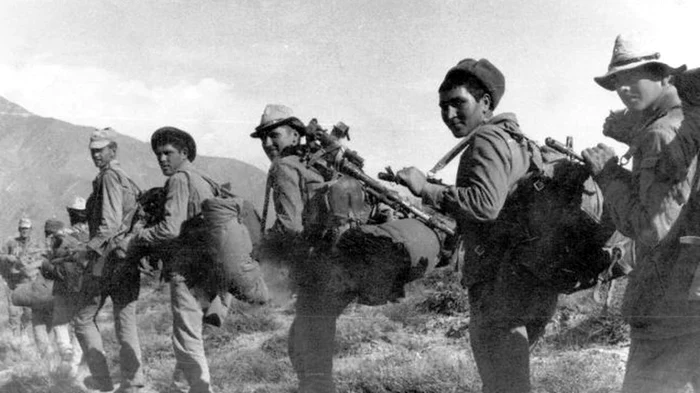
The Soviet-Afghan War/PHOTO: Historia
On the night of December 23 to 24, Soviet troops occupied the country's capital, Kabul. About 30,000 soldiers were sent to oust Hafizullah Amin and install a new client government led by Babrak Karmal.
The Soviet attempt to stabilize the clientelist regime in Afghanistan failed as the Mujahideen grew in power, supported by the United States and other countries, while the Afghan army was plagued by massive desertions.
The war reached a stalemate: more than 100,000 Soviet soldiers controlled only the cities, while the Mujahideen moved freely in the villages. Soviet tactics to crush the insurgency, including bombing and depopulating the countryside, caused a massive exodus (4.3 million refugees to Pakistan and Iran by 1982).
The Mujahideen were able to neutralize Soviet air superiority using man-portable anti-aircraft missiles supplied by the United States. The quality of their weaponry has steadily improved thanks to foreign support.
The war became a nightmare for the Soviet Union (15,000 dead and many wounded), contributing to its disintegration. Failing to impose a stable regime, the Soviet Union signed an agreement in 1988 and completed its troop withdrawal on 15 February 1989, returning Afghanistan to non-aligned status.
1986: The actress Eugenia Popovici dies
Born on August 13, 1914, in Bucharest, Eugenia Popovici was a Romanian film, radio, theater and voice actress and drama teacher.
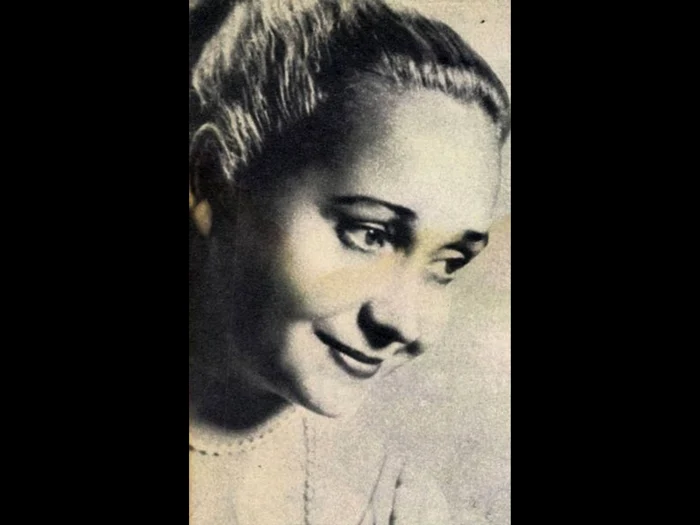
Eugenia Popovici/PHOTO: Wikipedia
He graduated from the Conservatory of Music and Dramatic Art in Bucharest, and in 1936 the Faculty of Letters and Philosophy. After graduating from the Conservatory, Eugenia Popovici was hired as an actress at the National Theater in Bucharest, where she performed until the end of her life.
Between 1962-1976 she was an acting teacher at the Institute of Theater and Cinematography Art in Bucharest, among her students were Tora Vasilescu, Eugen Cristea, Andrei Finți. In the years 1972-1976, he also served as rector of the institute.
Eugenia Popovici acted in few films, collaborating especially with the director Ion Popescu-Gopo.
He died on December 23, 1986, in Bucharest.