How China is building an army of 'indestructible' super-soldiers who can't feel cold or pain and can survive radiation


China plans to use biotechnology to transform the People's Liberation Army into a “world-class” force by 2049, according to a recent report by a US national security commission. The document warns that Beijing's rapid advances in biotechnology could have major implications for the global military balance.
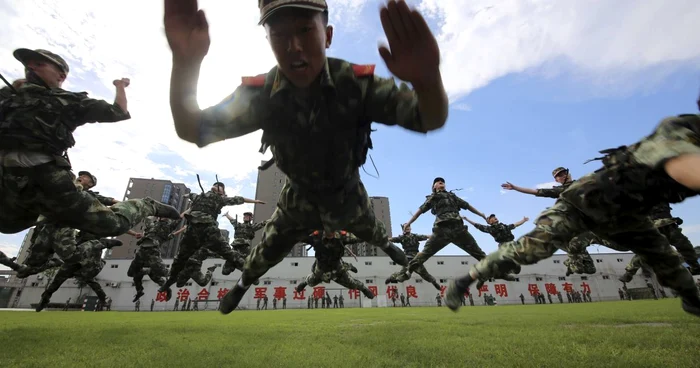
Chinese soldiers/PHOTO: Archive
Analysts and former intelligence officials say Chinese authorities are exploring the possibility of developing “enhanced” soldiers – soldiers better able to withstand extreme cold, intense heat or even high levels of radiation. Other research would aim at increasing physical resistance, recovery capacity or cognitive performance.
China already has the largest military in the world, and investment in emerging technologies is presented by leaders in Beijing as an essential component of military modernization. According to the National Security Commission's report on Emerging Biotechnologies in the US, the country is “rapidly climbing” to a dominant position in this field.
A passage in the document warns that, in the future, drone warfare could appear “outdated” in the face of genetically modified soldiers supported by artificial intelligence, writes The Sun.
Research and ethical concerns
Dr Anthony Vinci, a former senior US intelligence official, says there are indications of what he calls “genetic espionage” and that Beijing could collect genetic data on a large scale. He argues that such data could be used to identify rare traits – such as exceptional physical endurance or adaptation to extreme conditions – and reproduce them through genetic engineering.
Chinese authorities and the companies involved have repeatedly rejected accusations that the research had military purposes. In some cases, the projects were presented as having medical or public health objectives, such as disease prevention or improvement of living conditions.
However, skepticism persists, especially after the case of Chinese researcher He Jiankui, sentenced to prison in 2019 for the illegal genetic modification of human embryos – an experiment that sparked international condemnation and reignited the debate about the ethical limits of science.
What the “improvement” of soldiers might look like
Experts talk about several possible directions. One would be the use of brain-computer interfaces, implants capable of translating brain signals into digital commands. Although such technologies are currently being developed for medical purposes, they could also have military applications.
Another direction is the use of biotechnological substances or treatments to temporarily improve physical or mental performance. The third – and the most controversial – is the actual genetic modification, with the aim of increasing resistance, tolerance to hostile environments or recovery capacity.
Supporters of the research say many of these advances could have civilian benefits, such as treating disease or improving quality of life. Critics, however, warn that the line between medical and military applications is thin.
When it could become a reality
The report presented to the US Congress suggests that Beijing could aim for large-scale deployment of biotech-backed troops by 2049. Some analysts do not rule out the possibility that limited experiments are already underway, given the rapid pace of advances in areas such as CRISPR gene editing, which is already used to treat some diseases.
Although the idea of ”super-human soldiers” has long seemed like the stuff of science fiction, recent developments in biotechnology suggest that the question is no longer whether such capabilities are possible, but how they will be regulated—and with what consequences for global security.