Xi Jinping promises reunification of China and Taiwan in New Year's speech: “It cannot be stopped, it is a trend of the times”


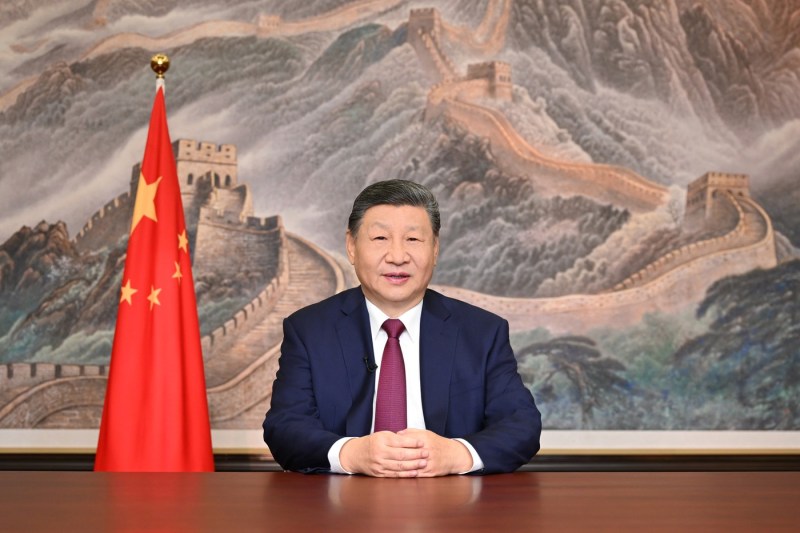
Xi Jinping speech. Photo credit: Yan Yan / Xinhua News / Profimedia
Chinese President Xi Jinping promised the reunification of China and Taiwan in his annual New Year's speech in Beijing. Speaking a day after the end of intense Chinese military exercises around Taiwan, Xi said that “the reunification of the motherland, a trend of the times, is unstoppable”, reports the Guardian.
China claims Taiwan, an autonomous island, as part of its territory and has been promising for a long time to annex it, using force if necessary, notes The Guardian, quoted by News.ro.
US intelligence services are increasingly concerned about the growing capabilities of the Chinese military to launch such an attack if Xi decides the time is right.
On Monday and Tuesday, China's People's Liberation Army launched live-fire military drills around Taiwan, simulating the blockade of major ports and sending the navy, air force, missile force and coast guard to encircle Taiwan's main island. The exercises, dubbed “Mission Justice 2025”, were held closer to Taiwan than previous exercises and involved at least 89 fighter jets, the largest number since last year.
The drills were expected by analysts before the end of the year, but have been linked by Chinese commentators to the US government's recent approval of a record $11 billion arms sale to Taiwan.
Speaking in Beijing late on Wednesday, Xi said China had “welcomed the world with open arms” and highlighted several multilateral conferences hosted by Beijing this year, including the Shanghai Cooperation Summit in August, when world leaders including Russia's Vladimir Putin, India's Narendra Modi and Turkey's Recep Tayyip Erdoğan gathered in Tianjin, a port city near Beijing.
The broadcast of Xi's speech on Chinese state television was interspersed with several images from the largest military parade in Chinese history, which took place in September to mark the 80th anniversary of the end of World War II. During the parade, which was billed as an unfettered show of military force, Xi, Putin and North Korean leader Kim Jong-un stood side by side in Beijing – a geopolitical alignment that has been dubbed the “axis of destabilization”.
Central to Xi's vision of a new world order is annexing Taiwan and gaining the support of other countries in recognizing Taiwan as part of the “one China” led by the Chinese Communist Party in Beijing, which most Taiwanese reject.
In his speech, Xi also highlighted “Taiwan Handover Day,” a commemorative day created in 2025 to mark the anniversary of the end of Japanese imperial rule in Taiwan in 1945. This year, Taiwan passed a law recognizing October 25 as a national holiday. The legacy of World War II has been a prominent theme in political rhetoric in China and Taiwan this year. China has emphasized its role in defeating the Japanese in that conflict, something China sees as underappreciated in the West. Taiwan's president, Lai Ching-te, gave an incisive speech this year, comparing Taiwan to European democracies in the 1930s that faced the threat of Nazi Germany.
Xi's speech also praised China's progress in high-tech development this year, mentioning kickboxing robots and Tianwen-2, a comet exploration mission launched in May. He also pointed to the global success of Chinese cultural exports such as the video game Black Myth: Wukong and the animated film Ne Zha 2.
Earlier, Xi had addressed a meeting of senior Chinese Communist Party officials and said China was on track to achieve its 5 percent GDP growth target.