
Video how a nation has succeeded completely on the national arena to realize one of the most ambitious road projects in the world: a network of tunnels that meet in a large roundabout


A small island country in the north of the Atlantic Ocean has achieved something that seems impossible for its dimensions: to develop a network of underwater road tunnels to connect its main islands and localities. Everything culminated with the first roundabout under the world, at the intersection of three tunnels that reach 189 meters below the sea level.
The Feroe Archipelago consists of 18 mountainous islands, with deep fjords and predominantly granite land.
Caught at the edge of the Norway's Sea and the north of the Atlantic Ocean, north of the United Kingdom, between Norway and Iceland, the small island country is actually an autonomous territory of Denmark and has about 54,900 inhabitants – that is less than the total capacity of the National Arena in Bucharest.
Fixed links between the Feroeze Islands
Difficult geography and severe climatic conditions have caused the localities on the Feroeze islands to suffer in terms of infrastructure connections and have raised major logistics challenges: ferries dependent on the very capricious weather, few bypass and lack of fixed links, reported BBC.
In the early 2000s, the Faroe islands started to make a series of road connections between its main islands. As the creation of quite long bridges would have been struck by the same problems by the severe weather, the authorities have oriented to make underwater tunnels to better connect the dispersed localities on the archipelago.
In turn, in 2002 and then in 2006 the ferroes inaugurated two underwater road tunnels – F Vágatunnilin (4.9 km) and norðoyatunnilin (6.2) km. But the most spectacular work would take shape a decade later.
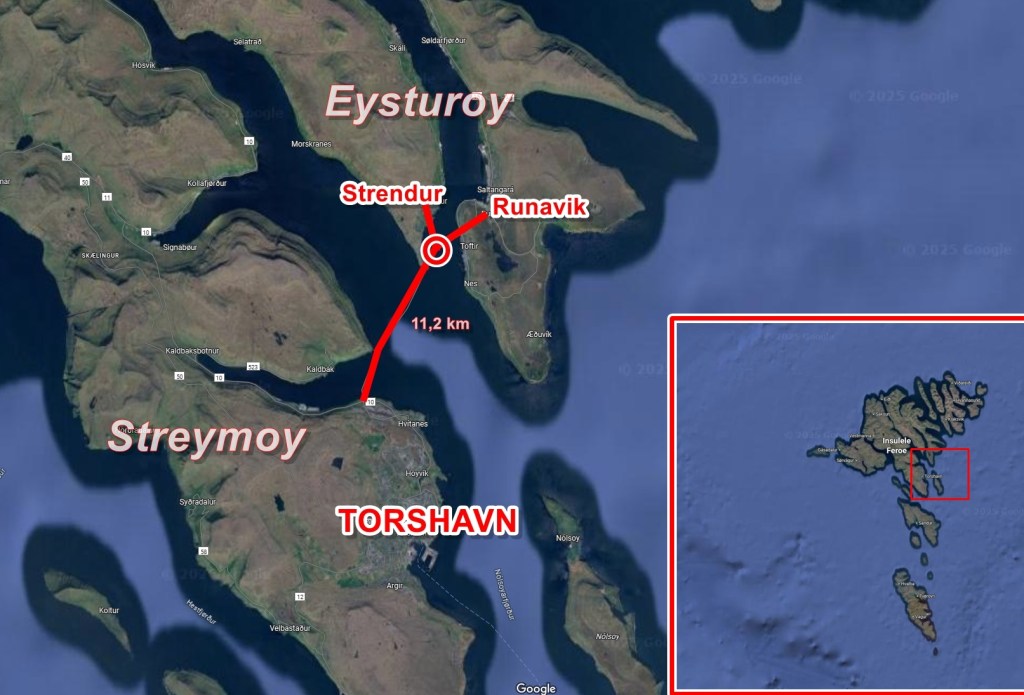
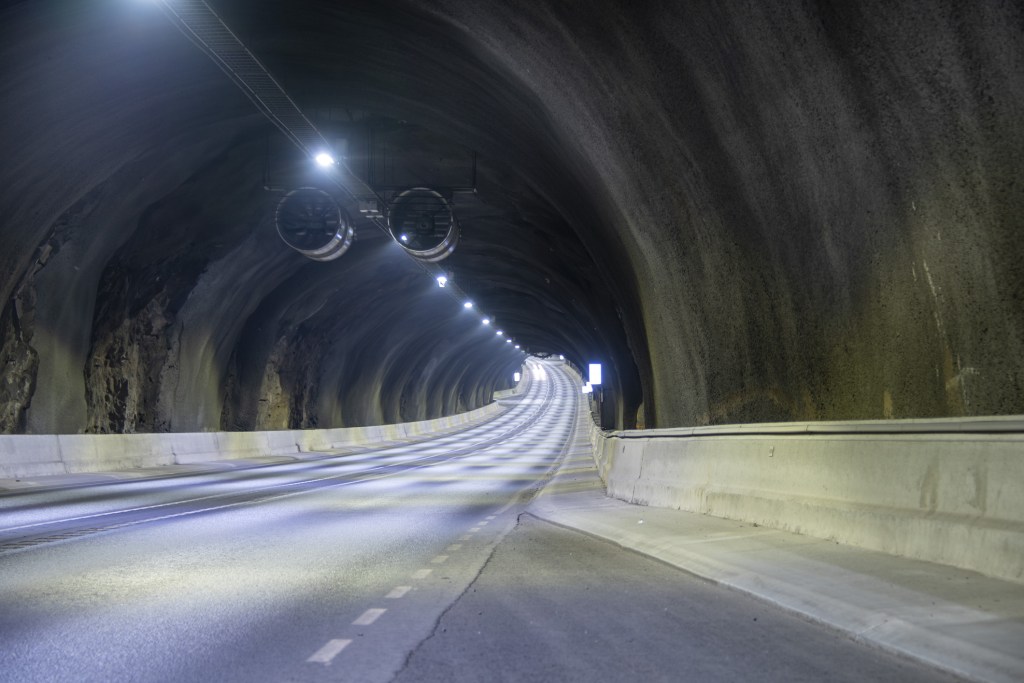
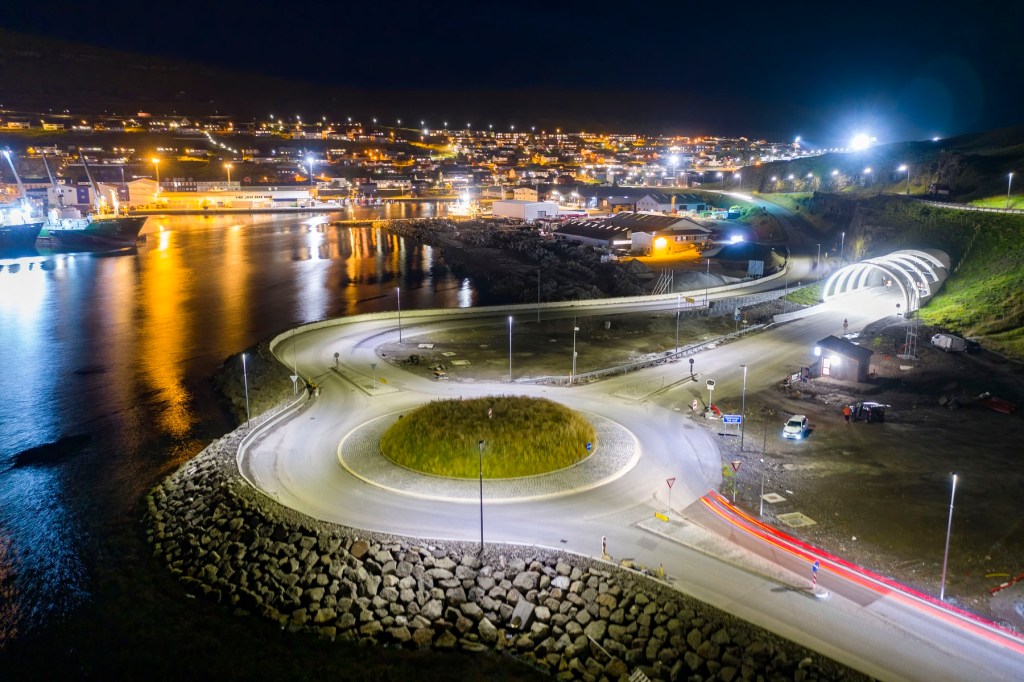
Eysturoyartunnilin (or Eysturoy tunnel) is a system of underwater tunnels connecting Streymoy and the capital of Tórshavn to Eysturoy Island. These are three tunnels with roads that meet in … the first underwater roundabout in the world.
The branches cross deep fjords and granite rocks; The lowest point of the network descends about 189 m below sea level. The main tunnel, with all branches, total about 11.2 km long, according to Structure.net
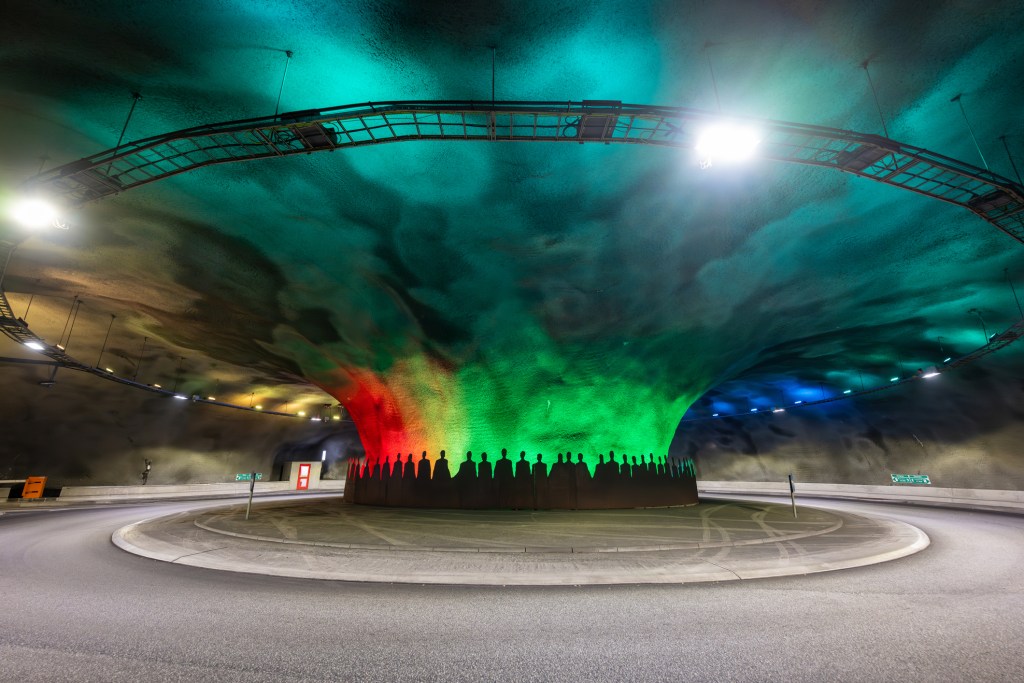
To the south, the tunnel reaches the island of Streymoy and directly connects the city of Tórshavn, and to the north, the tunnel separates into two branches, to Runavik to the east and Strendur to the west, both cities on Eysturoy Island. In the area where the three tunnels meet, a roundabout was arranged, decorated with architectural lights and an iron sculpture made by a local artist.
Halved the duration of travel between the most important cities
The idea of fixed links between the islands is not a purely technical ambition, but a social-economic necessity. The autonomous state of Faroe has proposed for years to reduce the isolation of communities, the commute times and the dependence on ferries affected by the capricious weather in the north of the Atlantic Ocean.
The government has explained from the launch phase of the project that the purpose is “increasing the mobility for the ordinary citizen, for companies and public administration” and that the new tunnels will shorten the daily shuttle for thousands – sometimes up to an hour and a half.
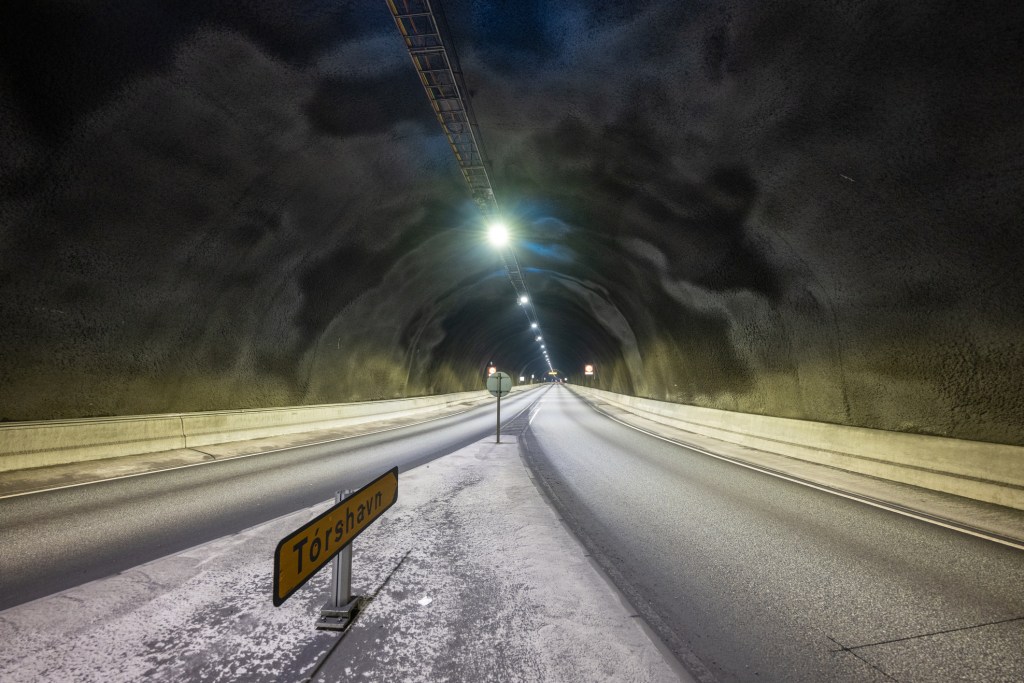
After opening the tunnel, routes that previously required the use of ferries and hours were transformed into 10-40 minutes, depending on the connection. The new connection facilitated the daily commute, access to jobs and medical services, but also the easier transport of goods and services.
The tunnel has significantly reduced the duration of the trip to the capital from other larger localities in the archipelago. The tunnel shortened the travel distance from Tórshavn to Runavík/Strendur from 55 kilometers to 17 kilometers, ie the duration of the car was reduced from 64 minutes to 16 minutes.
The duration of the car trip from Tórshavn to Klaksvík, the second largest city in the Feroez archipelago, was reduced from 68 minutes to 36 minutes.
VIDEO:
Was dug in just three years
The project was planned and executed in stages, after decades of geotechnical and seismic studies. The actual works began in 2017, and the tunnels and meaning of the underwater roundabout were opened to circulation on December 19, 2020.
The technical complexity in the creation of the Eysturoy tunnel came from the combination of several factors: hard rock drilling under high hydrostatic pressure, translation of seismic data in concrete plans, making a tunnel tunnels and complex drainage and ventilation systems, plus the specific logistics conditions – the transport underwater.
The project was executed by the northern company NCC, in partnership with the public entity P/F Eystur- OG Sandoyartunlar (EST).
For digging the builders used the method Drill & Blast – controlled drilling and detonation, followed by the evacuation of the material, supports and torque with concrete. Extremely harsh ferry granite has complicated the construction process on the one hand, but on the other hand it offers long-term structural stability.
At the lowest point of the tunnel network, the road is 189 meters below the sea level. The underground round area is at a depth of 73 meters below the sea level.
The tunnels, with a total length of 11.2 kilometers, have a traffic lane, with side space for emergency stops and are equipped with complex lighting, ventilation and sensors.
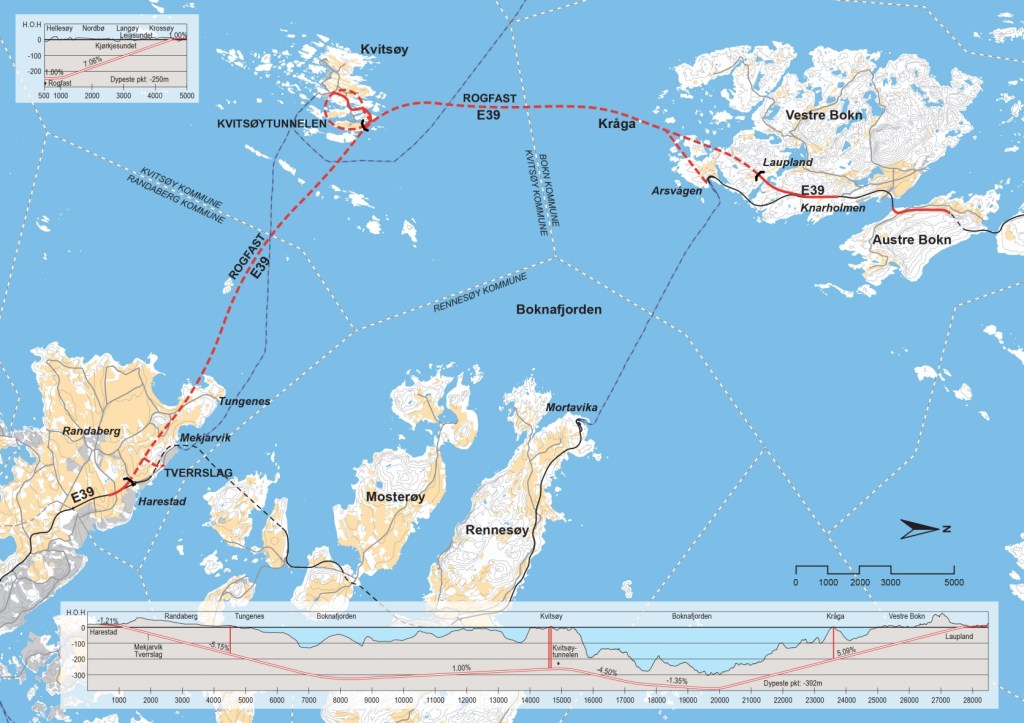 Video the longest and deeper road tunnel in the world is now under construction. A project of over two billion euros
The characteristics of the Eysturoy tunnel
- Project name: Eysturoyartunnilin (Eysturoy Tunnel).
- Total length – 11.2 km.
- Gallery diameter: 9 m
- Road system: 1+1
- Maximum depth below sea level: 189 m
- Depth below sea level in underground round area: 73 m:
- Duration of execution: 2017 – 2020
- Population served: 54,900 Residents (Faroe Islands, Total)
Costs: approx. 173 million euros design and execution (about 200 million euros in total for the whole project), - Operator / Developer: State Company / Entity created for project: P/F Eystur- Og Sandoyartunlar (East)
- Main builder: NCC
Huge cost for a small country: 8% of GDP
The cost of the project, in total, has reached over 200 million euros according to the latest estimates that include some related costs, not just the design and execution itself. At first glance it cannot seem much, but as it must be put in context.
At the level of 2019, for example, when the Eysturoy tunnel was in full execution, the GDP of the Feroe islands was about 2.5 billion euros. Therefore, an investment of about 200 million euros is equivalent to 8% of GDP, that is, more than today Romania on defense, education and research in one place.
The investment would be well recovered from the use taxes, at least that's how the Faroese government hoped. Thus, shortly after the inauguration, taxes were introduced from 23 euros for cars up to 107 euros per trucks and 168 euros for large buses.
However, traffic figures are not as encouraging for as the authorities initially hoped. For the year 2022, for example, 6,000 daily crossings were foreseen, but the recorded figures showed that only between 3 and 4,000 vehicles were crossing the tunnel network daily.
Only in 2023 the traffic digit exceeded 5,600 passes on average per day.
Even so public pressure increased in favor of reducing tariffs in order to increase the number of passengers. High tax opponents claim they prefer the old, longer route, wrote the Portal Feroez Kvf.Fo
A project criticized for costs and sustainability
Although Eysturoyartunnilin was presented as a huge step in the modernization of the Feroe infrastructure, the critical voices were not lacking.
First of all, the total cost has aroused heated debates. With an execution bill of 134 million euros, the tunnel represented one of the largest public investments in the history of the archipelago. Part of the public opinion and some local economists raised the problem of the relationship between the direct benefits and the indebtedness assumed by government credits and use taxes.
Another criticism is about economic centralization. The rapid connection of the islands with the capital Tórshavn would risk to emphasize the depopulation of the small communities, by migrating the inhabitants to the urban centers where more jobs and services appear. “The tunnels reduce the isolation, but they can accelerate the emptying of young villages,” warned a local sociologist in the Feroese publication quoted above.
Beyond the question marks related to the sustainability of the traffic, in the technical plane the independent experts have drawn attention to the maintenance costs: permanent pumping of water, ventilation and continuous structural monitoring involve significant expenses, which the small budget of Froe must absorb in the long term.
However, the authorities have constantly defended the project, stressing that the “fixed” (direct links) infrastructure is vital for the economic and social survival of the archipelago, even if it comes with accelerated financial risks and social changes.
Even so, Eysturoyartunnilin – with underwater roundabouts become a symbolic – is a clear example that small countries can make major technological jumps where there is a clear strategic goal for connectivity and safety. It remains to be followed, the way in which the social and economic impact will translate into medium and long term in traffic, in internal migration and in the standard of living of the connected communities. Example, however, gives hope to other small states in the world that they can implement major infrastructure projects.
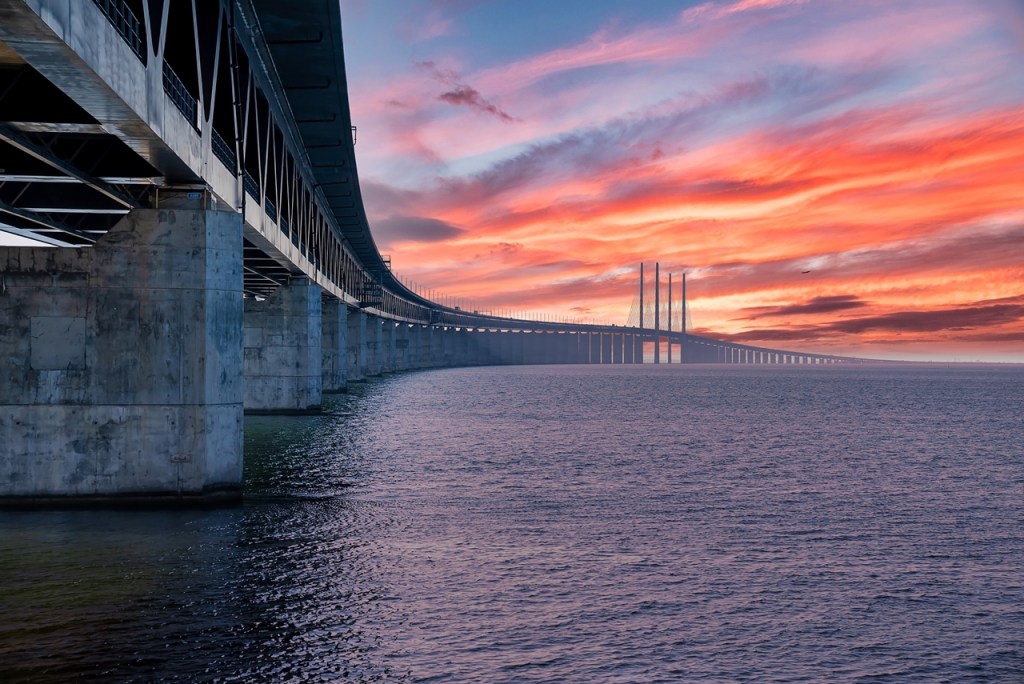 A huge plan with large infrastructure projects for one of the latest NATO members: underwater tunnels and tens of tens of kilometers for direct connections with allied states.
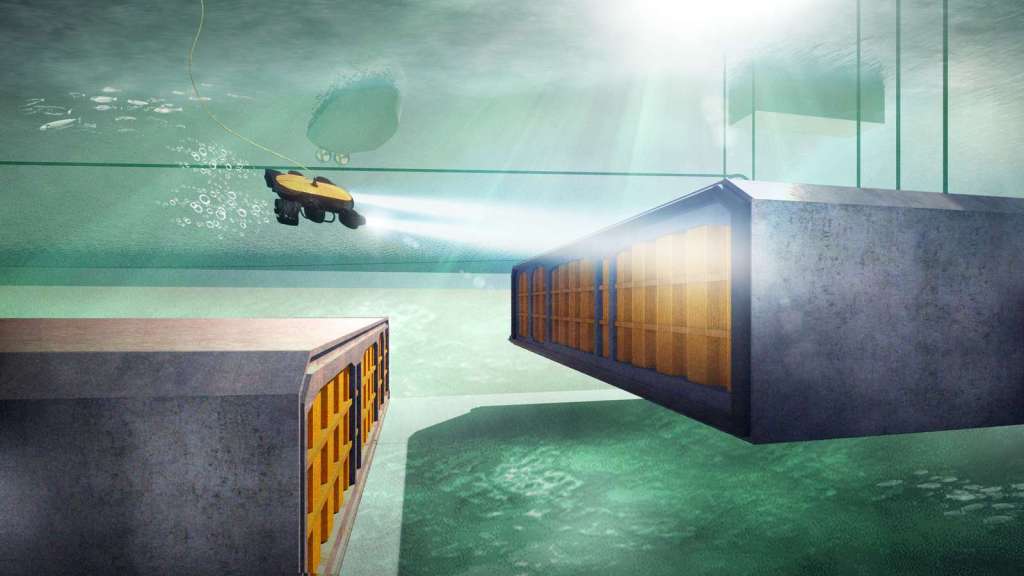 Video the most ambitious infrastructure project of the moment in Europe / what the longest submerged tunnel in the world will look


