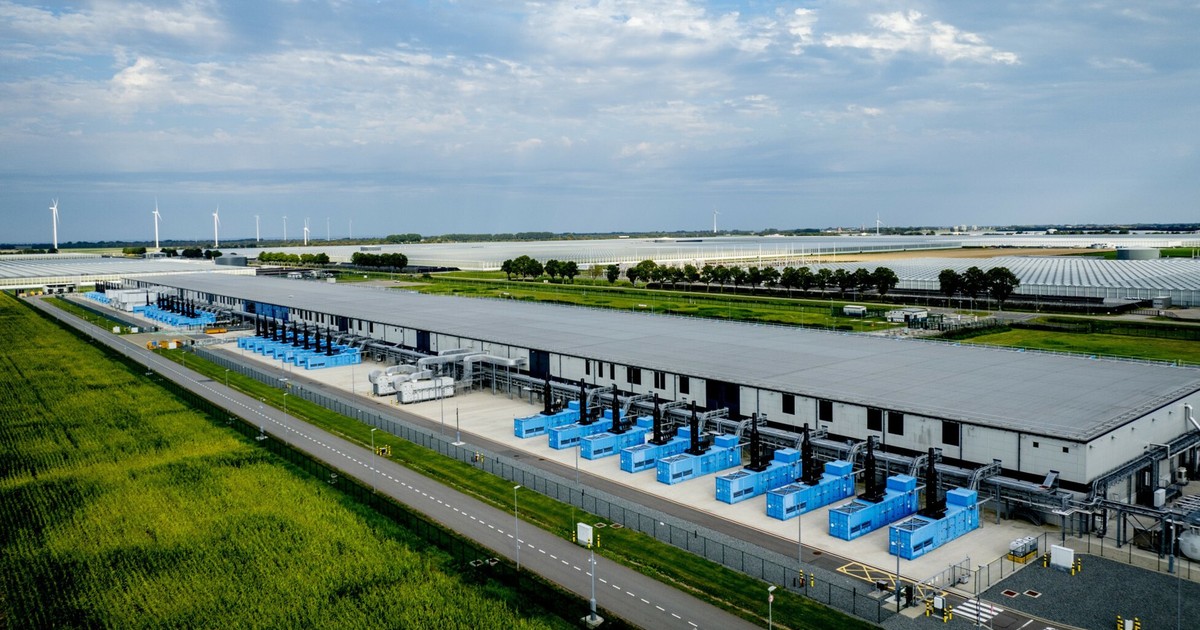
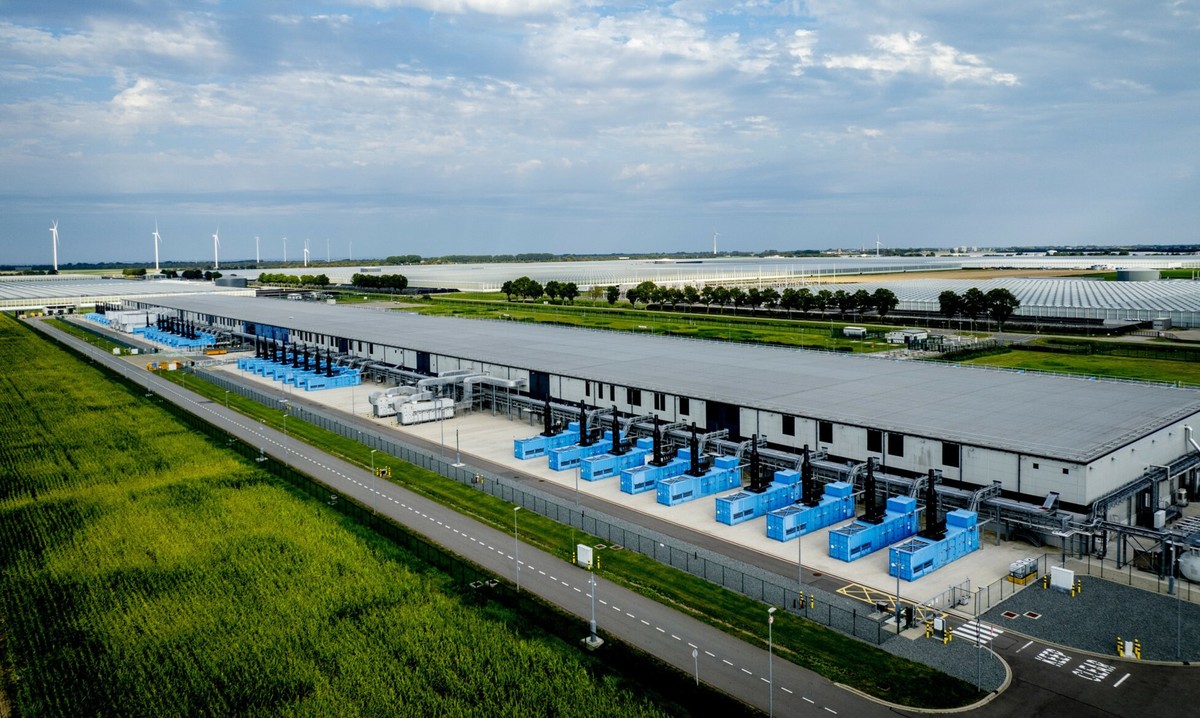
Turbines originally designed for airplanes are experiencing a renaissance in a completely new role – as an ad hoc energy source for AI infrastructure. When there are no large gas turbines and connections to the grid are years away, hyperscalers and data center developers choose a “behind-the-meter” solution, i.e. their own way of generating electricity right next to the server rooms. This allows you to continue training and running AI models without waiting for new transmission line capacity, though usually at the expense of higher emissions.
GE Vernova, which delivers, points to the increase in demand aeroderivative turbines for the Crusoe developer. The equipment will ultimately provide almost 1 GW of power for the Stargate facility in Texas, a project implemented jointly by OpenAI, Oracle and SoftBank. According to the company, orders for these units increased by approximately one third in the first three quarters of 2025 compared to the same period a year earlier, and the company describes them as crucial to the needs of data centers.
The next part below the video:
A similar signal comes from ProEnergy, which has already sold over 1 GW of 50 MW gas turbines based on CF6-80C2 cores – engines known, among others, from Boeing 747s. Also entering the game is Boom Supersonic, an aviation start-up supported by Sam Altman, which has agreed to sell Crusoe turbines capable of providing approximately 1.2 GW of energy. For Boom, this is not only an energy contract, but also a way to finance the aviation program.
Diesel is making a comeback – and regulations are starting to keep up with demand
In parallel the diesel generator market is recovering. Cummins has sold more than 39 GW of generator capacity to data centers and has nearly doubled production this year. Importantly, the equipment that so far it has played mainly an emergency role, but it is increasingly being considered as a basic power supply while waiting for the connection.
The state is also starting to treat these resources as part of the fuse of the entire system. US Secretary of Energy Chris Wright has spoken publicly about the idea of using existing generators at commercial facilities and data centers to support the grid in times of power shortage. At the same time, environmental costs are rising. Small units at facilities are usually less efficient than large system turbines or a renewable energy mix, so they mean more emissions and local pollutants per unit of energy.
Regulators in some states are beginning to loosen restrictions to accommodate soaring demand from data centers. In northern Virginia, in an area called Data Center Alley, it is considering allowing diesel generators to run longer, and the U.S. EPA has indicated that such sources could help stabilize local power supplies. However, economic calculations can be painful. BNP Paribas analysts estimated that energy from a small behind-the-meter gas power plant being built in Ohio (with Meta as a customer) could cost approximately $175. per MWh, which is approximately twice as much as on average paid by industrial customers from the network.
Today, the development of AI is increasingly based on a compromise: run the computing power faster thanks to your own turbines and diesel engines, but pay for it with noise, emissions and higher energy prices. At least until network infrastructure starts to catch up with the pace of data center investment.