2025-12-19 19:49, updated 2025-12-19 20:17
publication
2025-12-19 19:49
update
2025-12-19 20:17
The Politico website assessed that the arrangements adopted at the EU summit, which ended on the night from Thursday to Friday in Brussels, were a victory for the prime ministers of Belgium and Italy, as well as the president of the European Council. According to the portal, the losers were the head of the European Commission and the German chancellor.
The main conclusion of the negotiations, which lasted several hours and ended on the night from Thursday to Friday, was the decision that EU countries will not reach for frozen Russian assets for the time being in order to finance further assistance to Ukraine in the war with Russia. Instead, EU countries agreed to take out debt to help the authorities in Kiev. Three countries refused to participate in this project: the Czech Republic, Slovakia and Hungary.
According to Politico, the head of the Belgian government, Bart De Wever, “masterfully showed stoic resistance to the use of Russian assets.” It was recalled that consent to this was conditional on guarantees from other EU countries that they would take responsibility for any claims from Moscow sanctioned by international legal authorities.
According to Politico, Giorgia Meloni was also successful, as she “dictated the pace of negotiations of the trade agreement between the EU and Mercosur, and also perfectly timed her intervention on the financing of Ukraine.” The portal emphasized that the Italian prime minister “stepped into action late in the evening, when the loan plan for Ukraine was already dead.”
According to information obtained by Politico from summit participants, Meloni “did not even speak during the first part of the summit, but she managed to conclude the agreement.” The portal wrote that the idea of a joint loan was a solution that “few people wanted, but most could accept.”
The portal also recognized the President of the European Council, Antonio Costa, for reaching an agreement, as well as his persistence and consistency in finding ways to “shorten EU summits to one day.”
According to Politico, the firm opposition of Belgium, where Russia's assets are deposited, made most leaders accept that the meeting would end on Friday at the earliest, and perhaps even extend into the weekend.
The portal noted that Costa “never fully supported any of the solutions (…), stayed away from the dispute and nevertheless reached an agreement.” According to Politico, “everyone involved in the war” was also a success: Ukrainian President Volodymyr Zelensky, who “received the money he needed,” and the EU, because “it kept its promise to support Ukraine.”
Politico also emphasized that although Russia's frozen assets will not be used against its authorities for now, US President Donald Trump has the opportunity to use them as a “bargaining chip in negotiations on a future peace agreement.”
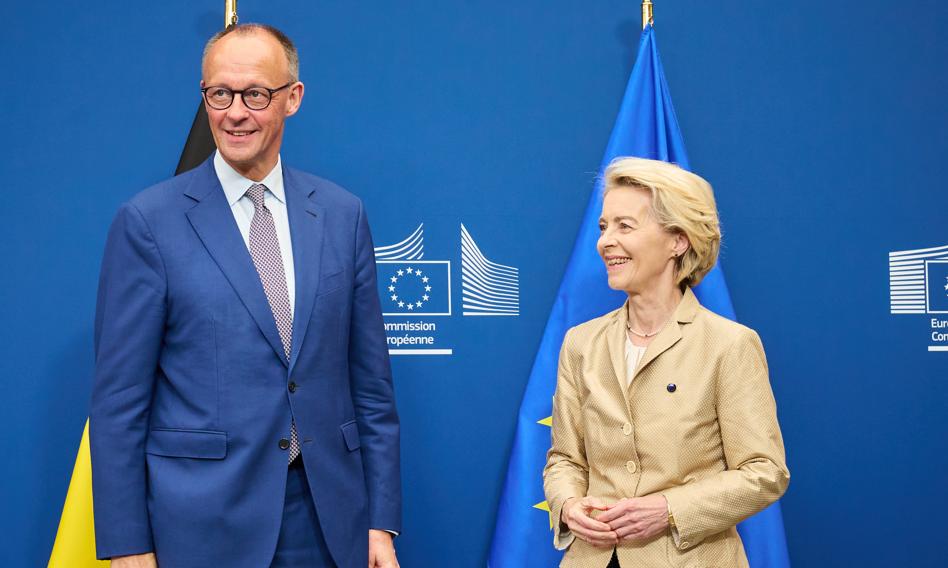
The portal considered German politicians as losers: Chancellor Friedrich Merz, who had to swallow two bitter pills: “postponing the agreement with Mercosur and torpedoing the asset freeze plan for which he lobbied hard”, and the President of the European Commission, Ursula von der Leyen, who tried to avoid “joint borrowing”.
Politico also included the head of the Danish government, Mette Frederiksen, who ends her presidency of the EU Council at the end of 2025 as a loser. In this case, the Danish presidency, similarly to the position of the authorities of Germany, Sweden and Finland, was reluctant to take out a joint debt.
The portal also considered the governments of the Czech Republic, Slovakia and Hungary to be losers of the EU summit, which – according to Politico – achieved success “in the short term”, but in the long term “may turn out to be costly”, because Ukraine will receive aid anyway, and “such a move brings three countries closer to the status of pariahs in the EU”. The portal also stated that only time will tell whether this scenario will become a fact.
On January 1, 2026, Cyprus will take over the six-month presidency of the Council of the European Union.(PAP)
piu/ mal/