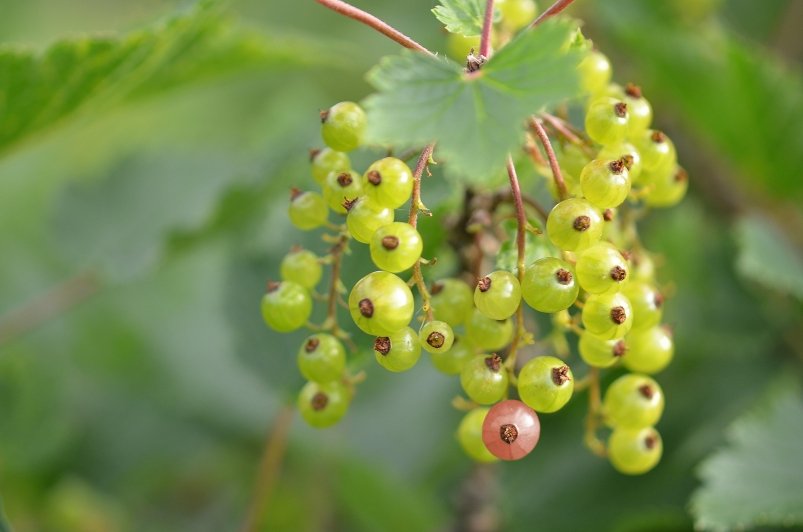
For many summer residents, December is a time of peace. But experienced gardeners know: right now, when the bushes are sleeping under the snow, they can propagate currants for free. The same branches that you cut off during sanitary pruning will easily turn into full-fledged bushes even without a greenhouse and stimulants.
The method has been proven for decades. The main thing is to start now, before the frosts become severe.

Which branches are suitable for propagation?
Annual shoots that take root best are flexible but not green, with smooth bark and many buds. The thickness should be like a pencil, length 15–20 cm. Take material from healthy, productive bushes: the berries of new plants will be the same.
Use sharp pruning shears to cut at an angle, so the cutting area is larger and roots form faster.
What is the essence of the “snow” method?
Currants are one of the most unpretentious crops. Its cuttings are not afraid of frost, but on the contrary, they need cold stratification in order to wake up in the spring.
The essence of the method is simple:
- Tie the cuttings into a bundle.
- Wrap in several layers of newspaper.
- Find a place in the garden where there is stable snow in the winter, but no stagnant water in the spring.
- Bury the bundle to a depth of 20–25 cm below freezing.
- Pour a pile of snow on top or cover it with spruce branches as a natural shelter.
- Be sure to place a peg. In the spring, under the snow, it is easy to forget where the “treasure” lies.
What happens to cuttings all winter
At temperatures from -2°C to -5°C, biochemical processes are launched in the tissues of the cuttings: the buds “remember” the cold, and callus is gradually formed on the cuts – the rudiment of the root system. The newspaper decomposes slowly, but until spring it retains moisture and prevents the branches from turning into dry sticks.
By March, the cuttings still do not have roots, but are ready for rooting. And by May they are already in the ground with the first growth and even flower buds.
In April–May, as soon as the snow melts:
- Carefully dig out the package.
- Plant the cuttings at an angle in loose, moist soil 2/3 of the way down.
- Cover with half a plastic bottle on top.
- Water moderately; currants do not like stagnation of water.
After 3-4 weeks you will see the first leaves. And by August, the first harvest of berries on your own bush.
Question and answer:
Is it possible to harvest currant cuttings in December?
Yes. Winter is the perfect time. While the plant is dormant, the cuttings do not lose moisture and tolerate storage well until spring.
Are root stimulants necessary?
May not be used. Currants take root easily on their own.