Great world star, the German tenor Kaufmann stopped at the Dâmbovița flats, at Sala Palatului, after a few seasons ago he had canceled a recital at the Romanian Athenaeum in one of the editions of the Enescu Festival. It was better to come to the Athenaeum, where no microphones are used, than in the huge auditorium originally intended for meetings, which also this time made figures due to the sound system. Although quite a few vacancies were observed, the success was high, five encore-s being offered by the two artists.
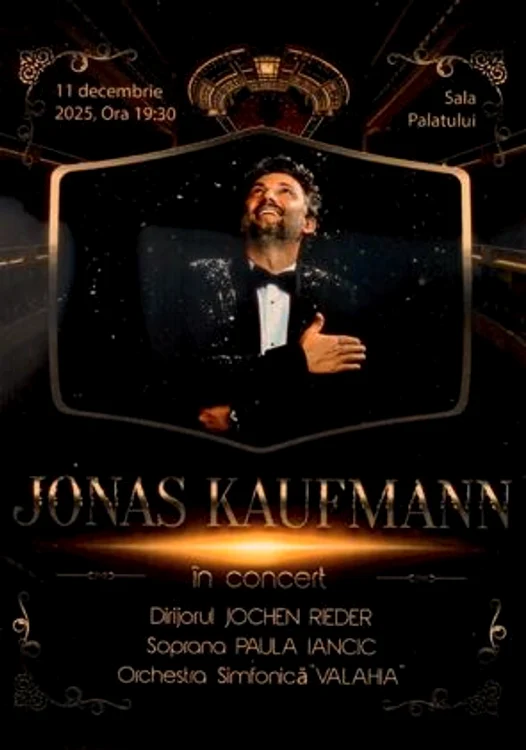
Everything started normally, with a good acoustic tuning perceptible from the box on the left where we were seated and Jonas Kaufmann started the concert with the aria “Celeste Aida” from Verdi's opera, a page rarely sung singly, outside of a stage performance.
It was like a miracle full of seductive lyricism, a poetic confession of love in which the tenor shaped his noble and velvety timbre in shades of extreme subtlety thanks to the mastery of admirable techniques of middle voices and pianists present at every step. The famous finale, B flat sharp “vicino al sol” noted by Verdi with pianissimo morendorefused by the overwhelming majority of interpreters (only Franco Corelli approached it with a masterful flair, others – very few – taking refuge in falsettothe rest treating him with brute force), received from Kaufmann an unheard-of version with messa di voce bel canto inspired, pianissimo attack, crescendo, decrescendospun return to a new concluding pianissimo, a dream on the same breathing arc. The construction of this
Romance by Radamès “Celeste Aida” by Jonas Kaufmann epitomized the sublime aesthetic. Verdi would probably have been happy.
The manner of expressively sculpting long phrases continued throughout the evening, with Kaufmann foregrounding the poetry of the voice. Who would have thought that the opening speech of the aria “Cielo e mar” (Ponchielli, “Gioconda”) would have contrasted between force and reverie, followed by restrained passion and again a half voice imponderable (“o sogni, o sogni d'or!”)? Creating an idyllic atmosphere, the tenor grew in passionate feeling (“vieni o donna, qui t'attendo”) so that in the high G finale “Ah! vien!” to show that he is a consummate sound painter (attack in mezzo-forte
and crescendo until the release of energies).
For “E lucevan le stelle” (Puccini, “Tosca”), painful memories flashed through his description through the same middle voices in “O dolci baci”, and the saying “… disciogliea dai veli!” benefited from a super sound filter. Probably the phrase “e muoio desperato!” pronounced con animaas the composer mentions next to the portable, moistened the eyes of the spectators.
I think that the detractors could accuse him of economic singing, but what Jonas Kaufmann does is pure art.
And then came the second part, for which those at the electronic desks operated unnatural modifications, amplifying the sound and accentuating the tenor's baritone voice colors, at least in the low and somewhat middle register.
The aria “Ô souverain, ô juge, ô père” (Massenet, “The Kill”) was a fervent, expressive-contrasting prayer rendered, with well-attacked sharps (B-flat) and a glorious finale. For Improviso di Chénier (the aria “Un dì all'azzurro spazio” from Giordano's “Andrea Chénier”), brought meaningful declamations, impetuous developments, ample underlining of phrases (“Ecco la bellezza della vita”) and a vigorous finale.
“Addio alla madre”, Turiddu's aria from Mascagni's “Cavalleria rusticana” had an accented experience of pain, with shades of crying and a spectacular, forceful conclusion, a page that practically ended the evening's official program, except that by then the tenor had also sung two duets with his concert partner.
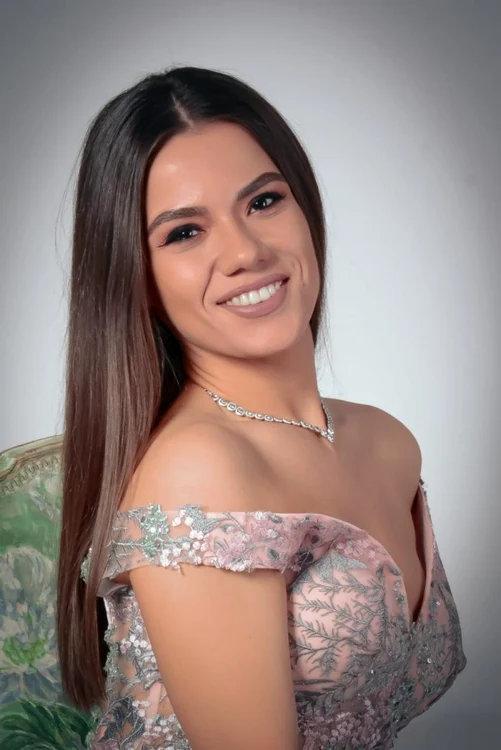
Paula Iancic
Paula Iancic, one of the best sopranos of the young generation in Romania, had the chance to be invited to Jonas Kaufmann's concert, an event that can bring her important career prospects. The recommendation came, as Paula declared in an interview granted to Radio Romania Cultural, from Cluj-based bassist Alexander Köpeczi, also a value of international lyricism.
In the aria “Sì. Mi chiamano Mimì” from Puccini's “Bohemian”, Paula Iancic exhibited her fresh, lyrical stamp, outlining an emotional, delicate, simple heroine, whose exposition was filled with a deep, soulful feeling with the phrase “… ma quando vien lo sgelo”. The vocal line is beautiful, the nuances are in their places, expressive. Immediately followed the final duet of the first act, “O soave fanciulla,” with bright notes from the soprano and high Cs in unison in diminuendo
from both of them.
“Ave Maria” from the IV act of the opera “Otello” by Verdi showed somber colors on the part of Paula Iancic, refinement in phrasing, sensitivity in humble and sweet prayer pianists airy, nuances that were also noticeable in the duet with Otello from the first act of the opera of the same name, a delightful chain of exchange of lines between the two lovers, communicated with charm in the Verdian starry night.
The order encore's was Prince Sou-Chong's aria “Dein ist mein ganzes Herz” from the operetta “Land of Smiles” by Lehár (Jonas Kaufmann in full romantic swing), the duet “Lippen schweigen” from the operetta “The Merry Widow” by the same composer (the two artists in a conquering Viennese spirit), the song “Ombra di nube” by Licinio Refice (Jonas Kaufmann, strongly internalized), Lauretta's aria “O mio babbino caro” from Puccini's “Gianni Schicchi” (Paula Iancic with beautiful expressive dosage and a tall, admirably spun “pietà”).
Crowned finial oppositeCalaf's aria “Nessun dorma” from Puccini's “Turandot” in full force, with the famous “Vincerò! Vincerò!”, And naturally acute spectacular, attacked in its own way.
He accompanied the “Wallachian” Symphony Orchestra conducted by the German Jochen Rieder, which also had instrumental pages from the operas “Aida” (Prelude), “Gioconda” (“Dance of the Hours”), “Manon Lescaut” by Puccini (Intermezzo), “Samson and Dalila” by Saint-Saëns (Bacanala), “La Vierge” by Massenet (Prelude “Le dernier sommeil”) and “Cavalleria rusticana” (Interlude).