Russia's subversive actions in Romania, myth or indisputable reality? Cambridge expert: 'It never stopped'

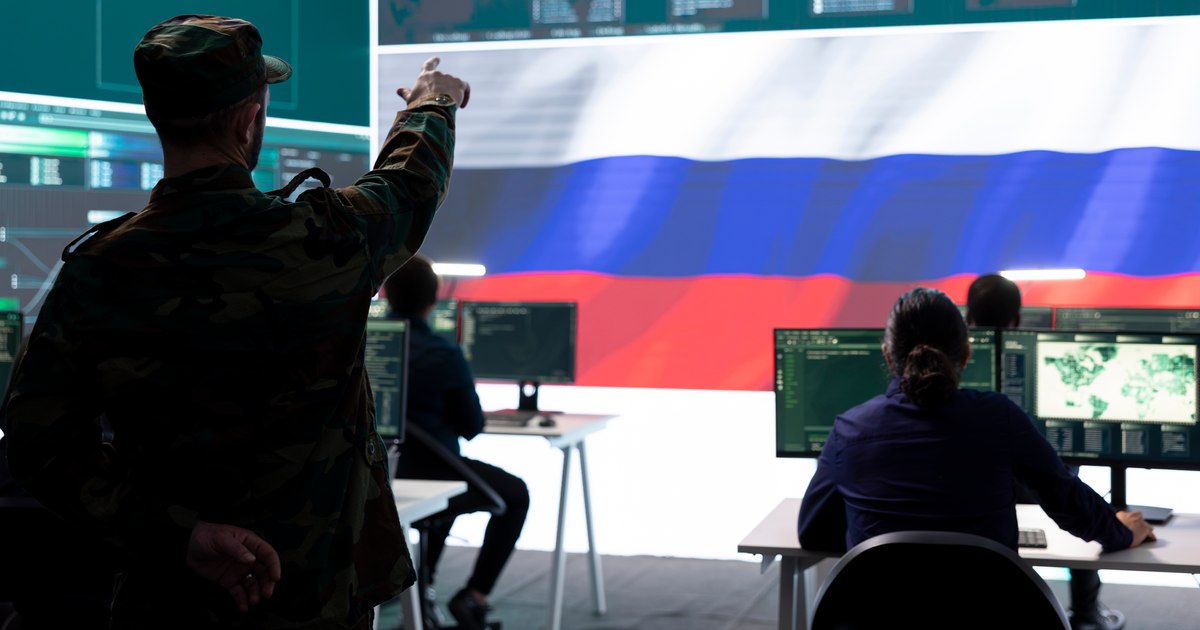
The USA and the EU are arguing over the canceled presidential elections, in December 2024, in Romania. Cambridge University researcher Andra Martinescu claims that there is all the evidence that Russia was the one that interfered with the elections in Romania and continues its subversive activities.
The hybrid war against NATO states is coordinated from Moscow. PHOTO: Freepik
The legal committee of the US House of Representatives has published a 160-page report in which it accuses the European Commission of interfering in the canceled presidential elections in Romania and of censoring the fundamental right to free expression. Brussels denies it, obviously. And that's not all. The equation is even more complicated in reality than it may seem at first glance. The Romanian authorities claim that, in fact, those who would have interfered in the presidential elections would have been the Russians. Andra Martinescu is a researcher at Cambridge University and Senior Research Fellow at The Foreign Policy Center, and recently he coordinated a team of Romanian and Ukrainian researchers in a study on Russia's subversive actions in European states. Their work attracted the attention of NATO and was disseminated by the North Atlantic Alliance.
Later, another study of hers came as written evidence at the invitation of the European Commission and the Digital Services Act Board of the EU, documenting the systemic risks to which society was exposed – both from Romania and from the diaspora – the focus being the large online platforms. Finally, Andrei Martinescu's latest project is running on iGov.ro, a civic platform for governmental transparency and democratic accountability in Romania. In an interview for “Adevărul”, the Romanian woman talks about the results of her studies and about the evidence showing that Russia has indeed carried out a series of subversive actions in Romania, culminating in the presidential elections.
The truth: You have coordinated a number of projects and documented Russia's actions in Romania, and the latest study also tries to shed light on this controversial case. What other themes are touched upon in this research and what would be the purpose of the new I.Gov.ro platform?
Andra Martinescu: I launched this last study together with several researchers, I will also mention Marius Dima, who put together the architecture of the ICOV platform. There we decided to bring to the public light, in the public domain, to be accessible to everyone, including journalists, decision-makers, those interested, the civil society, the results of a work that extended over several years. We also referred to the way in which the diaspora is financed and has been financed since 2014 until now. We are now processing the data for 2025, and I think it is an extremely important analytical repository that we will grow. So this is the intention of the ICOV.ro platform. Many people have contributed to these analyzes and researches.
Where are the Romanian authorities wrong?
Research into Russian interference has also expanded to other neighboring states. Which would be the most impactful of them, apart from the one that concerns us directly?
There was another serious analysis on the elections in Moldova. I started it in June and it basically finished a few weeks ago. We looked at the methods of interference in the September 2025 parliamentary elections, a crucial point, a key point in the strategic and political evolution of the Republic of Moldova.
Regarding the elections in Romania, although there is enough evidence, the authorities do not manage to be too convincing. Where does it go wrong?
It seems to me that a file of this kind, so important, has evolved into a secretomania, and it shouldn't be like that. Because precisely this secrecy and this lack of action derives, are instrumentalized by the extremist discourse, by factors that want to destabilize Romania's national interest. And I think that should be a public conversation. That's why we decided to make our analysis public. That is to say, there were analyzes presented at the conference in Paris, there were analyzes presented in relation to the European Commission and NATO, but which did not take root in Romania. And I understand that the president or at least the administration is working on a report on the annulment of the election.
Russia has been acting unhindered in Romania for decades
Were you or other researchers from the team you worked with on this subject contacted by the Romanian authorities?
No one spoke to us, as far as I know, not even to others. And there are so many researchers who also have experience, who have competence on these topics. I don't see it as an institutional matter because I don't really trust, as a citizen, that the administration would have the capabilities to understand the phenomenon. Especially since we scratch our ears. We scratch our heads. If you don't understand that and you don't have the capabilities, you as a state… I mean there has to be an informed conversation conducted with outside actors as well, right? I am referring here to civil society, to the journalists who have contributed with so many investigations. It is necessary to understand that interference does not appear out of nowhere. Malign actions aim to take advantage of weaknesses, fractures and social divisions that already exist. From the analysis of previous messages and speeches, we noticed the presence of some groups involved in massive disinformation campaigns since the period of the COVID-19 pandemic. In this context, state actors possessing such capabilities must be identified. Russia, for example, began to act at least during the pandemic, if not even earlier. Infiltration into the Romanian space is a continuous process, started since the 90s, without taking into account the activity of KGB agents from the communist era
Speaking of the administration, of the intelligence services, how did they manage these destabilizing actions of Russia?
I will be honest and say it openly. I don't think it's a state secret that they were caught completely off guard. That they failed to block Russia's subversive actions. That they failed in the 2024 elections and more. That they still can't handle a hybrid war, and that they haven't learned much from everything that's happened in the last few years, culminating in that election. The serious thing is that even now they do not seem to be more effective in preventing and neutralizing all these actions of foreign states in Romania.
Who doesn't want the full truth to be known
I don't want to feed a new conspiracy theory, but we can't because they are not able or maybe even certain important politicians at the top or people in the services have a vested interest in the truth coming out or not at all?
As I said, it was obvious that they were caught off guard. That there was probably also a will to cover their tracks, knowing that an audit inside the law enforcement agencies would uncover pro-Russian factions… I don't think that would be a big surprise. I mean, it doesn't seem like a state secret to me. That everyone is talking about capabilities and everyone is now looking at how Russia is interfering, sure, we applaud. But these things were known. And they were known for at least 10-15 years. We have been doing this research since that time. That is, it was absolutely preemptive work. And we brought at that time the first evidence related to Russian interference. It's just that instead of discussing data, evidence, what we saw, everyone was giving their opinion. That it is, or maybe it isn't, but based on opinion, not necessarily informed by a body of research. And so we believe is happening now. I mean, I don't understand what the duplicity is. I would also draw a parallel with Vexler's law, that there are some similarities. I know that Mr. Nicușor Dan declared at one point, speaking to those in the diaspora, that he is also the president of the others. No one says that he is not the president of the others, that's how he should be. But that doesn't mean you have to encourage deeply anti-Semitic positions to attract political and electoral capital. Because I think that's the intention.
Regarding the evidence of Russian interference in Romania and in the area, how was it acted, what were the attackers' favorite themes?
Romania's situation goes beyond the scope of simple interference, indicating a systematic Russian infiltration, the origins of which are deeply rooted in history. Moscow is resorting to aktivka (active destabilization measures), tools perfected during the Soviet era. A relevant example is the “Progres” type operations, through which agents of influence were inserted directly into the vital decision-making centers of other countries, including the allied states of the Eastern bloc, or through the use of intermediaries (proxies). Indisputable evidence of this arsenal of methods, tactics, and strategic objectives of the USSR, and of today's Russia, can be found in the Mitrokhin Archives—the documents provided by the KGB archivist who chose the path of exile in the West—as well as in numerous other primary documentary sources. And I would say that we have to look, at least if we still have regional strategic vocations, to look at this hybrid war in an integrated way. It was interesting, for example, to see that such actions also had the information space of other countries as a target. For example, during the elections in Moldova. But not only the Republic of Moldova was attacked. The same narrative was present, attacking at the same time in Romania. They were riding the austerity crisis and tried to convince that Romania is just a “colony” of Brussels. And from here also came other attacks, they appeared at the same time, they were corroborated. They simultaneously attacked Ukraine, but also Romanian-Ukrainian relations, saying that we bow down to Ukraine and that we do not see the national interest when we help them. This is constantly supported. The same with regard to the relations between Romania-Moldova, Romania-Ukraine and then at the trilateral level. There are fake news about huge sums that would be given to the Ukrainians and Moldovans while we are forced to make sacrifices. And that multinationals rule Romania. That the elections were rigged and that we have a president and a government that were not voted for by the Romanians. There are many themes of misinformation. As I said, not enough answers are given. And I think that's what's missing: an integrated view of what's really going on. You cannot have an answer exclusively from Romania. So the conversations have to look at the whole region. Because the whole region wants to be destabilized by the Russians. And the diasora was attacked with the same weapons.
You were saying that the Romanian authorities failed, but have you also seen more effective reactions to these Russian actions?
At one point, I think it was a fantastic mobilization. And even from the discussions with the Ukrainian colleagues, they told us that they especially admired the civil society. Journalists from Romania, for example, mobilized fantastically at that time. Even if the institutions were training and were caught off guard. I think that at that moment it was possible to avoid a disaster from all points of view.
And where else were “points” lost to Russian saboteurs?
We lost from the perspective of huge societal polarization. I don't think that can be covered even until the next election cycle. Especially with the lack of communication and transparency on the part of the authorities. Because strategic communication is also done according to the Romanian institutional framework. I mean, to be more precise, we don't even have strategic communication.
You referred to the upcoming election cycle, do you think that by then the authorities will learn the necessary lessons?
No, I don't think so. Looking at what it's going to be at this point, I'm not very optimistic, to be honest. So we will be exposed in the next election probably to the same extent, if not more than we have been so far.
Has anything changed since the 2024 presidential election to show us that the Russians can be stopped?
Indeed, there are acts of interference at election times, but it must be stated that the pressure is constantly maintained from Moscow. In fact, they never stopped. And that's what we see. That is, it also happened at that time when hundreds of pro-Russian channels were coordinating the same message regarding the topics of great importance. That is, there is constant pressure, he climbs on any event. They don't necessarily have to be elections to be very active and effective. And that's what we need to understand. It is not something that dissipates. It runs in the information space constantly and contributes to rampant polarization, misinformation. In fact, it seems that Romania and Bulgaria, please, the Balkan states, are the most susceptible to disinformation.