Contaminated water at the Children's Hospital in Iasi. Piocyanic bacteria, discovered in values above the allowed reference threshold / The Minister of Health goes to the site


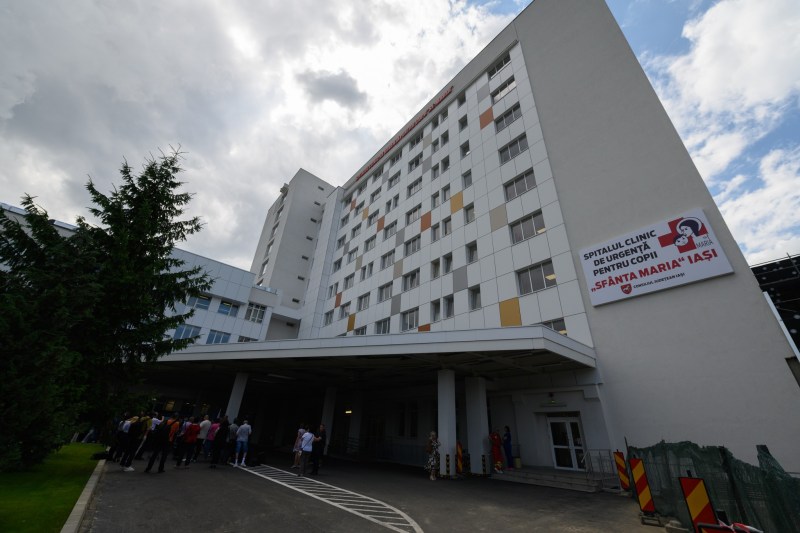
Emergency Clinical Hospital for Children “Sfânta Maria” Iasi Photo: Facebook.com
The water in the Emergency Clinical Hospital for Children “Sf. Maria” in Iași is non-compliant, according to the analysis reports sent to the Ministry of Health by the Iași Public Health Directorate on Thursday. The bacterium Pseudomonas aeruginosa (Piocyanic) was identified in several samples, and the Minister of Health, Alexandru Rogobete, announced that he is moving to Iasi to coordinate the intervention.
“On 12.12.2025, the analysis bulletins issued by DSP Iași were received, following the collection of water samples from the sanitary unit – the Emergency Clinical Hospital for Children “St. Maria” in Iași. The results indicate the following non-conformities”, the Minister of Health said.
According to official information:
- “7 out of the 8 analyzed samples were inadequate for the free residual chlorine parameter, the recorded values being below the minimum allowed limit”;
- “6 of the 8 samples were inadequate, exceeding the reference values for the total number of mesophilic bacteria”;
- “in 6 of the 8 samples, the presence of Pseudomonas aeruginosa bacteria was identified, in values above the allowed reference threshold”.
Alexandru Rogobete announced that he is on his way to Iasi to manage the situation at the local level.
A crisis cell was established at the level of the Ministry of Health. “The children's emergency hospitals in Bucharest – “Grigore Alexandrescu” and “Marie Curie”, the Suceava County Emergency Hospital, as well as other health units, were included, in the event that the transfer of some patients will be required,” the relevant minister said.
At the same time, DSP Iași was ordered to microbiologically test patients and medical staff. “We have ordered the microbiological testing of patients and medical staff, in order to prevent any epidemiological or microbiological risk”, stated Alexandru Rogobete.