“Solidarity Independence”. How Romania can turn a historical opportunity into an industrial strategy for national security

Romania has a unique strategic opportunity to modernize its defense industry. “Solidarity Independence” calls for investments in technology, innovation, exports and a unified industry-army-administration-academy-media ecosystem.
A moment of crossroads for Romania
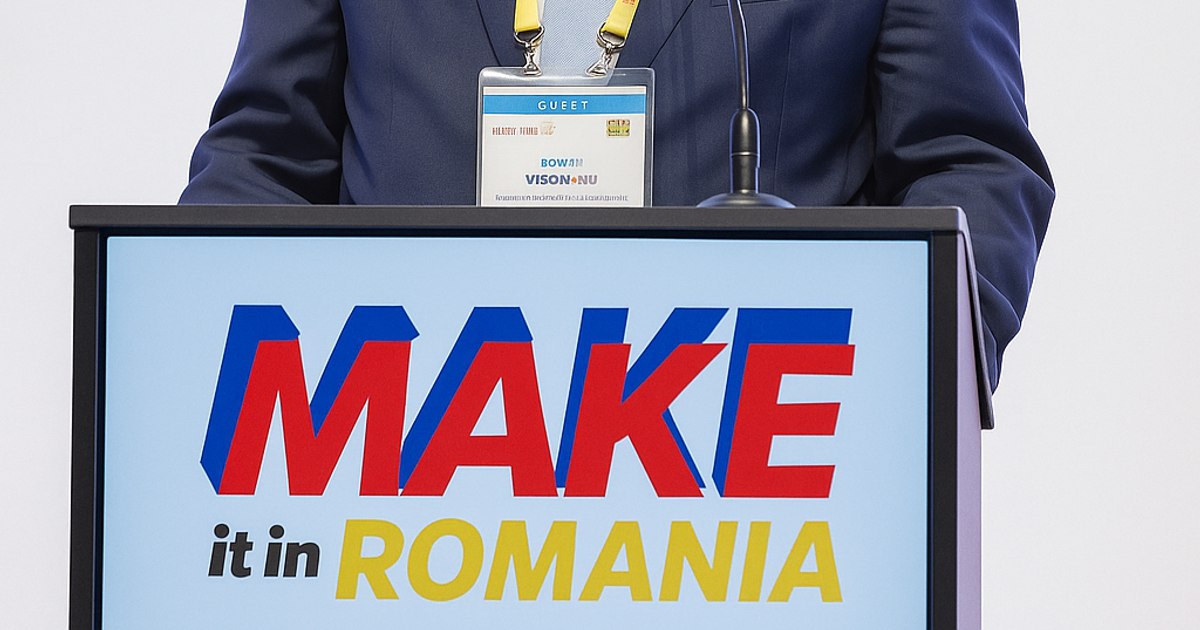
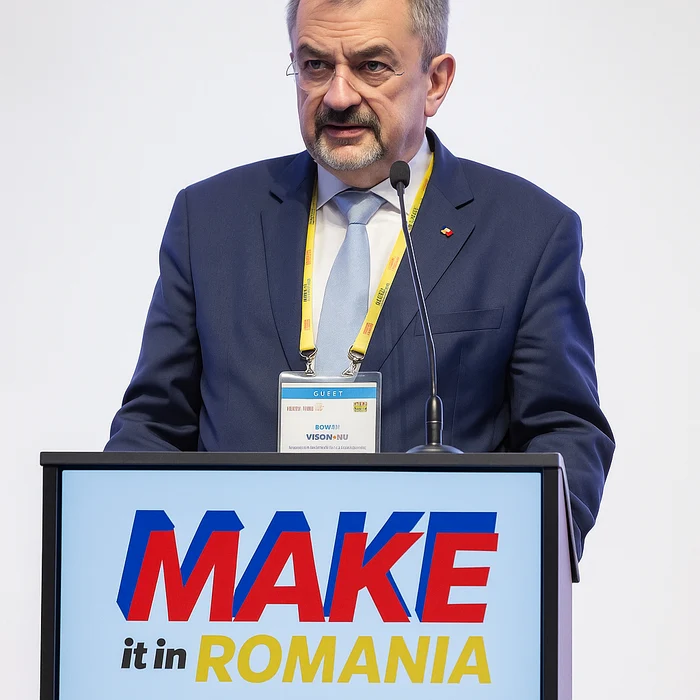
The “Make it in Romania” conference brought together over 800 participants from 23 countries – a clear signal that Romania is entering a new strategic stage. In an unstable global context, with a growing demand for defense capabilities, with Europe in full process of reindustrialization and with NATO looking for credible partners on the Eastern Flank, Romania is facing a historic opportunity. An opportunity that, if not capitalized on now, may never come again.
In recent years we have witnessed a tectonic shift in the global security architecture. As some states regroup, others are accelerating investments in critical technologies, logistics, applied research, and manufacturing capabilities.
Romania, through its geopolitical position and through its still insufficiently exploited industrial potential, can become a central actor in this transformation. But this perspective will not materialize by itself. It requires vision, consistency, speed and above all the courage to abandon outdated models.
“Solidarity Independence”: the concept that should define the national strategy
The new National Defense Strategy introduces a concept with deep resonance: Solidarity Independence. It is an inspired wording – Romania cannot be independent outside the NATO architecture, and NATO cannot be solid without its member states having real industrial capabilities.
This concept poses an essential question:
Can Romania act as a pillar of regional security as long as it imports 70% of essential military equipment and is heavily dependent on foreign suppliers for ammunition, electronic systems and critical technology?
The answer is obvious: not.
The problem is not only technical. It is a problem of vision, commitment and administrative capacity. In the absence of a modern industrial base, Romania risks remaining a security consumer, not a security provider. And in a volatile geopolitical environment, overdependence becomes strategic vulnerability.
From survival to accelerated industrial reconstruction
My operational experience in the industry – from Moreni or Dragomirești to projects aligned with NATO standards – showed me the same thing: the difference between ambition and reality is not made in strategic documents, but in factories, laboratories and test spaces.
Romania cannot continue at the current pace. The defense industry needs an urgent transition from survival to dynamic reconstruction. For this, three immediate, clear and quantifiable lines of action are needed.
1. Massive and accelerated re-engineering
The modernization of the Romanian defense industry cannot be stopped in the pilot zone, incomplete projects or political announcements without finality.
It takes:
· modern production lines for smart munitions, anti-UAS and electronic systems;
· real digitization and automation, not just in reports;
· the integration of NATO standards in all industrial processes;
· testing, validation and rapid prototyping centers.
Without these elements, any strategy becomes just a rhetorical exercise. The Romanian industry must be able to deliver not only components, but complete and competitive solutions.
2. Romania's integration into European production chains and the expansion of strategic exports
Foreign markets are not closed to Romania. Central Europe, Middle East, Africa and Central Asia are looking for reliable suppliers with fast delivery capability. Romania has the necessary skills, but lacks the tools.
To succeed, they are essential:
· type agreements Government-to-Government (G2G);
· offensive economic diplomacy, not passive;
· attachés specialized exclusively in the defense industry;
· modern financial mechanisms for exports.
The Romanian government must become the main economic diplomat of the Romanian industry. Without this support, competitiveness remains limited.
3. Rebuilding applied research and accelerating innovation
Innovation is not a luxury for the defense industry – it is a condition of survival. Romania has high-performing universities, research institutes and a solid tradition in engineering. The problem is the lack of a framework to connect research with production.
The proposed solution is clear:
· directing a 30% of the national research budget towards public-private partnerships with Romanian companies;
· rapid prototyping and accelerated testing centers;
· integrated programs with technical universities and NATO structures such as DIANA, EDF or NIAG;
· the radical simplification of the current bureaucracy.
Without innovation, Romania risks becoming an industrial museum in a world in continuous technological transformation.
The Pentapartite Ecosystem: the only model capable of delivering fast results
I have constantly supported a concept that I believe can fundamentally change the way Romania approaches industrial security: The Pentapartite Ecosystem.
This model integrates:
1) industry, (2) military, (3) administration, (4) academia, (5) mass media.
It is a “hand of steel”, in which every finger has an essential role:
·
Industry
they must innovate, not just follow orders.
·
Army
must provide immediate operational feedback.
·
academy
must produce frontier technology.
·
Media
must rebuild public confidence in the role of the defense industry.
·
administration
it must facilitate, not block.
This model is not a metaphor. It is a practical and necessary solution. In 2025, security is no longer the responsibility of a single institution, but a collective effort. The speed of collaboration will determine Romania's ability to remain relevant.
Public procurement – from an obstacle to a strategic tool
One of the industry's biggest roadblocks remains bureaucracy. A project that in the private sector is completed in 6 months ends up taking 3 years in public procurement. This discrepancy is not just an administrative problem – it is a strategic vulnerability.
Smart purchases are:
· an investment in security,
· an innovation accelerator,
· an industrial development tool.
Romania needs national consortia, digital processes, transparency and predictability. Time has become the critical security resource.
The proposed solution: an Industrial Council for National Security
Romania needs an informal, permanent, functional platform – not new bureaucratic institutions.
A Industrial Council for National Security can become the space where:
· the industry asks the army what it needs in 18 months, not in 10 years;
· the military asks the industry what it can deliver quickly;
· international partners find coherence in Romania's position;
· skills align in a real collaborative ecosystem.
This structure would eliminate strategic monologues and replace them with practical, results-oriented dialogues.
A strategic imperative: “Make it in Romania”
“Make it in Romania” is not a slogan, but a strategic imperative. TNT Production has demonstrated in two decades that Romania can deliver to international standards. BSDA has become a global benchmark in the defense industry.
Romania has the resources, skills and geopolitical position to become a regional center of production, innovation and security. But this leap cannot be made piecemeal. Only an integrated ecosystem can turn potential into performance.
Conclusion: The future is being built now
Proximity warfare compressed times. Emerging technologies, from drones to artificial intelligence and cybersecurity, develop in accelerated cycles. Romania must respond with the same speed.
Solidarity Independence is not an abstract ideal, but a technological and industrial equation that requires immediate action.
For Romania, the dilemma is no longer there if
it must transform, but how fast he can do it. This conference is just the beginning. The future of Romanian industry is being decided now.
And the future of national security depends on how we turn this opportunity into a sustainable, coherent, and courageous strategy.