Brussels is asking for a reduction in energy prices, but in Romania taxes are blocking the reductions


In recent years, the energy market in the European Union has gone through major fluctuations. After periods when gas and electricity prices reached record highs (especially in 2022), costs in the wholesale markets have now started to fall. However, this situation is not fully reflected in final consumer bills.

In this context, Ursula von der Leyen and the European Commission draw attention to the fact that production prices have returned to more stable levels, but bills have remained high in many member states due to the level of taxes, excise duties and other mandatory contributions imposed at national level.
Thus, the Commission encourages the governments of EU countries to temporarily or permanently reduce certain taxes, recalibrate excise duties, eliminate unjustified surcharges and help households and companies benefit from lower energy prices in the market.
“On the wholesale market (suppliers' market), gas and electricity are cheaper than during the crisis, but the charging structure differs from one Member State to another. In some countries, governments have increased taxes and contributions to cover budget costs, finance the energy transition (renewables) and compensate for support schemes granted during the energy crisis”, said energy expert Dumitru Chisăliță, president of the Intelligent Energy Association (AEI).
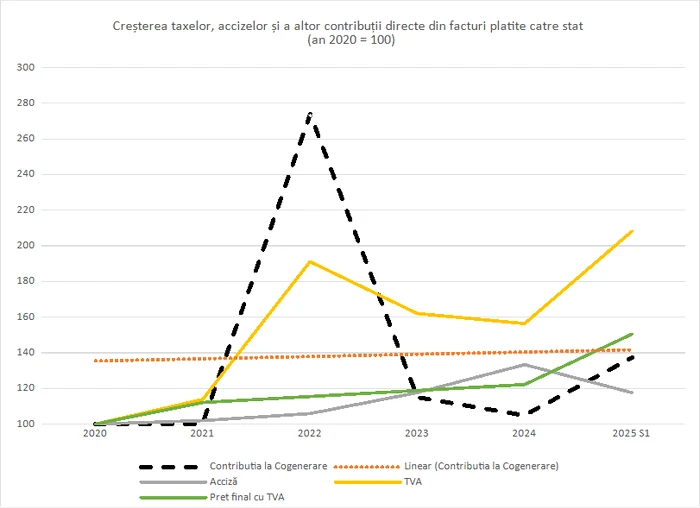
Romania has too high taxes in energy bills
Therefore, the expert added, the final consumer does not feel the real decrease in the cost of energy, because:
• the amount of VAT paid by household consumers in the invoice increased 4 times compared to 2020;
• the value of the excise duty paid by household consumers in the invoice increased by 0.2 times compared to 2020;
• the value of the cogeneration contribution paid by household consumers in the bill increased 2 times compared to 2020;
• the value of green certificates paid by household consumers in the invoice increased by 0.1 times compared to 2020.
The European Commission suggests that the effort for energy affordability should not be limited only to the market mechanism, but also to the fiscal policy of the member states.
Recommendations of the European Commission
The European Commission's recommendations include: reducing VAT on energy (where possible), reducing taxes that are not strictly necessary, reassessing the contributions imposed on consumers and harmonizing taxation between member states to avoid imbalances.
The goal is for citizens and businesses to actually feel the drop in market prices. For this, it is necessary to start from the clear identification of the components in the invoice that can be reduced without affecting the safety and quality of the products or services, but which also determine an important reduction in price.
Estimation of the share of natural gas/electricity price components in the average price to the final consumer including VAT based on reports published by production, transport, distribution and supply companies for semester 1 2025.

“Even if the increase in labor productivity and the efficiency of expenses are particularly important, they bring the smallest contributions to the reduction of costs and possibly the price of gas and energy. The reduction of taxes and excises is the measure that can really significantly and immediately reduce the price to the final consumer.
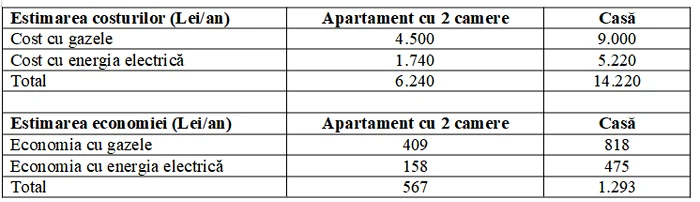
A halving of the VAT on gas and energy bills would reduce expenses by 600-1300 lei for a building”, explained the energy expert, adding that this measure should be doubled by directing part of the revenues collected by the state to be used to protect vulnerable consumers.