Romania, heavily exposed to disinformation campaigns. Nicușor Dan: “It bothered me the most”


President Nicușor Dan drew attention, on Tuesday, during the summit for digital governance, that although the Romanian state is “pretty good” in terms of cyber security, it remains highly exposed to disinformation campaigns. The reason: the lack of automatic mechanisms for detecting manipulations, but also communication “unstructured” of state institutions.
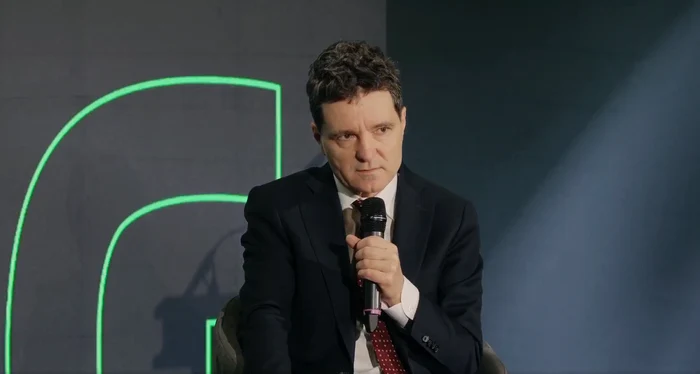
Dan also spoke about the difficulties encountered. PHOTO: Facebook video capture/Nicușor Dan
Asked how he sees the integration of technologies in the National Defense Strategy, the president emphasized that quick reaction is essential.
“If we come strictly to the technology area, here you need to detect a disinformation campaign in real time, automatically, because that way you don't have enough people to collect all the things that can be said, so you don't leave time for a campaign to become the truth for an important part of the population and you succeed in the communication of the state institutions, which must tell their truth, to be coordinated and have an impact”, said Nicușor Dan.
He also criticized the lack of impact of institutional communication: “A statement from the Ministry of Defense I don't know if it reaches 1-2 thousand of the population.”
The head of state explained that disinformation strikes all the more strongly as Romania has lost its reliable benchmarks. Neither the political leaders nor the institutions nor the media have the necessary authority to stop the manipulations.
“What is disinformation in fact? It is a deviation from a reference. The question is: what is the reference? Because normally some things are said, in theory, in a democracy, and a political leader comes along who has the trust of the citizens and says 'it's not like that', or a media trust comes along who has the trust of the citizens who says 'it's not like that' and that disinformation goes away. The problem is that we no longer have the reference or it is greatly diminished. Who has the trust of the citizens to say: “it is not so”? the president pointed out.
He added that regaining public trust is a long-term process and is not about technology, but about how state institutions and the media do their job.
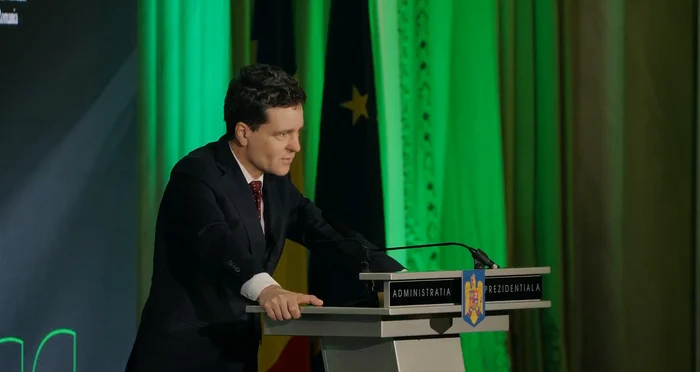
N. Dan at the Digital Governance Summit 2025. PHOTO: Facebook video capture/Nicușor Dan
“I don't know if shocked is the word, but it bothered me the most”
Nicușor Dan also spoke about the difficulties encountered since taking over the mandate, showing that one of the biggest problems of the administration is the incoherence and lack of coordination between the institutions.
“During the time I spent here, this was the thing that somehow – I don't know if shocked is the word, but it bothered me the most, that often the information you receive from different areas is different or differs from one month to another and it's not normal, because there is no structure and collaboration between institutions so that the information you need to make decisions is put in a structured, organized and stable way”, he said.
The interface with citizens and the business environment, still deficient
Another sensitive point pointed out by the president is the digital interaction between the state, citizens and the business environment. Public online platforms and services are difficult to use and poorly integrated, which affects the efficiency of administration.
The President announced that the new National Defense Strategy, which will be presented to the Parliament on Wednesday, contains passages inspired by the proposals received during the public debate.