“This is not only part of the story, but also identity.” Anniversary of the Warsaw Ghetto Uprising

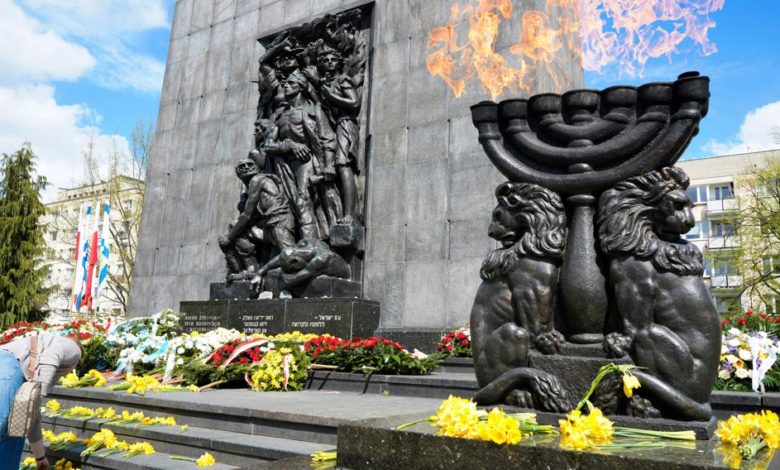
The ceremony at the monument to the Heroes of the Warsaw Ghetto was celebrated on Saturday, the 82nd anniversary of the outbreak of the Warsaw Ghetto Uprising. The words of Marian Turski were recalled: “In 1943, the insurgents from the ghetto transformed the streets surrounding us into Jewish thermopylae.”
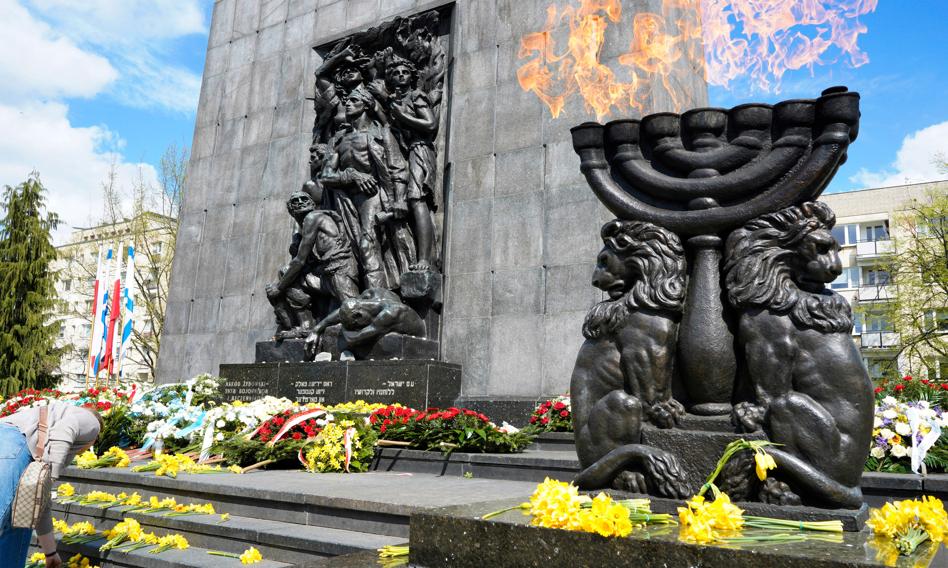
The commemoration ceremony of the 82nd anniversary of the outbreak of the Warsaw Ghetto Uprising began on Saturday at 12.00 howling alarm sirens. The main part of the celebrations at the monument to the Heroes of the Warsaw Ghetto was attended by representatives of the Jewish community, veterans, righteous among the nations, representatives of state and local authorities, diplomats, representatives of Polish cultural institutions and residents of the capital.
A fragment of the memories of Civilian Lubetkin, a co -founder of the Jewish Combat Organization, was read by the actor, the actor, actor Andrzej Ferenc: “My group had about 30 people, armed with several rifles, pistols, grenades, bombs of our own production and many bottles with Molotov cocktail. He attacked the enemy. Stronger.
The words of the deceased in February this year were also recalled. Marian Turski, which he said during the celebration of the 80th anniversary of the uprising of the insurgent uprising.
“Our civilization has adopted at least a dozen symbols of resistance and heroism. I have the right to say that in 1943 the insurgents from the ghetto transformed the streets surrounding us – goose, nice, low, muranowska – into Jewish thermopylae, in the repeated Jewish Masada, in Jewish Westerplatte,” said journalist, historian Auschwitz.
Ferenc also read the poem “Weekly DAY” Polski Braun – poet and composer, co -creator of “Living Dziennik” presented in the “Art” cafe in the Warsaw Ghetto. The poet describes in it, as the actor noted, “dilemmas and hopes from the bottom of hell”: “It started with this/ that in the morning I had a headache/ and then these various rumors/ and the mood is still new/ and then anxiety some strange/ mixed with great fear/ and blunt resignation/ actually what? For who? When one more/ and I don't want to die/ on the contrary, I really want to live. “
“The memory of the Warsaw Ghetto Uprising is not only part of our history, but also part of our identity (…) is also a warning and commitment. As a heir to this story, we have a duty to watch that such evil never repeat. – emphasized Ferenc.
The celebrations ended with a prayer for the dead “El Male Rachamim”, which was refused by Meir Hoss, son of the survivors from Otwock, and Kadisz refused by Rabbi Stas Wojciechowicz. Flowers and wreaths were also laid at the monument to the Heroes of the Warsaw Ghetto.
After the ceremony at the monument, the Memorial Memorial of the Insurgents started, going to: the monument of Żegota (pl. Heroes of the Warsaw Ghetto), Schmula Zygielbojma album (ul. Edelmana 6), Bunra Anielewicz (Horn of Military and Dubois). Its participants laid flowers at memorial sites. The celebrations ended at the monument to Umschlagplatz (ul. STAKI 4/6).
KE boss: The heroes of the Warsaw Ghetto fought for freedom and dignity
The heroes of the Warsaw Ghetto Uprising fought for freedom and dignity in the face of an unimaginable nightmare – emphasized the chairwoman of the European Commission Ursula von der Leyen, on the occasion of the 82nd anniversary of the insurgent uprising.
“The heroes of the Warsaw Ghetto Uprising fought for freedom and dignity in the face of an unimaginable nightmare. Like many people all over Poland, we have daffodils with each other to celebrate the memory of their courage,” von der Leyen wrote in social media.
“The memory of them makes us oppose anti -Semitism and hatred in every form” – emphasized the head of the EC.
Jad your: Uprising in the Warsaw Ghetto became an example, inspiration and symbol
The insurgents of the Warsaw Ghetto had no illusions, they saw what awaited them, but they decided to fight, which became an example, inspiration and symbol – wrote the Jerusalem Institute Jad Was. On Saturday, the 82nd anniversary of the outbreak of the Warsaw Ghetto Uprising is celebrated.
“When the Germans entered the ghetto, they were attacked by fighters. The insurgents, despite the minimal stocks, for nearly a month resisted one of the world's most powerful army at the time, which had an overwhelming numerical and hardware advantage” – the Israeli institution reminded on social media.
Uprising in the Warsaw Ghetto – History
In 1940, the Germans fenced the wall of the center of Warsaw and crowded almost half a million Jews from the capital and the surrounding area. On the night of April 18-19, 1943, on the Pesach Festival, the Warsaw Ghetto surrounded German military troops. In the morning, the Germans entered the ghetto with the intention of its final liquidation. Members of Jewish armed organizations – the Jewish Combat Organization (ŻOB) with its commander Mordechaj Anielewicz and the Jewish Military Association (ŻZW) commanded by Paweł Frenkel and Leon Rodel, stood up to the fight for human dignity.
“The only thing we could do in that situation was to oppose the Germans, knowing that death awaits us at the end of the road. It was the only certain thing. There was no illusion, we didn't even have such a thought that we could survive. Nobody dreamed about it. Neither at the beginning of the Uprising or later” – recalled Symcha Ratajzer Rot. “Kazik”, a member of the Jewish combat organization.
On May 8, Anielewicz and several dozen insurgents were surrounded and committed suicide. Few Jews managed to get the channels out of the burning ghetto. On May 16, 1943, the Germans blew up the great synagogue at ul. Tłomackie. The Warsaw Ghetto ceased to exist.
The deputy head of the Ministry of Foreign Affairs invites you to participate in the Action Dawkile
The deputy head of the Ministry of Foreign Affairs Władysław Teofil Bartoszewski invited Poles to participate in the action, which takes place on April 19. Marek Edelman, the hero of the Warsaw Ghetto and all murdered Jews, also mentioned on the website X. Representatives of the US embassy in Warsaw also wiped some insurgents and victims.
The action began 13 years ago, in order to commemorate the anniversary of the first armed uprising against Nazi Germany in Europe, which broke out on April 19, 1943 in the Warsaw ghetto – reminded Bartoszewski on a recording placed on the website X on Saturday.
“On this 82nd anniversary I remember the last living leader of the Jewish combat organization Marek Edelman, whom I met when I was four and a half years old. I was run for one hand by Marek Edelman, for the other by my father and we walked through the area of the former ghetto” – said the deputy minister.
“We remember all Jewish victims and Polish Jews who were murdered here and therefore we wear yellow daffodils” – he pointed out and added that all Polish and Israeli diplomats do it today. “I encourage all Poles to do the same,” he noted.
Representatives of the United States embassy in Warsaw also worshiped the insurgents. On the embassy profile on the X website, a photo of three diplomats has been published, holding yellow daffodils. “We remember those who died and confirm our commitment to nurture memory, for the truth and to fight anti -Semitism” – it was emphasized and added that the daffodil is today a symbol of “resistance, memory and a constant call to objection to hatred.”
The daffodil action is part of the celebration of the anniversary of the outbreak of the Warsaw Ghetto Uprising. On April 19, museum employees, volunteers and volunteers as well as schools, libraries and institutions throughout Poland will remind you of events from 82 years ago. On this day, in Warsaw and other cities in Poland and in the world, volunteers will traditionally give passers -by paper daffodils.
From Jerusalem Jerzy Adamiak
pj/ bar/ pcs/ joz/