Bolojan's adviser: “We don't have the resources” to significantly reduce fuel prices for everyone. What solutions are analyzed

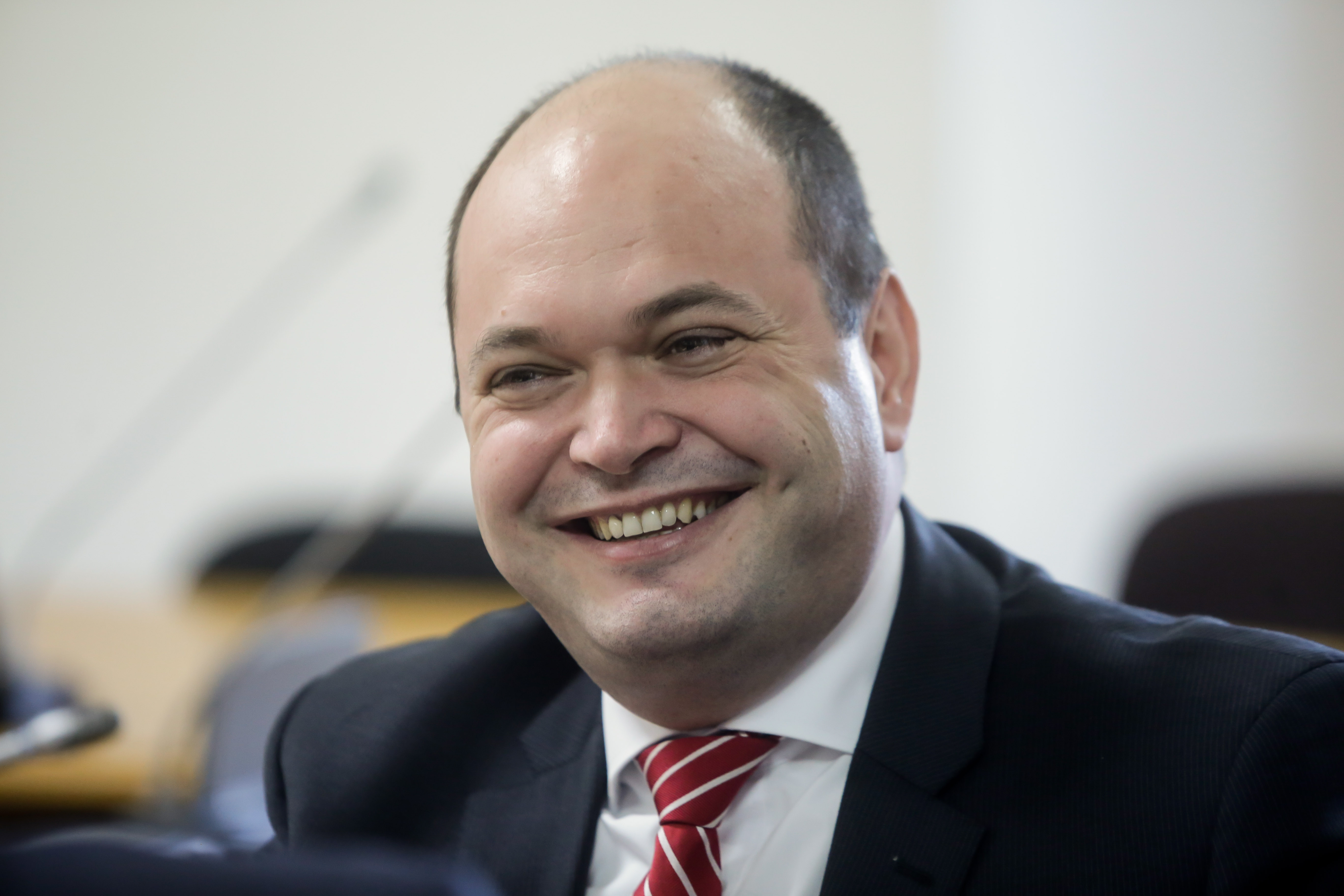
Prime Minister Ilie Bolojan's adviser on economic issues, Ionuț Dumitru, said on Friday, on Digi24, that the Executive does not have the resources to significantly reduce the price at the pump “for everyone”.
“We all know that we have a very serious budget constraint, we have to reduce the budget deficit this year to 6.2% of GDP. So any measure we can discuss at the moment must take into account this budget constraint,” said Dumitru.
“We must understand that the state has money from the taxes it collects. In order to allocate larger sums for refunding or reducing the excise duty, you have to reduce from elsewhere, because you have no other budget sources. The budget deficit is still very large. We can imagine many scenarios, but they must face the budget reality. The budget reality is a very clear one: we have a budget deficit of 6.2% of GDP and we have to fit into it, because we don't have other resources,” the councilor continued.
According to him, the already existing measures, such as the partial reimbursement of excise duties for agriculture and transporters, cannot be extended to the entire population.
“Of course, when we have a very fast increase and the consistency of the price at the pump, everyone is worried and everyone is thinking about what the state can do to reduce this effort that every citizen makes. All the solutions that we can have within the limits of the budget we have approved must be analyzed, but the expectations that the state can significantly reduce the price at the pump for everyone, in my opinion, are not realized, because we do not have the resources to do it,” said Dimitru.
Among the analyzed solutions is a flexible excise tax, adjusted according to the price of oil, but also the capping of the commercial addition.
“Flexible excise duty basically means a reduction of excise duty depending on the oil price level. This solution is being considered, because we do not know where the price of oil stabilizes. One is to stabilize at $80/barrel, another at $150/barrel. The capping of the commercial addition must be analyzed and see what budgetary resources we have available and how we can use them most rationally,” explained the councilor.
“Until we have more clarity about what is happening with the price of oil on the international markets, it is difficult to imagine solutions, especially in a budget with very large constraints”, Ionuț Dumitru also said.
Bolognese: “An attempt to corner the market can lead to shortages”
On Friday, Prime Minister Ilie Bolojan discussed the fuel market situation with representatives of several ministries, as well as the Competition Council and ANAF, announcing that at the end of the week they will continue checks to see how prices are formed, to avoid speculative increases.
“They are not easy decisions to make, because the dangers between which we have to act are multiple, in the conditions where we cannot control the price at which crude oil enters the market, and the supply chains are disrupted. An attempt to abruptly disrupt the market, through an arbitrary price ceiling, can lead to shortages. On the other hand, a decrease in excise duties must guarantee a price reduction and be bearable by the budget voted today for 2026, under the conditions of deficit reduction”, explained Bolojan.
The National Agency for Fiscal Administration (ANAF) announced on Thursday that it has started checks at the national level on the entire distribution chain, from importers and warehouses to final fuel traders, in the context of rising prices. The inspectors verify suspicions of tax fraud and practices that may affect the fairness of the market, and if they find speculative practices, they will notify the competent institutions.
The number of EU countries taking action to keep pump prices under control is increasing
Spain wants to cut the Value Added Tax (VAT) applied to fuel products from 21% to 10% as part of measures to ease the economic impact of the war in the Middle East, SER radio reported, citing sources familiar with the plans, according to Reuters.
Madrid's government is expected to unveil its plan of measures a day after Italy's announced it had set aside around 417.4 million euros to cushion the impact of cutting fuel excise duties until April 7.
The measure, already taken through a decree published in the Official Gazette of Rome, reduced excise duties on gasoline and diesel from 672.9 euros for 1,000 liters to 472.90 euros.
The government intends to cover the cost of the excise duty reduction through spending cuts, the decree also states.
On Wednesday, Austria's government announced it would temporarily cut taxes on gasoline and diesel and cap earnings for fuel retailers such as OMV (which owns about half of the country's gas stations) to protect consumers from skyrocketing oil prices caused by the conflict with Iran.