This has never happened in Germany before. A smiling AfD politician goes for victory


This text was created as part of the Axel Springer Global Reporters Network project, of which Onet is a part.
Just before Christmas Ulrich Siegmund shows in the state parliament of Saxony-Anhalt how to turn failure into success.
— No one should be forced to pay for disinformation! – shouts the young chairman of the AfD parliamentary club from the podium. This is, of course, about the German public media. The Siegmund faction demands that the parliament terminate state television contracts. ARD and ZDF – “one” and “two” – should be smaller and are supposed to finally report events objectively, “without indoctrination, without all this nonsense.”
The 35-year-old gives one example program titled “Radical Christians in Germany: Crusade from the Right”. “Everyone knows this feeling,” he says. — You're sitting on the train and you think: I just wish no radical Christian would sit next to me!
The AfD faction bursts into laughter. Even one of the CDU MPs cannot contain his amusement.
The speaker is tall, slim and photogenic. Graying hair slicked back, facial hair trimmed with precision. He wears a white shirt and a pocket square with a fitted navy blue suit. Often, even when he goes on the attack, there is a slight smile on his face.
Siegmund's proposal, not surprisingly, has no chance of success. One of the Christian Democrats praises the local branch of public television as a “trustworthy institution”, to which the AfD benches shout: “Yes, for you!” Ultimately, 16 people voted for the motion and 66 against it.
Failure – but only at first glance. The parliament in the capital of Saxony-Anhalt, Magdeburg, is not the most important stage for Siegmund. Shortly after the speech, he publishes a fragment of it on his social media. Headline: “This is how they want to manipulate us.” He has over 600,000 followers on TikTok. people, on Instagram and Facebook, nearly 300,000 each.
A video criticizing public television wins many hearts. “I dream of an absolute majority for AfD,” writes one fan. This dream may come true soon. Siegmund, a former CDU member, has a real chance of winning for the AfD the first victory in Germany at the level of the state authorities. He may win in such a way that it will be impossible to create any coalition, even the most exotic one, without the participation of his party.
In autumn, support for the AfD in Saxony-Anhalt reached 39 and even 40 percent for the first time. in the polls. If it increases by another two or three percentage points, Siegmund could win an absolute majority in the landtag in Magdeburg in the elections on September 6 and take over the office of Prime Minister in the stately Palace on Fuerstenwall. The key will be how many parties do not exceed the 5% threshold. The votes cast for them will then be lost. For the liberals from the FDP and the Greens, the situation looks bad, but the Social Democrats (SDP) and the Sahra Wagenknecht Alliance (BSW) also have something to fear.
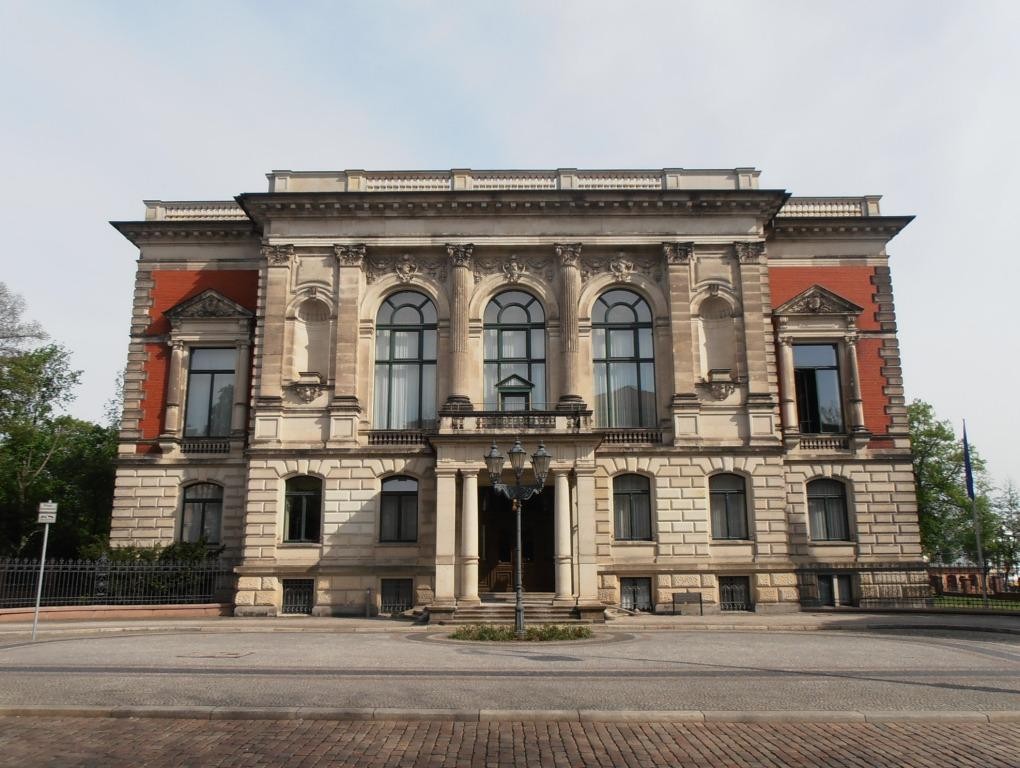
Fuerstenwall Palace in Magdeburg, seat of the Prime Minister of Saxony-AnhaltWikipedia
All the insiders I interviewed for this article – leaders, right-wingers, political rivals and entrepreneurs – agree on one thing: Siegmund has something that the AfD has lacked so far. The word “charisma” appears often.
“There's something compelling about Siegmund”
Prime Minister Siegmund would not only transform Saxony-Anhalt with its just over 2 million inhabitants, but would influence the entire Federal Republic. This would be a failure of the “everyone against AfD” model.. Or, as many fear, the beginning of the end of German democracy. However, this view is not shared by my interlocutor, Peter Nitschke.
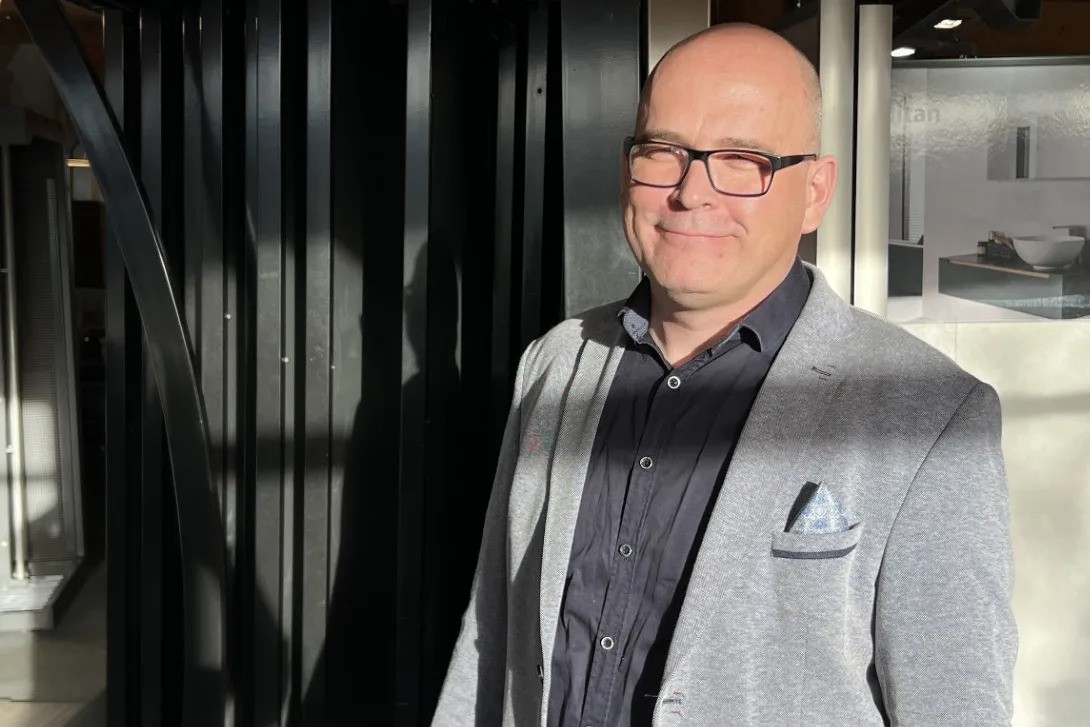
Entrepreneur Peter Nitschke, president of the Saxony-Anhalt Construction AssociationMarc Felix Serrao / Welt
“I wouldn't want a prime minister from the AfD,” admits the president of the Construction Association in Saxony-Anhalt during a conversation at his company in the Harz Mountains. – But if Mr. Siegmund rules, I will have to come to terms with it. AND I will definitely not leave my hometown because of this – he assures. And it was precisely such an “escape” from his state in the event of an AfD victory that the Christian Democrat Reiner Haseloff, the outgoing Prime Minister of Saxony-Anhalt due to his age, threatened.
Nitschke grew up in the GDR. His best time was the years after German reunification. “It seemed like anything was possible,” he says. But the spirit of freedom has disappeared. “Germany has become bureaucratic and fearful,” explains Nitschke. He sees the increase in support for the AfD as a consequence of the “left turn” of all other nationwide parties. Unfortunately, also his own. Nitschke has been a member of the CDU for years.
There is no political firewall in his daily life. “If I had to exclude all AfD voters and members, I wouldn't build any more swimming pools,” he says. His union of tilers, carpenters and road workers would collapse in this state.
The article continues below the video
What Nitschke tells is very different from what the inhabitants of western Germany and Berlin are used to. There, whenever someone dares to question the AfD's isolation – as the Union of Family Entrepreneurs recently did very carefully – a wave of indignation immediately follows. So far everyone has succumbed to this pressure. In eastern Germany, as Nitschke says, this fear no longer exists.
The entrepreneur recently met the AfD candidate during a “dialogue with organizations” in November in Magdeburg. All the heads of the Landtag factions were then invited – “of course also Mr. Siegmund”. There were lectures and something like express business meetings. Three tables attracted the greatest interest: CDU, FDP and AfD.
“Siegmund has something convincing about him,” says Nitschke. And explains: the AfD politician learned from his previous positions how to build relationships. Siegmund worked in sales. Even before obtaining an economics diploma, at the age of twenty, he founded a company producing interior fragrances, where he is still a silent partner.
Something is happening in Magdeburg that would be unthinkable in Berlin
– Are you from Hanover? That's interesting! — the AfD candidate greets the undersigned with a broad smile. This is, of course, a joke: the capital of Lower Saxony usually tops rankings of the most boring cities in Germany. Still, the party is endearing.
And that's how the conversation goes. There are questions about reconciling private life with politics. Siegmund's wife works at a school and he is the father of a little daughter, so he asks me about my family. When he tells me that he goes to the gym twice a week and that he once ran a half-marathon in just over an hour and a half, he asks curiously what sport I practice. Several German politicians have mastered this “embracing” strategy. But in the AfD? There, journalists are usually treated with distrust and even hostility.
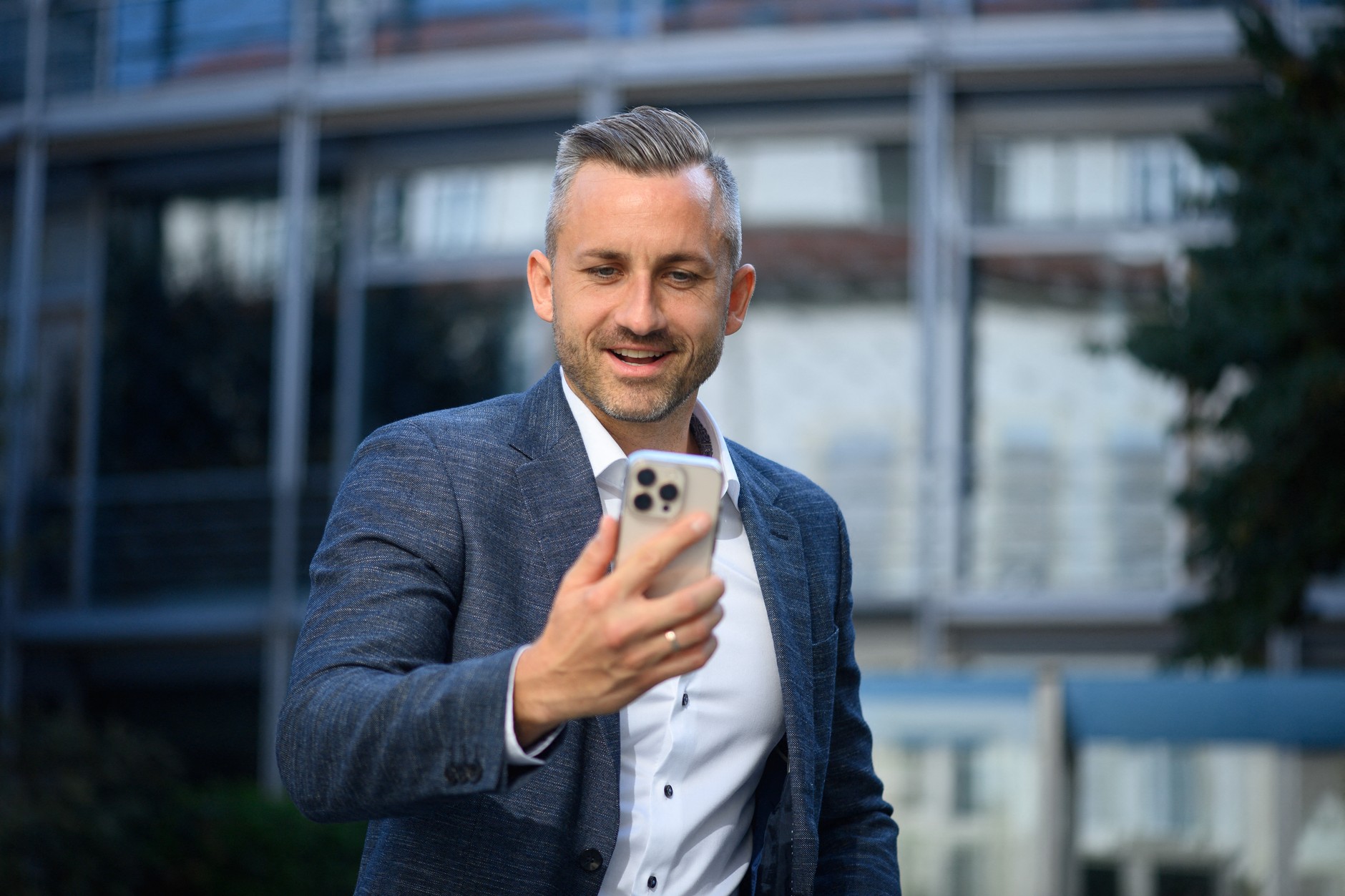
Ulrich Siegmund, leader of the AfD faction in the state parliament of Saxony-Anhalt. Magdeburg, August 14, 2025KLAUS-DIETMAR GABBERT / DPA / dpa Picture-Alliance via AFP / AFP
Even when he wants to, Siegmund talks about political competition without malice. He believes that it is possible to reach “very reasonable” agreements with the FDP faction in the landtag. Also in the CDU, “80 percent of people” are OK. When he meets his colleagues in the corridors of parliament, he greets them normally. In other parts of Germany, especially in the Bundestag, such a relationship would be unthinkable.
“Provides fewer opportunities for attacks”
— During the coronavirus pandemic, I realized what a hidden talent Siegmund has, says his parliamentary club co-chairman, Oliver Kirchner, who is 24 years his senior. — This is indeed a visually good candidate, and it gives fewer opportunities to attack.
Kirchner, short and bald, in the state parliament slams “communists for open borders” and “the chancellor for electoral lies”, almost without interrupting. He rarely takes his eyes off the page and at most gives a short, dark smile. He was number one on the list in 2021. Then, for the first time in the history of elections in the eastern federal states, AfD lost support: from 24.3 to 20.8 percent It was a shock for right-wing voters accustomed to success. Soon after, Siegmund came to the fore.
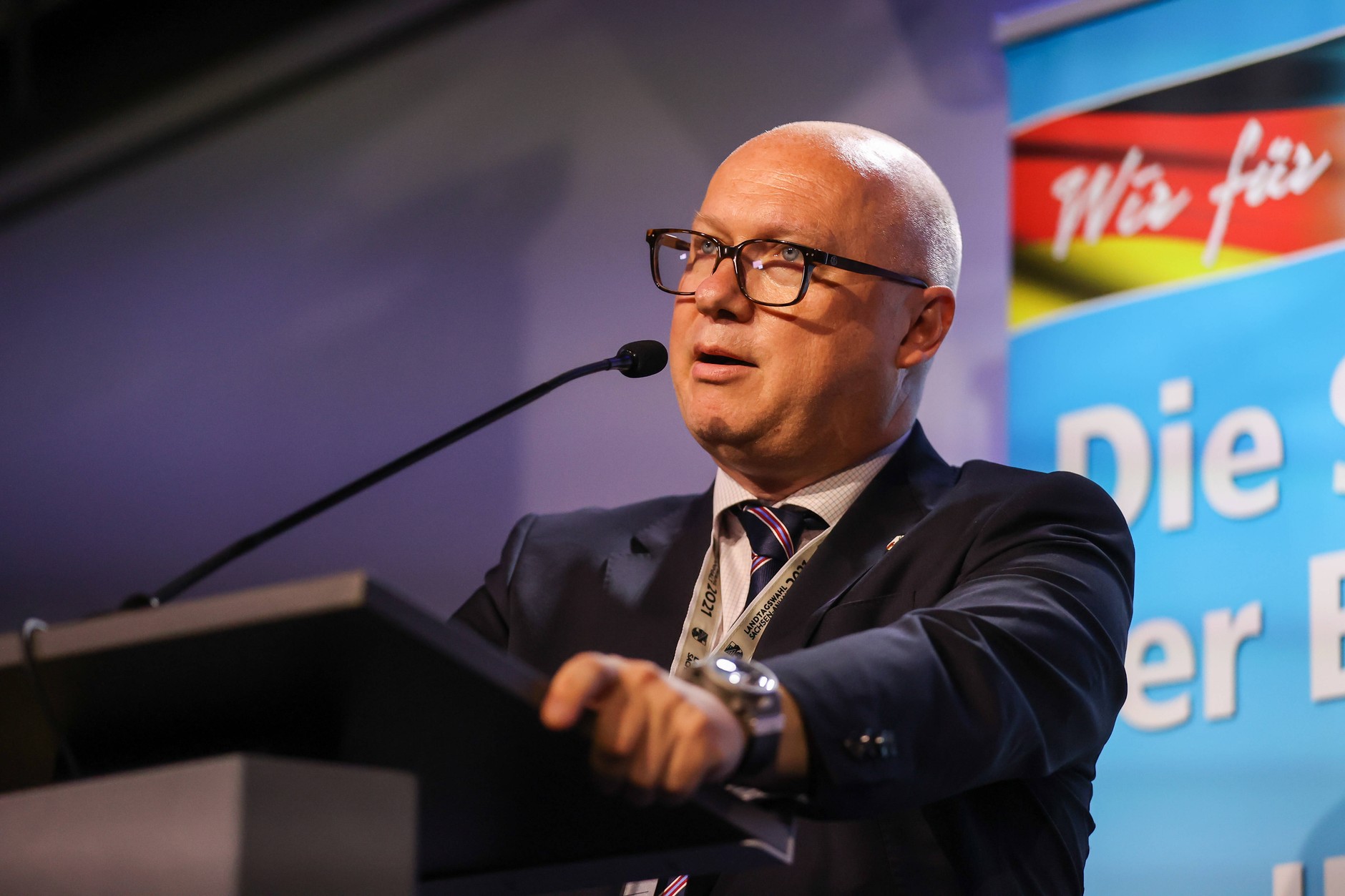
Speeches by Oliver Kirchner from AfD after the announcement of the exit poll. Magdeburg, June 6, 2021Jan Woitas/dpa-Zentralbild/dpa / PAP
When it is said today that the party is going from victory to victory with its main candidate, this is not entirely true. It would be more accurate to say: it is Siegmund who succeeds despite his own party structures. The party's branch in Saxony-Anhalt, considered “definitely right-wing extremist” by German counterintelligence, has repeatedly been a source of unrest.
“It's gold for Saxony-Anhalt”
A CDU politician who wants to thwart Siegmund's plans and become prime minister himself sits at the conference table in the state parliament with his legs stretched out after a long day of deliberations. Sven Schulze, Minister of Economy of Saxony-Anhalthas only just had to delve into the details of the validity of certificates for anglers and new data centers, which – according to the will of the Greens – are to be “sustainable”. And now a reporter from Berlin asks him what he can do that his AfD rival cannot.
“To rule,” Schulze replies with a smile. — It's not about who speaks better, but who has a better program offer and more to offer to their state – says. Apart from his experience as a minister, his greatest asset is his contacts with Berlin and Brussels. — This is gold for Saxony-Anhalt, especially when it comes to large investments.
From the AfD's point of view, Schulze is a demanding opponent: authentic East German origins, stable family situation with three children, no abstract studies, only economics and engineering, and many years of experience in business.
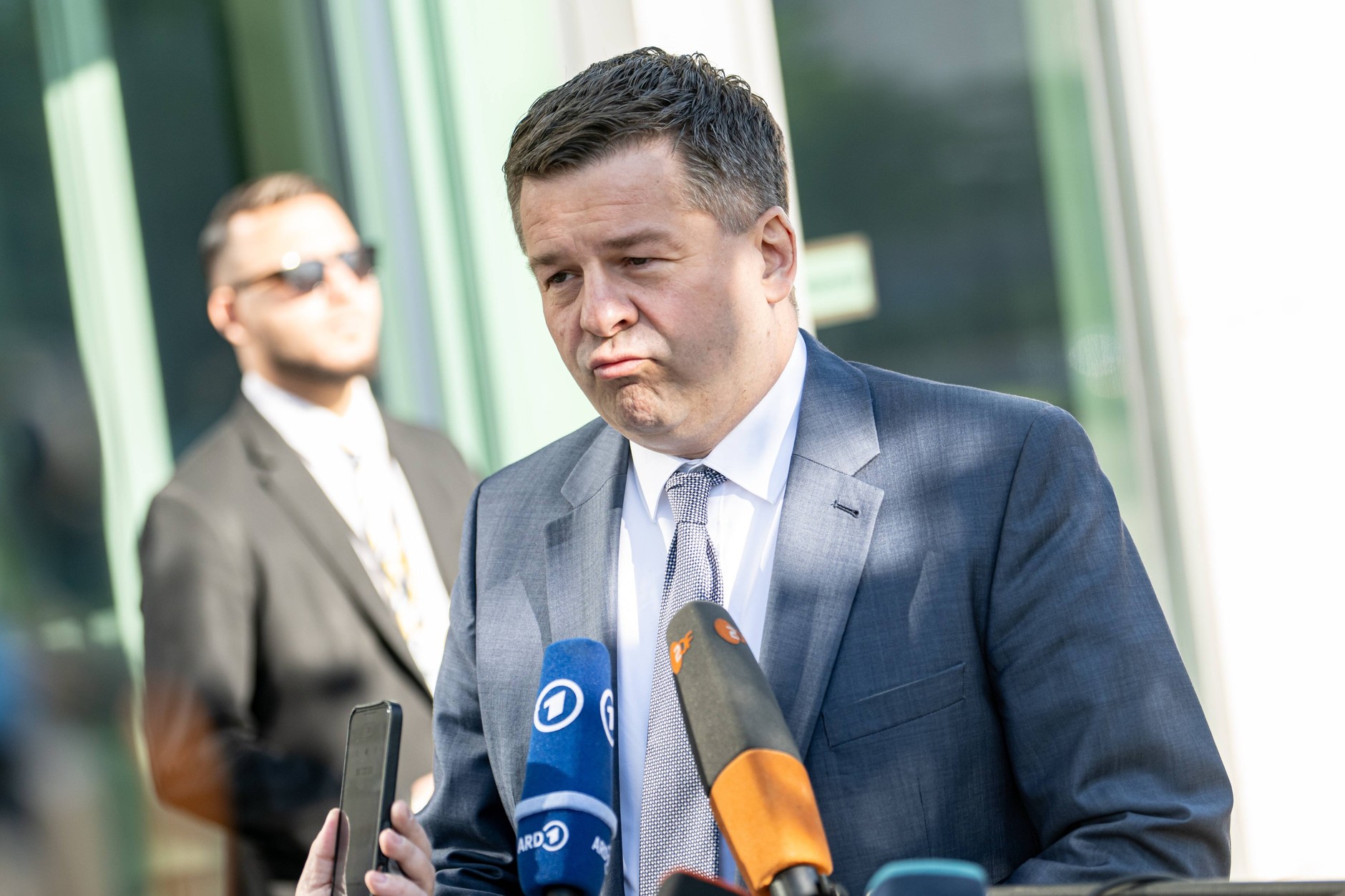
Sven Schulze, Minister of Economy of Saxony-Anhalt, before a meeting of the CDU Executive Committee. Berlin, April 28, 2025Fabian Sommer / DPA / PAP
Schulze paints a bleak vision for the absolute majority of the right. He does not call AfD a “Nazi party”, but simply warns against chaos: – Mr. Siegmund has no experience, little to offer and lacks the right staff.
The competitor's program is really vague for now. He wants – as he wrote on his “Vision for 2026” website – to focus on security, health, economy, education and infrastructure. “Bold ideas and expressive proposals,” we read, but there are no details.
“Worse than today? It's impossible!”
The AfD and its circles expect great resistance from Berlin if the party takes power in the state. It's common to hear that the federal government will do everything it can to make her life harder. A form of pressure could be an equalization fund. It is very likely that there would be attempts to freeze payments from the richer states as part of a redistribution mechanism. According to the principle: we will not finance alleged fascists.
The right-wing publicist and publisher Goetz Kubitschek, whose estate is in Saxony-Anhalt, even considers it possible that Berlin will use the tool of “federal coercion” towards the state authorities. Pursuant to Art. 37 of the German Constitution “The Federal Government may, with the consent of the Bundesrat [izby wyższej parlamentu — red.] take the necessary measures to induce the country concerned to fulfill its obligations through federal coercion.” This would be the first such event in Germany's post-war history.
“Siegmund's land force has a lot of homework ahead of them,” says Kubitschek during a meeting in Naumburg, a medieval town. – Students must prepare as diligently as possible.
They are supposed to create Siegmund's “Cabinet of Shadows”. trusted party activists and former politicians of other parties. He hasn't revealed his name yet. “Maybe we'll make a mistake someday,” he says. – But to make it worse than today? It's impossible!
On the evening of September 6, 2026, Ulrich Siegmund's name may only be a mention on the margins of German politics. But it could also shake the entire Federal Republic.