The North Sea was set to become Europe's powerhouse, but ambitious plans to build huge offshore wind farms may now suffer a major blow. A number of large energy companies want to withdraw from projects in the German North Sea and return the auctioned areas to the state at a high price.
In this way, not only key energy transformation plans are at risk, but also thousands of jobs in the supply industry. The planned billions in revenues to the state budget may not materialize.
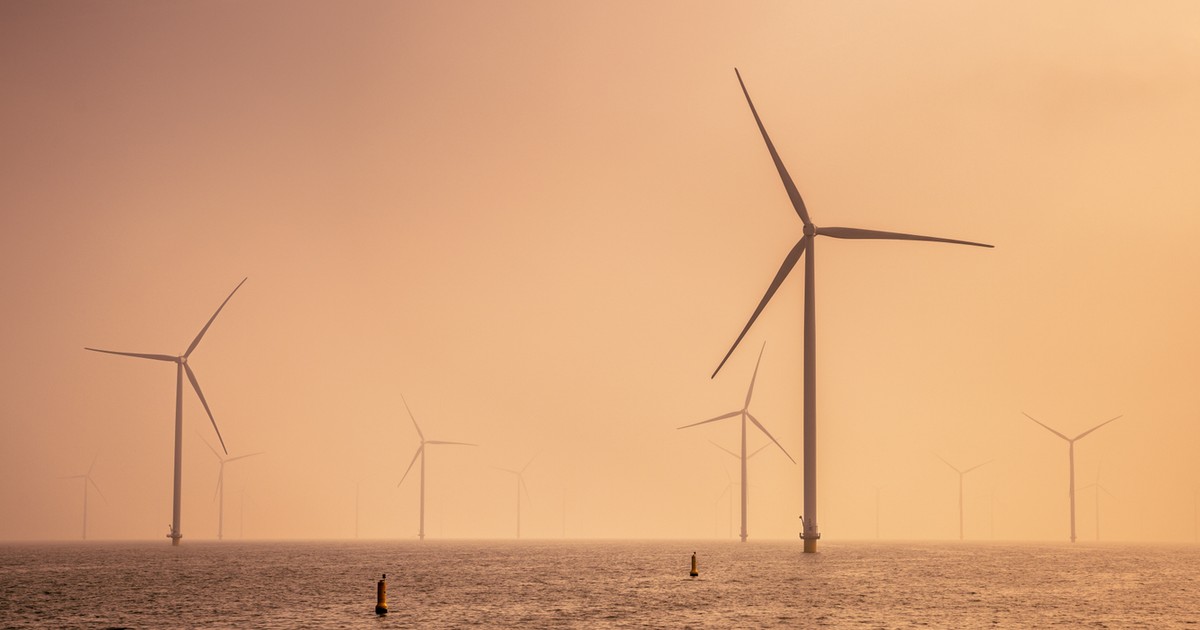
The scale of the undertaking is enormous. The North Sea countries have agreed to build 300 gigawatts of wind capacity, equivalent to approximately 20,000 latest generation turbines (15 MW). Germany's share is 70 gigawatts, or about 4,600 giant turbines the size of the Eiffel Tower. For comparison: 70 gigawatts is the equivalent of 70 nuclear power plants, although in the case of wind, production depends on weather conditions.
- Read also: Offshore wind farms are critical infrastructure. The threats are increasing
A late reflection of oil companies
So far, however, only about 1,700 smaller turbines with a total capacity of 10 gigawatts are operating in the North and Baltic Seas. To achieve the goals of the Offshore Wind Energy Act, energy production should increase sevenfold over the next 20 years. The implementation of these ambitious plans is now even more in question – and with it the achievement of climate goals.
Several investors want to withdraw from their projects. In the years 2022-2025, developers paid over EUR 16 billion for building permits alone. The oil companies TotalEnergies and BP (via Jero Nex) alone have agreed to pay EUR 7.5 billion for the use of the areas. So far, only about 10 percent has been paid. this amount, the rest was to be repaid over the years. However, it is currently unclear whether the state will receive further payments.
The industry association Windenergie Offshore (BWO) is calling on the government to release investors from construction and payment obligations, arguing that otherwise it will result in even greater economic damage. According to BWO, the government created a tender system that transferred significant risk to investors – especially related to delays in the construction of transmission networks.
The head of BWO, Stefan Thimm, pointed out, among others: to problems in supply chains resulting from geopolitical tensions: American tariffs, China's export restrictions and the effects of wars in Ukraine and the Middle East.
Capital costs have also increased significantly. Additionally, it turned out that the demand for electricity in Germany is growing slower than expected, which reduces the expected revenues. Delays in network expansion also have a negative impact on profitability.
An additional problem is the planned artillery training ground of the German Navy, which forced a change in the route of transmission cables.
However, it is not certain whether the government will accept the companies' arguments. Critics emphasize that risks – such as changes in interest rates or geopolitical tensions – were predictable already when the offers were submitted in 2023. Even the training ground plan was known then.
There are many indications that investors simply overestimated the profitability of the projects, offering too high amounts. The change in the course of some companies is also due to disappointment with the pace of the global energy transformation. In the case of BP, shareholders forced a return to investment in oil and gas.
- Read also: Polish companies are sounding the alarm. The prices of allowances have increased twentyfold
Huge penalties for the giants
The Ministry of Economy emphasizes that the regulations allow for some flexibility, but decisions will be made individually and in compliance with the principle of equal treatment.
However, the act clearly states that auction winners cannot return the awarded areas – they are obliged to implement the projects. If they fail to fulfill their obligations, they must pay a penalty. It amounts to EUR 100 for each kilowatt of planned power.
If TotalEnergies and BP withdraw from the 7.5 gigawatt projects, the fine would be around €750 million. However, it may be cheaper for corporations than making unprofitable investments.
BWO nevertheless appeals to be allowed to exit the projects, arguing that otherwise it will take years to redistribute them. Projects with a capacity of up to 16 gigawatts and worth up to EUR 50 billion are at risk.
Stopping the investment would affect the entire supply chain, in which approximately 49,000 people work in Germany. people.
That's why the industry proposes changes to the act, including: introduction of the so-called indexed contracts for difference. This means that energy remuneration would be linked to inflation, and the state would partially absorb the risk of losses while participating in windfall profits.
Companies have already incurred significant preparation costs – often amounting to hundreds of millions of euros. However, they do not expect a return of funds previously transferred for environmental purposes and compensation for fishing.
The matter was brought to the attention of the energy ministers of the federal states, who met on the island of Norderney. Coastal regions would particularly benefit from the development of wind energy, so they can pressure the government to make it easier for investors to withdraw from projects.
Minister of Economy Katherina Reiche did not attend the meeting for health reasons.
The article is a translation from German “Die Welt”