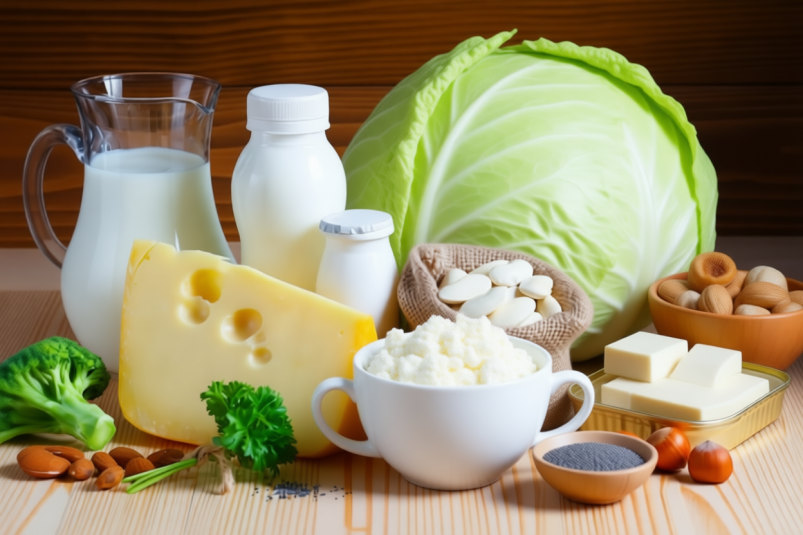
Every adult needs about 1000 mg of calcium per day. This is not just a matter of strong bones, as the mineral is involved in the functioning of the heart, muscles, nervous system and even hormones. When there is not enough calcium, the body very quickly begins to give signals such as brittle nails, fatigue, cramps, dental problems, joint pain.
Many people are accustomed to thinking that cottage cheese is the main source of calcium. But in 100 g of cottage cheese there is only 120 mg. Experts say that there are foods that contain many times more calcium. And many of them are quite tasty and familiar.
All indicators below are indicated per 100 g of product.
1. Parmesan – 1300 mg (130% DV)
Parmesan is the absolute champion of affordable foods. Just 75 g covers the daily calcium requirement completely. It's also high in phosphorus, which helps calcium absorbed, and has less cholesterol than most other durums.
2. Cow's milk cheese – 630 mg (63%)
Fragrant, fatty, rich, it is rich in minerals. Bryndza is made from cow's milk with the addition of sourdough and calcium chloride, which is why it turns out so concentrated.
Just 100 g can cover half the daily calcium requirement. In addition, it contains protein, vitamins, and microelements, which is especially good for strengthening bones and preventing osteoporosis.
3. Tahini-peanut halva – 465 mg (47%)
It sounds unexpected, but halva is a sweet mineral complex. The sesame seeds used to make the tahini base contain about 780 mg of calcium.
The product is really high in calories, but a couple of spoons can make a pleasant contribution to the daily requirement. But you shouldn’t turn it into the main source of calcium.
4. Sardines in oil – 380 mg (38%)
When canned, sardines come with soft bones, which is what gives them such a high level of calcium. Moreover, this calcium is absorbed very well.
But remember that canned fish is not suitable for people with gastrointestinal diseases. If you want a healthy analogue, stew the fish at home for several hours until the bones become soft and completely edible.
5. Milk chocolate – 240 mg (24%)
Yes, it contains twice as much calcium as cottage cheese, but calcium from chocolate is not always incorporated into bones as efficiently, so there is no point in counting on it. But you can use it as a nice addition.
What else contains calcium?
- Wheat bran – about 150 mg
- Milk – 120 mg, well absorbed due to protein and lactose
- White cabbage (boiled) – 125 mg, a budget alternative to trendy broccoli
With age, the need increases: after 60 years, you need 1200 mg per day. And be sure to combine calcium with vitamin D and enough protein for it to work properly.
Calcium not only strengthens bones, but gives energy, strength, a calm heart rate, strong teeth and stability of the body. And the best part is that you can get it not only from cottage cheese, but also from very tasty and affordable products.
Important: This information is not a substitute for consulting a doctor. The body's response to changes in diet/training may depend on individual physiology, genetic predisposition and health status. It is recommended to consult a specialist.