The day when the Romanian pilots achieved a legendary victory. They flew exclusively Romanian planes and were led by an air ace

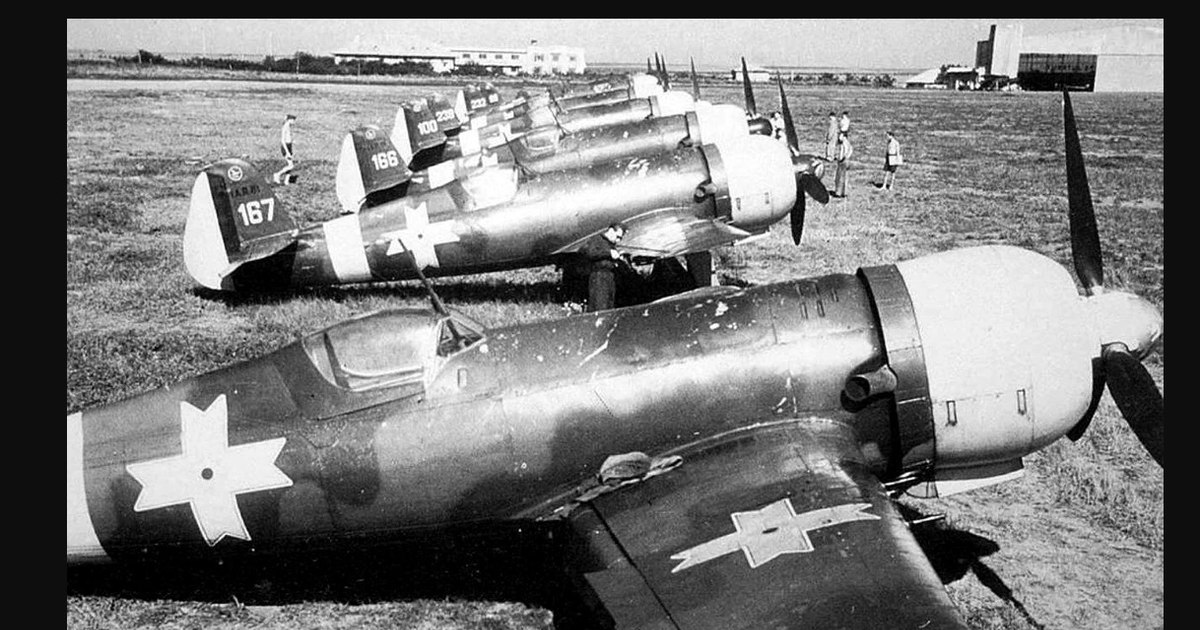
One of the most spectacular victories ever achieved by Romanian aviation took place on June 10, 1944. Several Romanian pilots flying the famous Romanian IAR-80 planes managed to destroy an American squadron that had tried to attack Romanian airfields.
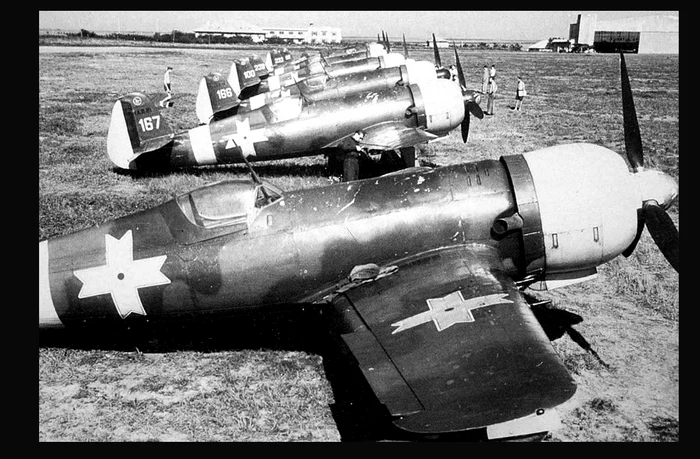
The powerful Romanian planes IAR-80 and IAR-81 PHOTO Historia
The Romanian Royal Air Force experienced moments of glory in the Second World War. The aerial battle on June 10, 1944, near the Popești-Leordeni airfield, in which the Romanian pilots, with Romanian planes, managed to achieve a huge victory over the American aviation sent to bomb the oil refineries in Ploiesti, remained legendary. That day, 24 American Lightning P-38 fighter jets were shot down, a true catastrophe for the American military. The American defeat made Thomas McKelvey Cleaver, in “Annals of Air Combat”, call that moment “The Blackest Day”. Dan Vizanty, the commander of the Romanian squadron, was nicknamed “The Terror of the Lightnings” after the battle on June 10, 1944.
When the Americans targeted the Romanian refineries
On June 6, 1944, the Normandy landings took place. It was a successful Allied operation. While the Russians were pushing from the East, the Americans and British had managed to establish a bridgehead in Europe and were trying to grip Nazi Germany like a pincer. The success of Operation Overlord encouraged the Allies to make a sustained attack on all German-held areas, especially those that provided the necessary resources for the war machine. Thus was born the mission of June 10, 1944, launched only four days after the landing in Normandy.
The 82nd Fighter Group of the US 15th Army, stationed at Foggia, Italy, was to carry out a bombing mission on the refineries at Ploiești, on Romanian territory. During the Second World War, until August 23, 1944, Romania was an ally of Nazi Germany. The American airmen, most of them veterans and true legends of air combat, were to use their P38 Lightning fighters as mini-bombers, that is, to carry a single 445-kilogram bomb under the left wing. For balance, but also to travel long distances, a large kerosene tank was mounted under the right wing.
After dropping the bombs, the American planes could return to the role of fighter aircraft. It was the first American attack on such a precise target, a refinery. Until then they had generally attacked large areas, such as urban agglomerations, railway networks. In the early hours of the morning, the American squadrons left Foggia for Ploiesti. Group 82 was accompanied by Group 1, which consisted strictly of fighter planes intended to defend the improvised bombers. Out of a total of 100 American planes that left Foggia, only 75 arrived in Romania. The rest broke down. At one point one of the groups of American planes makes the wrong turn and ends up over the Popești Leordeni airfield. For the Americans, all bad was for good, because they could annihilate the Romanian fighter planes on the ground, thus ensuring the silence of the improvised bombers. It wasn't meant to be.
“I grab my stun gun, rush out and launch the green missile”
The 6th fighter group was stationed at the Popești-Leordeni airfield, Romanian pilots mostly equipped with fighter planes of Romanian production, from Brașov, the famous IAR-80 and IAR-81. Fighter Group 6 was commanded by an extremely talented pilot, Dan Vizanty. He was already considered a real ace of the air in the Second World War.
Obviously, the Romanians did not expect the appearance of American planes. By chance, a sentry saw on the radar in the command post a whole squadron approaching. He immediately notified Vizanty, who in turn raised the alarm. “I had just entered the office to go through my mail when… alarm!?… At 8:00 a.m.?! Surprised for a moment by the unusual time, I take my alarm gun, quickly go out and launch the green missile by which I give my units the order to take off immediately. We took off after the last patrol and, cutting the formation's trajectory, we were at the head of it, continuing to gain altitude”said Dan Vizanty, in the French magazine “Pionniers”, in 1982. As Vizanty also stated, the Romanian pilots mobilized and went out to attack. Within minutes they were in the air. Noticing the American planes flying at very low altitude, Vizanty ordered the attack.
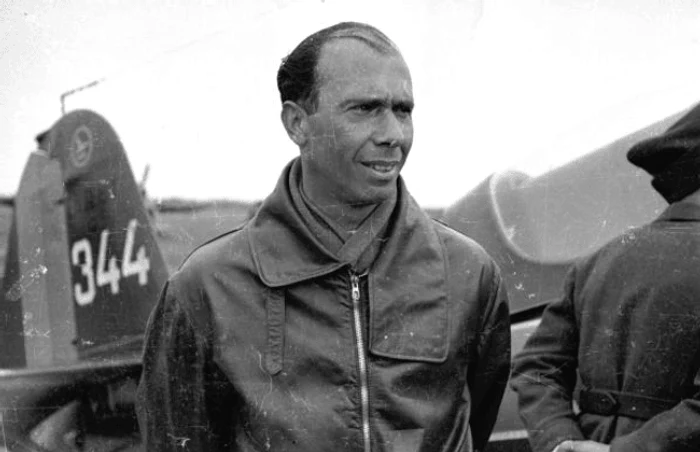
Dan Vizanty, an ace of the air PHOTO The truth
The 36 Romanian pilots threw themselves at full speed on the American planes. “I was at an altitude of 1,500 meters at the head of the formation and I heard coded in my helmet: “Attention, Paris! Attention, Paris! Indians above the nest!”. I immediately recognized the voice of Traian Gavriliu, the head of the Operations Bureau of the Popeşti-Leordeni Airport, who informed me that the fighter planes were heading towards the airfield. Then, looking overboard, I see wave after wave, at very low altitude, formations of Lightning P-38s. Immediately and without hesitation, I order over the radio: “Paris to Paris: 1, 2, 3, we attack, follow me!”reported Vizanty, in the same publication.
“Wolves of the Carpathians” and a legendary victory
To give an example, Dan Vizanty rushes his plane directly to the enemy planes and strafes them heavily. An epic clash follows, in which the pilots of the 36 Romanian IARs do exceptionally well. The battle lasted 12 minutes, during which the roar of machine guns, the deafening noise of revving engines and the dramatic sound of falling planes dominated the entire atmosphere. Those on the ground were watching with bated breath the skirmish in the air and were constantly trying to send warning messages to the pilots.
“Stunned, all those on the ground were spectators and witnesses of that bloody battle, in the blinding light of the summer sun, in the noise of the explosions, in the deafening chatter of the machine guns, in the fantastic roar of the engines, while, everywhere, the smoke curls of the downed burning planes rose to the sky”Dan Vizanty described the confrontation in “Pionniers” magazine. Several American planes are shot down and six pilots die. On the other side, the Americans shoot down three Romanian planes, their pilots losing their lives.
Overall, however, the victory belonged to the Romanians, a moment of glory for the Royal Romanian Air Force. Dan Vizanty is said to have personally shot down three American airliners and miraculously survived after a 13.2 millimeter projectile went through the cockpit of his aircraft and exited the rear of the plane. Initially, the American press believed that those who defeated the 71 USAF squadron were the German pilots stationed in Romania. Later, he realized that it was Group 6 of the Royal Romanian Air Force.
Richard “Dick” Wilsie, an American aviator who participated in the raid on June 10, 1944, stated, according to the book “Flight Log” by McKelvey Cleaver: “That day, it felt as if the sky had fallen on us. We felt on our skin that we had been badly beaten”. Unfortunately, part of the group of improvised bombers reached Ploiesti and launched 33 of the 36 available bombs. To top it off, they damaged the Romanian-American refinery. However, they were met by German fighter planes and Romanian anti-aircraft batteries. Both German pilots and anti-aircraft batteries shot down 18 more American planes. In total, including the planes shot down by Group 6 at Popești Leordeni, USAF losses were huge in that mission.
Champagne for Romanian aviators
Apart from the downed pilots, Vizanty brought the rest of the group to the ground safely. They were received with cheers. The commander of the Romanian aviation, the Minister of Air at that time, General Gheorghe Jienescu, when he learned about this huge victory, would have immediately sent them 24 bottles of French champagne in his personal car. Subsequently, the 5th Fighter Group lived up to its coat of arms and hunted down American aircraft attacking the oilfields. Between April 4 and August 23, 1944, Group 6, led by Dan Vizanty, shot down 6 B-17 Flying Fortresses, 6 B-24 Liberator four-engine bombers, and 28 P-38 Lightnings.