“Romanian Prigozhin” tried to escape to Moscow. The Kremlin's plan backfired


Although Kremlin propaganda, also spread by several European politicians from far-right parties, claimed that the EU and the West interfered in the Romanian presidential elections, According to the local secret services, it is quite the opposite. It was pro-Russian networks that tried to interfere in this process.
The case that shook Romanian politics last year came back to light after revelations by the British daily “The Guardian”. According to the Guardian people linked to the Kremlin are trying to prevent the extradition of Horatio Potraformer member of the French Foreign Legion. In Romania, he would be charged with an attempted coup.
According to the investigation, the winner of the first round of elections, Calin Georgescu, was also behind financial flows from Russian oligarchs and people with ties to Moscow. At that time, Potra – nicknamed “Romanian Prigozhin” – he allegedly worked with Georgescu on a plan to overthrow the constitutional order and destabilize the country. Georgescu, a former environmental engineer and nationalist politician, won the first round of the November 2024 presidential election, but the Constitutional Court invalidated it shortly before the second round due to allegations of Russian influence.
Romanian authorities claim that Potra tried to escape to Moscow via Dubai after the election was canceled and his plan was discovered. However, he was detained in the United Arab Emirates in September 2025 along with his son and nephew. According to the Guardian, Russian lobbyists and people associated with the Ministry of Foreign Affairs in Moscow are trying to secure his release, and the whole case additionally reveals connections between pro-Russian networks in Romania and military structures operating in Africa.
In the repeated presidential elections in Romania, pro-European candidate Nicusor Dan won, defeating nationalist George Simion and confirming that Romania remains firmly anchored in the European and transatlantic space.
He allegedly collaborated with far-right politician Calin Georgescu
Due to an arrest warrant issued in Romania, Horatiu Potra tried to fly to Moscow with his son and nephew, but his journey ended at Dubai airport. There, on September 24, 2025, he was detained by local authorities as he boarded his plane. Romanian investigators say Potra, in cooperation with his ally, far-right politician Calin Georgescu, had a plan to “overthrow the constitutional order” after the presidential election was annulled.
The Romanian Ministry of Justice confirmed his detention and is cooperating with the United Arab Emirates authorities to ensure his return to the country. According to the prosecutor general there, Potra allegedly applied for asylum in Russia.
According to the Guardian, people close to the Kremlin are seeking his release, in particular Igor Spivak, head of the Russian Middle East Society linked to the Russian Ministry of Foreign Affairs, and Alexander Kalinin, a Moldovan collaborator with Moscow who is recruiting Moldovans to fight in Ukraine. Spivak admitted that he hired lawyers in the United Arab Emirates and planned to travel to Dubai to visit Potra in person. He claimed his goal was to “prevent the extradition of a mercenary” who, he said, “only helped his compatriots.”
On September 16, Romanian prosecutors formally charged Horatio Potra, his son Dorian and Calin Georgescu with an attempted coup. Investigators say the group planned to use protests after the first round of presidential elections were canceled to spark violence in Bucharest.
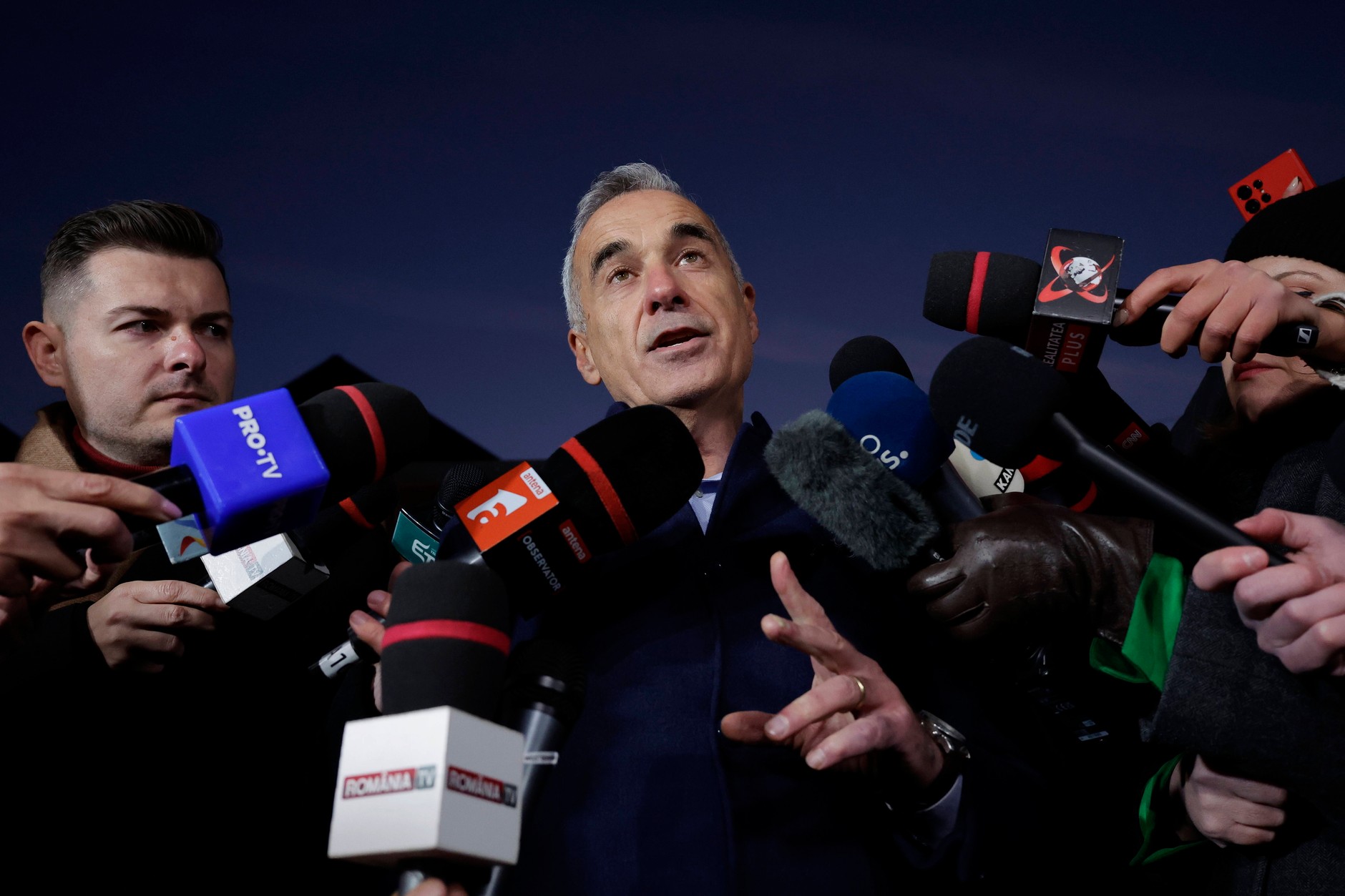
Calin Georgescu, the unexpected winner of the first round of the presidential elections in Romania. Izvorani, November 26, 2024EPA/ROBERT GHEMENT / PAP
According to the files, their actions were intended to threaten the constitutional order and state security. At the same time, it was confirmed that At that time, Moscow was conducting large-scale hybrid operations — from cyberattacks to targeted disinformation campaigns — aimed at influencing election results and destabilizing the country.
Who is the “Romanian Prigozhin”?
“Romanian Prigozhin” Horatiu Potra is a 55-year-old former member of the French Foreign Legion, bodyguard, military trainer and mercenary leader who he became one of the most controversial figures in Romania. It gained recognition in early 2023 after a series of international investigations revealed its activities in Africa and the Arab world.
Potra commanded his own a group of mercenaries whose members operated mainly in the Democratic Republic of the Congo. Some of them had recently been captured by Congolese M23 rebels and were considered “Russians” by locals. In fact, all white Europeans were associated with the Russian Wagner Group.
That's why Potra is often compared to Yevgeny Prigozhin, co-founder of the Wagner Group, who fought in both Africa and Ukraine. Prigozhin tried to incite a rebellion against the Kremlin in 2023 and died in a plane crash in Russia in the summer of the same year.
In recent months, Potra has also been under national investigation for his own reasons connections with far-right politician Calin Georgescuwho won the first round of the presidential election, which was later invalidated due to allegations of fraud. Romanian authorities detained Potra in early December 2024 while he had weapons and radio equipment in his car. Investigators say he was going to Bucharest with the intention of starting riots.
Anti-Semitic provocation in Paris. “Act of Foreign Interference”
However, the Horatiu Potro case is not the only example of actions aimed at destabilizing EU Member States. In recent days, Paris has been shocked by the verdict in the case of four Bulgarians who… in 2024 they desecrated the Wall of the Righteous, a Holocaust memorial, with red handprints. A French court sentenced them to several years in prison, describing the act as an act of foreign interference that could have been “organized by Russian intelligence services.”
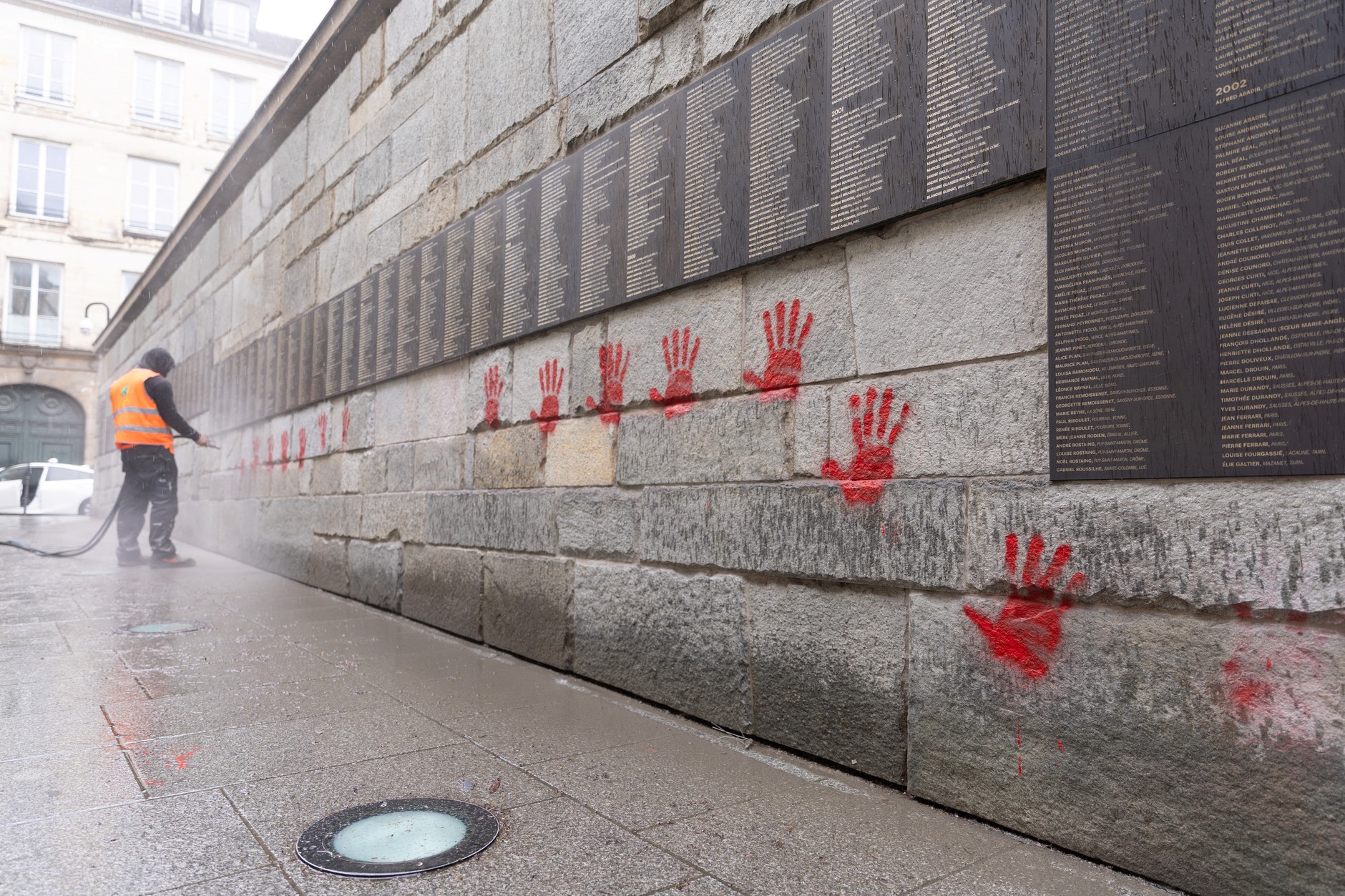
Red hands painted on the Wall of the Righteous in Paris, May 14, 2024.Antonin Utz / AFP
Prosecutors said it was part of a broader operation aimed at inciting public opinion, exploiting social tensions and inflaming divisions in French society. The Viginum Foreign Influence Monitoring Office confirmed that the incident was later widely exploited by Russian-linked social media accounts.