Trump II breaks with the law. An expert on how the USA is entering an era of chaos. “We are dealing with a structural transformation of America”

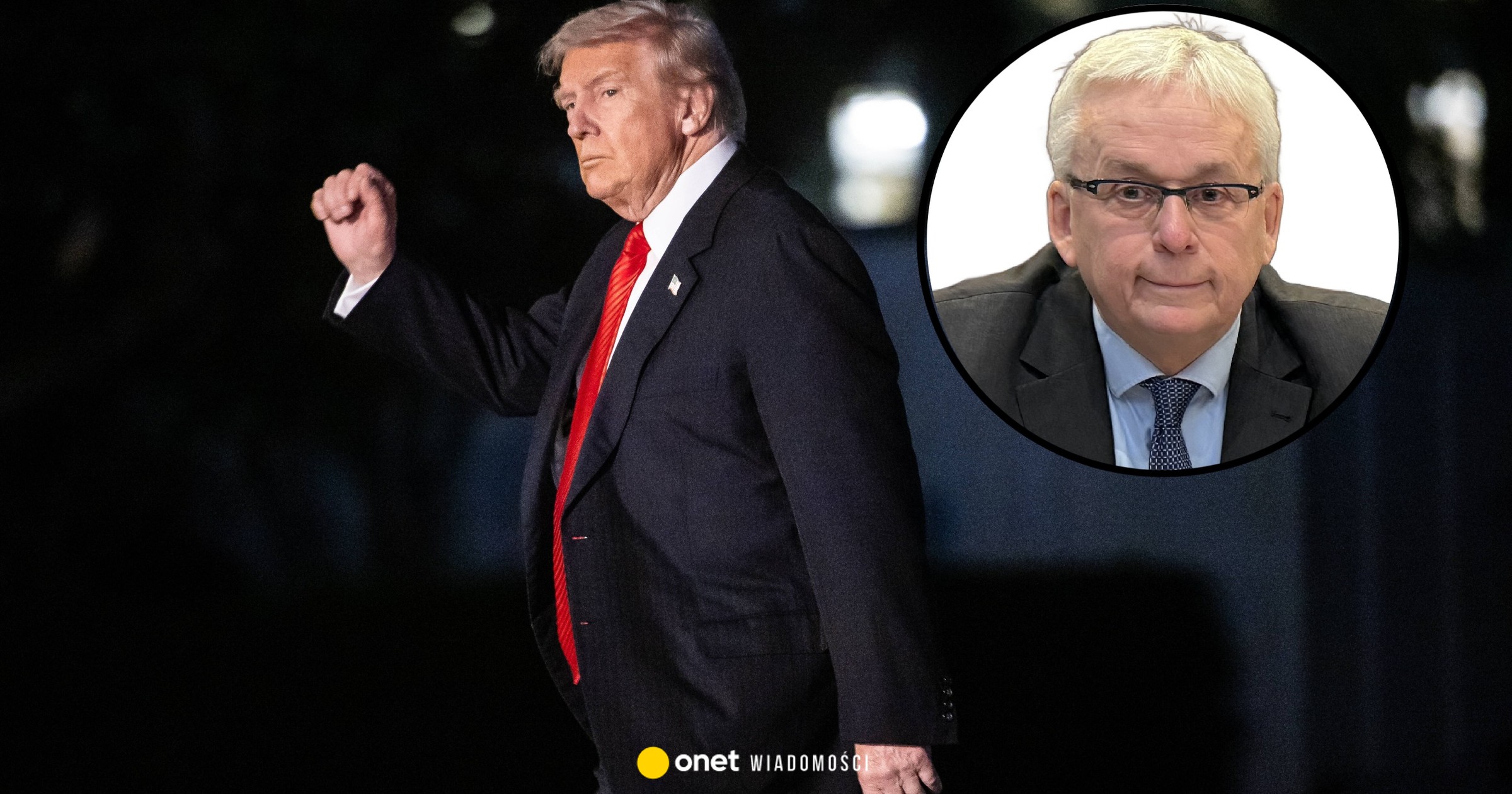
This week marks one year since Donald Trump won the presidential election. Like no other US president before him, Trump turns international politics, and therefore law, upside down.
Andreas Zimmermann, a law expert from the University of Potsdam, is a regular guest at meetings organized by the UN. In September, he was appointed by the federal government for a 5-year term as an arbitrator at the Organization for Security and Co-operation in Europe (OSCE).
According to Professor Zimmermann, what Trump is doing is not just breaking the rules – it is an open demonstration of that The United States no longer needs to explain itself to anyone. And if the greatest power no longer recognizes the law, who will still adhere to it? Expert warns: this is the beginning of the end of the rule-based world.
WELT: Since September, Donald Trump has been issuing orders without prior consent of the US Congress attacking alleged “drug boats” operating off the coast of Venezuela and Colombia. As a result of these actions, dozens of people died. Is the president of the United States acting within the boundaries of international law?
Andreas Zimmermann: The use of military force against other states, including their ships, is generally permitted under international law only when that state is under attack. Even if an armed conflict occurs, the principles of international humanitarian law apply.
But Trump declared the drug mafia a terrorist group?
Yes, these non-state actors are classified as terrorist groups – just as al-Qaeda was after September 11, 2001. However, such domestic classification does not confer legal rights under international law. In particular, a far-reaching conclusion is to define drug smuggling as an armed attack that would entitle self-defense. Even in times of war, you can only attack and kill enemy commanders or combatants. However, people involved in drug smuggling are not.
What resources does the international community have to punish Trump for such actions?
International law has no central enforcement agency. Figuratively speaking, there is no such thing as a “federal constitutional court of international law.” There is, indeed, an International Court of Justice (ICJ) that deals with interstate disputes. However, in each case it must first be examined whether it has jurisdiction in the particular case. When it comes to the US and Venezuela, it won't work. In turn, the International Criminal Court (ICC) is responsible for acts committed on the territory of a state party or by nationals of a state party. However, the US is not a party to the Rome Statute [definiującego zbrodnie podlegające jego jurysdykcji].
The end of the golden age of international law
This month marks the 80th anniversary of the start of the Nuremberg trials. After the genocides in the Balkans and Africa, the ICC became the body with enforcement powers in the application of international law. What is the situation of international law under the current Trump administration?
It can be said that international law is in crisis. In the 1990s, international law was flourishing, just think about the creation of the World Trade Organization or the ICC. The UN Security Council also functioned for the first time as envisaged in the 1945 UN Charter. The Russian Federation joined the Council of Europe and submitted to the jurisdiction of the European Court of Human Rights – a real quantum leap.
During President Trump's first term, it was initially believed that the United States was moving away from multilateralism [czyli koordynowania polityki przez co najmniej trzy państwa] is transitory, whereas at present it appears to be a structural departure from the order of international law.
To make matters worse, Russia also violates the basic principles of international law, including: by the annexation of Crimea and the invasion of Ukraine.
What can be cited as an example of the United States moving away from international law?
It is enough to recall the recent reaction of the Trump administration to the legal opinion issued by the ICJ. The Court confirmed Israel's obligation to cooperate with the United Nations Relief and Works Agency for Palestine Refugees (UNRWA). In response, the US Department of State described the ICC as a “quasi-tribunal” that is merely a “political instrument” used as a “weapon” against the United States.
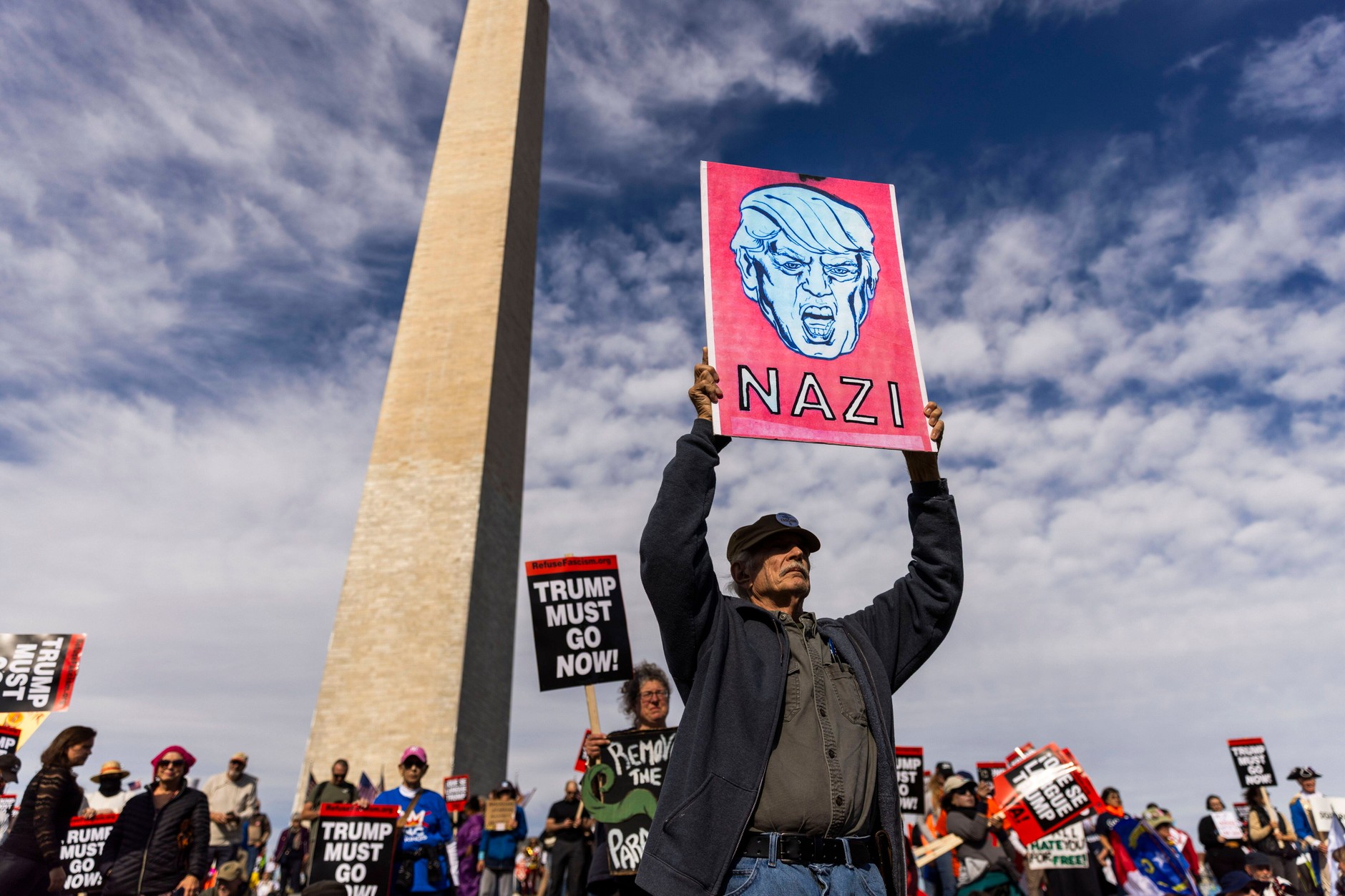
Protesters at the “Trump Must Go Now” rally a year after US President Donald Trump was elected to a second term. Washington, USA, November 5, 2025PAP
How would you describe the attitude of the current US government?
As nihilism towards the question of whether states in the international system have any binding obligations in international law. Trump fundamentally questions the meaning and binding nature of international law. In my opinion it is a drama. Under the rule of “Trump II”, we are also dealing with a structural transformation of American society and the constitutional order. And there is no turning back.
Donald Trump also uses tariffs as a foreign policy tool. How should this be classified under international law?
In the 1990s, a very effective, comprehensive regulatory system was developed, including: through the World Trade Organization, and in particular its dispute resolution body. However, since 2017, the United States has blocked this mechanism. As a result, the arbitration procedure is practically “dead” and the substantive rules turn out to be irrelevant. The rules-based system under Trump's leadership appears to be broken.
How Trump killed a system based on law
The US president is also taking decisive action actions against illegal immigrants. Are there any possibilities of intervention in this regard under international law?
The United States, like most countries, is a party to the International Covenant on Civil and Political Rights, arguably the United Nations' most important 1966 human rights agreement. It states that people in custody have the right to legal protection. This also applies to migrants.
In many cases this is known not to happen. Can violations of the pact be sanctioned?
There is a commission composed of independent experts. It consists of 18 people, including me. Countries must report regularly on their compliance with the pact. In the event of violations, the party to the contract may be requested to submit a report on how to remedy the violation within six months.
The article continues below the video
What if he doesn't?
Then, another round takes place approximately every six years. There are 175 states parties and the Committee meets for 12 weeks a year.
Are we dealing with conflict between Europe and the United States in terms of understanding the right to freedom of speech?
There is a common standard, also enshrined in the UN Covenant. Article 19 reads:
Everyone has the right to freedom of expression; this right includes freedom to seek, receive and impart information and ideas of all kinds, regardless of frontiers, in oral, written, printed, artistic or other forms of one's choice.
This sounds similar to the First Amendment to the United States Constitution. However, there are also limitations. For example, in relation to “respect for the rights or reputation of others.” Or for the protection of national security and public order or public health. For example, when I say that only white people are people – in our legal system this will be incitement to racial hatred.
The United States allows much more freedom?
Yes. For example, in the 1960s, when a group of Nazis in uniform wanted to march through Chicago's Jewish neighborhood, they were given the green light by American courts to do so. There was a belief that their democracy would have to withstand it.
After the murder of Charlie Kirk Suddenly, not every statement was allowed anymore.
In the United States, there is a rather ambivalent understanding of freedom of speech. Actions have been taken, such as suspending government employees who have spoken critically of Kirk, which significantly restrict free speech.