The publication notes that the goals of Russia’s aggression against Ukraine remain the same as four years ago: to establish a puppet regime in Kyiv and annex large parts of the country. Russian officials say they can fight the war forever. In reality, the Russian economy is experiencing increasing problems. Many Russians do not share Putin's obsession with destroying Ukraine at any cost for their own future, the article says.
“We are always waiting for Russia to collapse politically, as happened to Germany in 1918, when it lost the war, despite the fact that there were not a single enemy soldier on German soil at that moment,” said economist Konstantin Sonin, a professor at the Harris School of Public Policy at the University of Chicago. According to him, this is not yet the case, but “sooner or later such things always happen.”
For now, the Russian economy remains relatively stable, but that cannot last forever, said Alexandra Prokopenko, a fellow at the Carnegie Eurasia Center in Berlin, who was an adviser to Russia's central bank until 2022. According to her, Russians will soon no longer be able to finance the situation in traditional ways, through taxes and spending cuts. Possible ways to solve the problem would be to increase the issue of money, which will spur inflation, a sharp reduction in social spending, and replacing the current system of recruiting volunteers to participate in hostilities in Ukraine with forced mobilization. All these steps can cause unrest.
“As soon as he [Путин] shows weakness, it will all be over for him and his rule,” said Alina Polyakova, president and CEO of the Center for European Policy Analysis in Washington.
Context
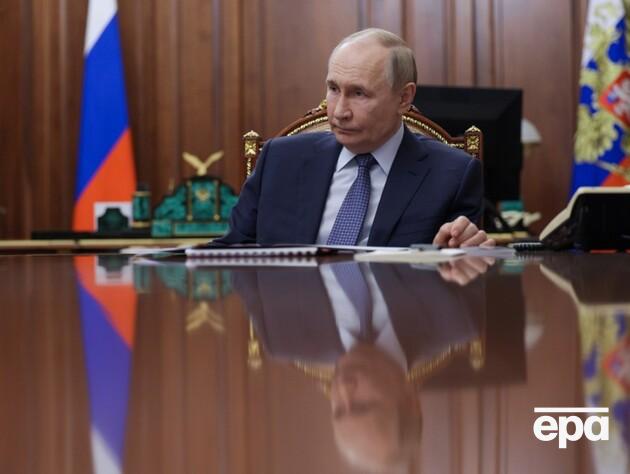
On June 20, Putin said he believed rumors about the decline of the Russian economy too exaggerated. He said that the Russian Federation “paid with inflation for the need for military spending,” but is fighting against it. He also added that starting next year the Russian Federation can supposedly reduce military spending, recognizing that the current burden on the country's economy is excessive.
On July 16, the head of the Federation Council of the Russian Federation, Valentina Matvienko, during a meeting of the upper house of parliament, said that the motto of the 2026 budget in Russia, the preparation of which Russian officials are beginning, should be “strictest savings” of funds.
On July 26, Bloomberg reported that the Russian economy, which has long shown stability despite international sanctions, is “showing more and more cracks” worth $2 trillion. The head of the Central Bank, Elvira Nabiullina, stated that concerns about banks’ capital are “completely unfounded”; Sberbank CEO German Gref admitted in June that the quality of the loan portfolio is deteriorating, companies are increasingly forced to restructure debts.
In Russia, there are clear signs that the economy can no longer bear the costs of the war against Ukraine, the publication wrote. “Important Stories” October 2.