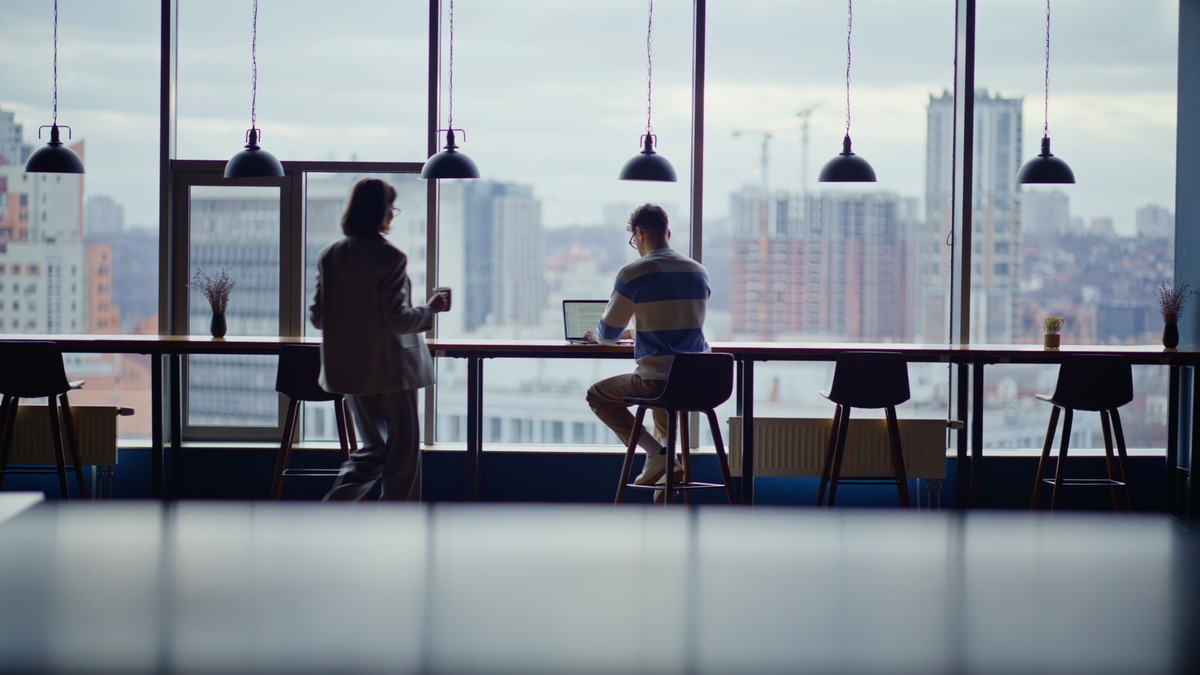
Just a decade ago, inclusiveness in architecture meant primarily wheelchair ramps and elevators in monuments. Today this is no longer enough. More and more experts pay attention to the needs of neuroatypical people – with ADHD, autism, sensory processing disorders or high sensory sensitivity. According to the report, even 20 percent employees may have different cognitive and environmental needs, and yet most office spaces are still designed “for a typical user”.
— It's time for the next step – an attempt to understand and translate the needs of neurodivergent people into the language of functions and architecture of office spaces – comments Ewelina Kałużna, CEO of Business Link and Head of Strategic Workplace at Skanska. — Just as we once started adapting offices to the needs of people with physical disabilities, we will – I hope – in a moment We will take into account various neuroatypicalities in each office project. Together with employers, we want to create spaces that support the well-being and effective work of people whose brains work in different ways, he adds.
This shift in emphasis from functionality and aesthetics to empathy and psychological comfort of users is a real paradigm shift in thinking about architecture.
Neurodesign – more than a trend
A new approach to interior design is more than just a fashionable label. Neurodesign is a philosophy that assumes that space directly affects our nervous system and emotions. Too many stimuli – bright lights, noise, movement – can overload and reduce performance, especially in sensory sensitive people. In turn, well-planned acoustics, varied lighting and the ability to choose a workplace allow for concentration and regeneration.
— In the pursuit of design, we sometimes forget that interiors are not only supposed to look good, but above all serve people, he emphasizes. Anna Baczkowska from Knauf Ceiling Solutions. — Interior solutions cannot be assessed solely through the prism of the product. We need to think about user comfort – how they feel, how they respond to stimuli, how long they can stay focused. Every space is an experience, and design is about working with emotions, not only with form, he argues.
Knauf emphasizes that acoustics are one of the most important elements of neuroinclusive design. In offices, schools and hospitals, where sound reflects off hard surfaces, even a small change – such as the use of suspended ceilings or acoustic panels – can significantly improve the mental comfort of users.
Anna Marciniak, Executive Vice President HR at Skanska Commercial Development Europe shows how the quality of cooperation can be significantly improved using the example of solutions used in conference rooms. — By mounting screens at a lower height, we enable people connecting remotely to participate more fully in meetings. In turn, trapezoidal-shaped tables or the so-called “banana shapes” promote eye contact, facilitating communication between participants. Elements that influence the perception of space, such as lighting, colors and sound levels, are equally important, he explains.
Technology at the service of the senses
Not only architecture, but also modern technologies are beginning to support neurodiversity. “Systems like Blue Bolt allow users to move around buildings completely independently, calmly and predictably,” he says Maciej Grabowski, CEO of Blue Bolt. — The user does not have to wait in line, use access cards or contact staff. For many people, especially highly sensitive people, this makes a huge difference. Our goal is for buildings to give a sense of security and control – only then do they become truly inclusive – he adds.
This is an example of how technology can minimize stress and cognitive overload, supporting not only neuroatypical people, but all users of space.
Neurodiversity is the new efficiency
Understanding the diversity of human minds is not just about ethics – it is a strategic asset of the organization. Companies that create sensory-friendly work environments gain more engaged and creative employees.
— Facilities for neurodivergent people are facilities that will benefit all of us, he notes Dominik Kuc, member of the board of the GrowSPACE Foundation. — Research clearly shows that neurodivergent people are particularly sensitive to visual stimuli, noise, crowds and unintuitive spaces. But what may be a difficulty for them may simply be a source of discomfort for others. If we take care of them, we improve the quality of space for each user, he says.
However, the Skanski and Workplace report reveals a significant gap: as much as 95 percent companies recognize the need for change, but less than 40 percent has actually implemented solutions supporting neurodiversity. This shows that the real estate market has a lot of room for action – and a real chance to stand out through empathetic design.
A new language of architecture – multisensory
It is increasingly said that architecture should appeal not only to the eye, but to all senses. — Our approach to design must be multisensorybecause we perceive space in a multidimensional way – through sight, hearing, touch, and even awareness of the body in space – he explains Marta Wierusz, architect leading the interior department at APA Wojciechowski Architekci. — We need to predict how the user will move from one zone to another – from a quiet office to a noisy lobby or from a dim meeting room to a bright company kitchen. This is a sensory transition process that – if not planned – may cause the so-called sensory shock. Therefore, thinking about design as an experience, and not just a system of functions, is a necessity today, argues the architect.
Architecture responsible – also for emotions
More and more companies – from Skanska to Knauf – are showing that designing for the diversity of human minds can go hand in hand with environmental responsibility. Products with a low carbon footprint, circular economy and Cradle to Cradle or BREEAM certificates are today a standard that supports not only the planet, but also people's mental well-being.
Knauf Ceiling Solutions in its “Ceilings for Every Purpose” campaign emphasizes that each space – from a noisy hall to a cozy office – requires individual acoustic solutions that combine function with aesthetics. — Inclusive design is not complicated. It's simply designing with attention – to sound, light, color and people – sums up Baczkowska.
Neurodiversity is not a passing trend, but a new dimension of sustainable design. Offices, schools and public buildings that take into account different sensory needs become more human, empathetic and effective. Just as accessibility once meant ramps and elevators, today it means peace, choice and emotional comfort in space. Architecture that understands the brain is architecture that truly understands humans.