What does the future hold for Venezuela? “Trump is ready to use all available means”


President Trump has made clear that he is willing to use all means at his disposal to stop the flow of drugs north. However, as is evident from Trump's first term, he has always been very concerned about the lack of democracy in the country, the human rights violations that have led to migration, and the crime leaving the country.
Has such a decision been made? I don't know. However, I can say that they have increased their presence in the region over the last few weeks. This leads me to believe that something might happen. Now it could be anything from an anti-drug operation within 12 nautical miles [ok. 22 km] from domestic, through land-based activities focused on drugs, to something broader.
You were ambassador to Venezuela during both Donald Trump's first term and Joe Biden's presidency. How have the Trump administration's views on Venezuela changed since his first term?
What he is doing now in connection with the fight against drugs is different. The president ran on a platform based on concerns about migration and organizations such as Tren de Aragua, a well-known Venezuelan criminal organization with an international presence.
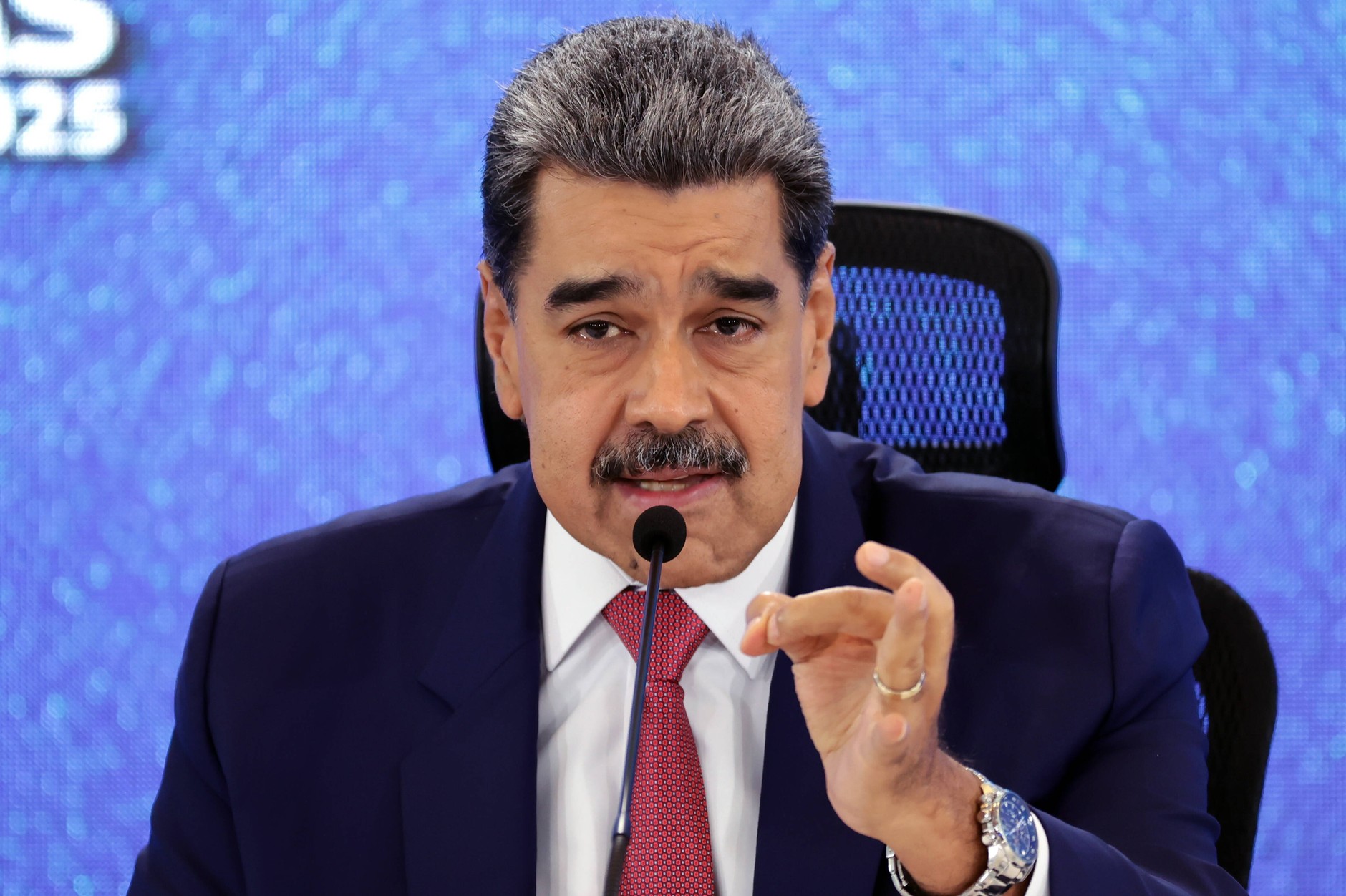
Venezuelan President Nicolas Maduro during a press conference in Caracas, September 15, 2025.MIGUEL GUTIERREZ / PAP
So all of this is new compared to the situation in which the first Trump administration found itself. At that time, we were the first country to recognize President Juan Guaido as the country's rightful leader. He was invited [do Waszyngtonu] for the State of the Union address. Much emphasis was placed on applying pressure to force the regime to change. I'm not talking about regime change, I'm talking about putting pressure on the regime, supporting democracy through the interim government and Juan Guaido. And although there was fighting language and all options were on the table, it all pales in comparison to what is happening now.
“The administration hopes to achieve transformation through other means.”
What do you think about Trump's campaign to destabilize Maduro through… attacks on boatsamassing troops at sea and authorizing covert CIA operations on land?
I believe the administration's intention is for someone close to Maduro to “invite” him into exile, extradite him to the United States, or otherwise encourage him to leave. And I think that's the preferred outcome. If you look at the pressure being exerted – certainly including attacks on alleged drug smuggling vessels – it is much greater than under the first Trump administration. But also talking about a secret agenda in an open way is certainly something that should be read as a decision made to put additional pressure on those around Maduro to get him to leave.
During the first Trump administration, in March 2020, almost in parallel with the indictment against Maduro and the spread of COVID-19, a framework for democratic transition emerged that would define Venezuela's future: an interim government that would lead to elections, this kind of path. There is no such path visible today. So the pressure is great. I think the administration hopes to achieve transformation through other means, without the need for force.
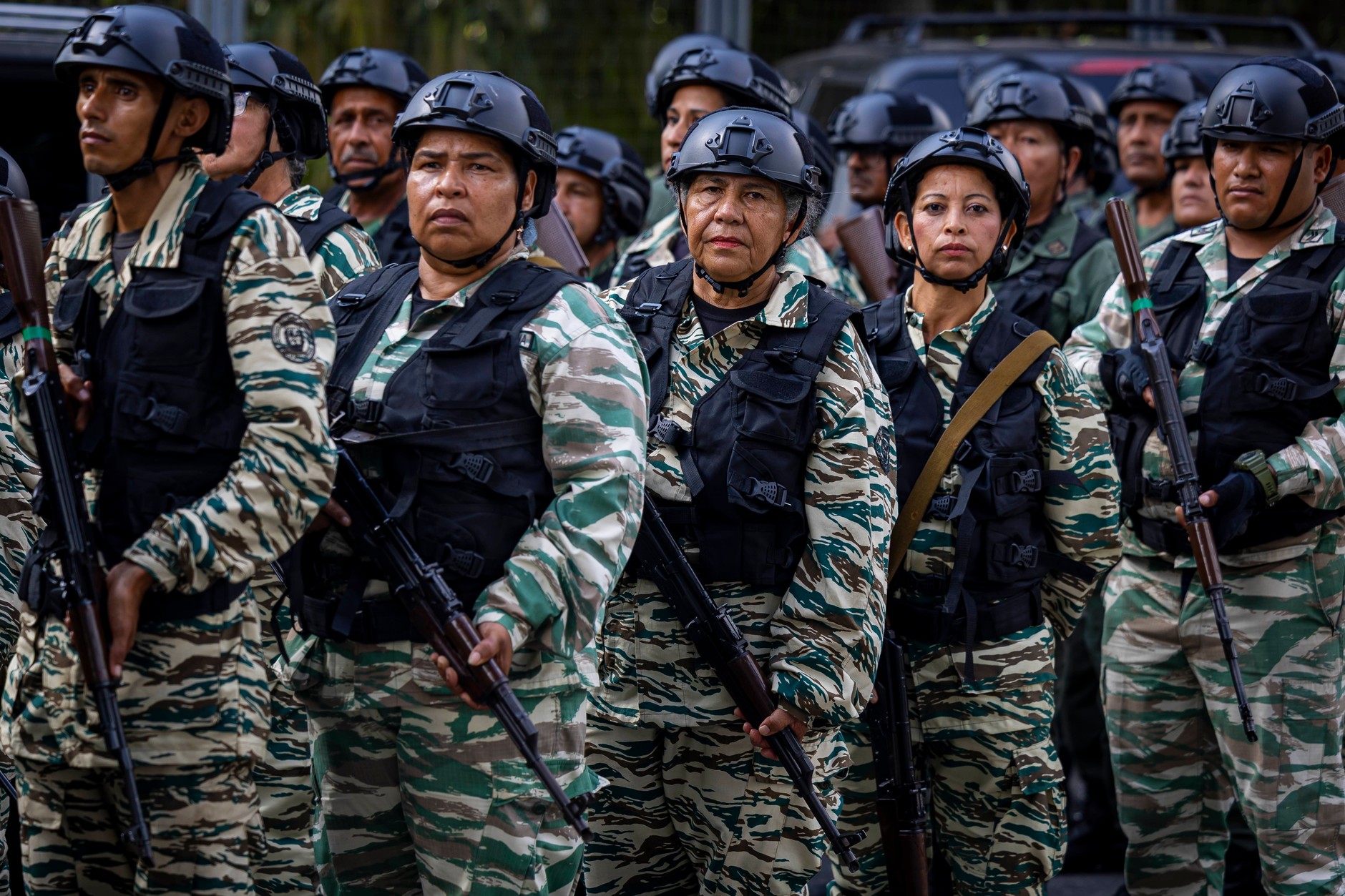
Venezuelan soldiers in Caracas, September 11, 2025.EPA/MIGUEL GUTIERREZ / PAP
Why do these actions put more pressure on Venezuelan elites compared to other measures such as sanctions?
However, this is a threat to use force. Sanctions certainly put pressure on the regime, but it has been under them for so long that it has certainly learned to live with them: ghost ships carrying oil to China, money laundering through Malaysia, and the roles of Iran, Cuba, Russia, China and Venezuela. It doesn't matter to the regime whether people are starving or there are not enough medicines. It's not something they worry about. And their existence is what concerns themselves. Now there is a real possibility of using force. I am sure this is intended to shock those closest to Maduro, to encourage them to decide on a change in the government.
The article continues below the video
“At least 5% of this cocaine travels through Venezuela.”
The focus on Venezuela was striking because there was some expectation that the focus would be on Mexico. Why do you think the White House is paying less attention to Mexico, even though its role in the drug trade remains unchanged?
Mexico is our largest trading partner. We have fully integrated economies on the border. I'm sure that [administracja] talks to President Claudia Sheinbaum and she responds. She was proactive, putting troops on the border, doing some of the things the president wanted [Trump]and allowing more intelligence to be collected in Mexico.
The country of origin of cocaine and heroin – most of the heroin and not all, but almost all of the cocaine that enters the United States – is Colombia. At least 5 percent, and potentially as much as 10 or 15 percent, of that cocaine travels through Venezuela. It then goes to the eastern Caribbean, Haiti and the Dominican Republic, and to some extent directly to Puerto Rico. Once it arrives in Puerto Rico, it is already inside the United States and can travel freely throughout the country.
The president has made clear that he believes the Tren de Aragua cartel is in collusion with Maduro. I don't know to what extent you can say that Maduro is in charge of Tren de Aragua. Their interests may overlap at times, but they are separate entities.
The decision to deal with Venezuela is not only a matter of drugs, but also of hemispheric stability. Crime occurs in Venezuela and comes from Venezuela. In addition, there are 9 million immigrants who have fled the country in search of a better life, and this in itself is destabilizing. Not only for the United States. If you look at a country like Aruba, it's about 10 or 15 percent. people living there are from Venezuela. This is a small number on a global scale, but an astonishing statistic when you consider the percentages.
Look at a place like Colombia, which has emerged from a 50-year war and is struggling to provide its citizens with health care and education, housing, food and opportunity. And now it has to deal with 3 million Venezuelans arriving across the border. I want to be very clear: very few Venezuelans are involved in illegal activities. Being Venezuelan is not a crime. Being an immigrant is not a crime. But this destabilizes the situation.
So why does the president make this decision? For many reasons. Related to drugs, related to stability, related to migration, related to human rights and related to democracy.
“For 25 years the country has been deprived of institutions”
Maria Corina Machado recently received the Nobel Prizewhich added wind to the sails of the Venezuelan opposition, which was struggling with Maduro's resilience. Do you think she could continue to lead the democratic transition in her country?
Maduro is an extremely unpopular figure, and Maria Corina Machado is a very capable politician. She has captured the imagination of the vast majority of Venezuelans, as evidenced by her victory in the primary elections and then the victory of her second deputy, Edmundo Gonzalez, in the elections last July. The first question is: how did this happen?
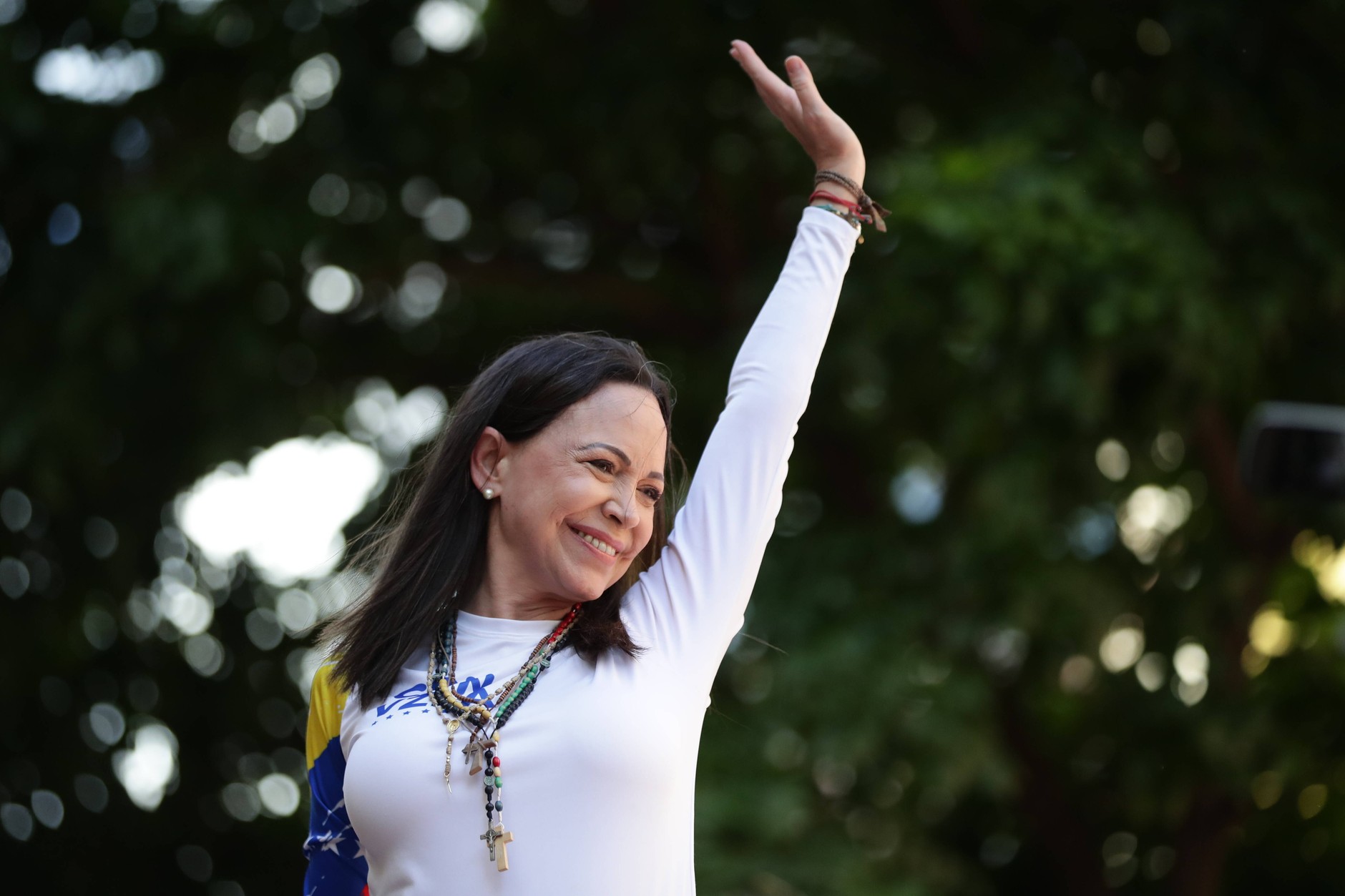
Maria Corina Machado at a rally in Caracas, January 9, 2025.EPA/RONALD PENA / PAP
If the theory of change is that we want someone close to Maduro to either exile him, extradite him, or send him to meet his maker, that person must know that after Maduro he will not spend his life in prison. Therefore, the Trump administration's first framework for a democratic transition in some sense defined what it would look like. I think it's important to define this.
What should the transitional government look like? The biggest problem is that the country has been deprived of institutions for 25 years. So there is not a single decision of the prosecutor general that would be contrary to what Maduro wanted to do. There is not a single decision made by the Supreme Court that is not in accordance with its will. There is not a single decision taken by the National Assembly that is not in accordance with its will.
Every institution in this country was created to support the few people who actually believe in Maduro's party. They're not popular, but if you want free food, you have to go to their marches. You must register. Do you want a job, a loan, a car, a passport, the ability to travel? You need to be part of the inner circle.
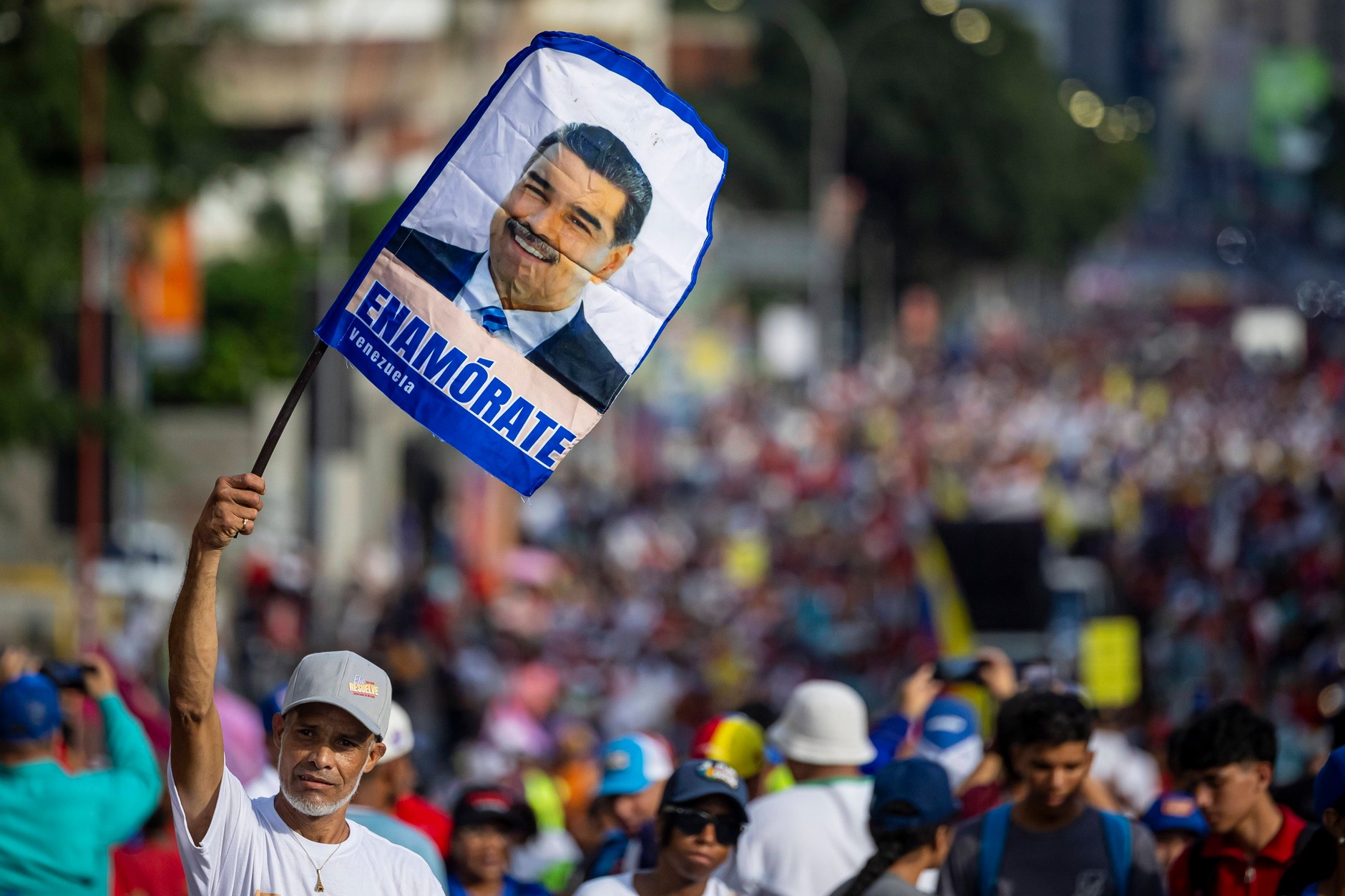
A demonstration of support for the Venezuelan government. Caracas, October 6, 2025EPA/MIGUEL GUTIERREZ / PAP
Let's assume that Maduro and the top colonels around him leave tomorrow. Now the question is: how to quickly re-institutionalize the country to hold free and fair elections and then usher in a new democratic period in the country? This will be really difficult. Maria Corina has the strength to start, but there is much work to be done because not only has the country been stripped bare – there is no money – but all the institutions have been destroyed. They all need to be fixed. Education, a medical system that was the envy of the entire region.
All these things can be rebuilt. At the end of World War II, when the Marshall Plan existed, something that previously existed was rebuilt. There are plans to launch what existed in Venezuela. But the first steps are institutions. Then you have to provide people with health care, food, electricity, air conditioning in places like Maracaibo. It's going to be really hard work. Many people say that if Maduro and company are removed, there will be general chaos and Venezuela will become Haiti, Libya or Iraq. But that won't happen.
Why not?
There will be no repeat of Haiti because they have plenty of natural resources and will be able to pay for their own development. They have an educated population, some of whom will definitely come back, especially the middle and upper middle classes.
There is also a Venezuelan patriotic ethos. This is Bolivar's country. Even Maria Corina Machado and Maduro agree on two things: the best arepas in the world come from Venezuela, not Colombia, and secondly, Essequibo is part of Venezuela. I agree about the arepas, I disagree about Essequibo.
There will be no violence from various camps like Iraq or Libya. So we have resources and an educated population. This doesn't mean there won't be problems. Many criminal groups operate in the country. I used to call Maduro the mayor of Fuerte Tuna, the military base where he lives, because he doesn't control the entire country. Crime happens everywhere.
These actors will have to be dealt with. Therefore, debasification is not a wise move [wyeliminowanie z życia publicznego członków partii Saddama Husajna]. Let's learn a lesson from Iraq. People who have committed human rights violations, tortured or murdered people will not be able to be rehabilitated. But there should certainly be room for captains, majors, lieutenant colonels in the military who could keep their positions, take an oath to the constitution and help ensure stability and security. If we got rid of them all, we would have a mess. It wouldn't be Haiti, it wouldn't be Iraq, it wouldn't be Libya, but it would be a mess.