The UN, European Union and World Bank report on the Gaza Strip, published in April 2026, paints a picture of unprecedented destruction. The assessment shows that rebuilding the region over the next decade will require expenditures of approximately USD 71.4 billion. The material losses alone in the conflict that the world has already forgotten were estimated at over 35 billion dollars, and the economic losses at another 22.7 billion.
Key sectors of social and economic life suffered the most, including housing, agriculture, health care and trade.
The authors of the report point out that the effects of the conflict are not limited only to destroyed buildings and infrastructure. According to the Human Development Index, As a result, the Gaza Strip went back 77 years. This indicator takes into account issues such as life expectancy, education and national income per capita.
The humanitarian situation in the Gaza Strip is dramatic. Less than half of hospitals are even partially functioning, approximately 1.2 million people have lost their homes, and nearly 1.9 million have been forced to leave their homes, often multiple times. The report also highlights the long-term social impacts, including the serious mental health burden that affects almost all children.
The number of victims of the conflict is shocking. Since the attack on Israel on October 7, 2023, by armed groups from the Gaza Strip, the conflict in the region has escalated rapidly, leading to a huge number of casualties and a serious humanitarian crisis. Over 71,000 people died in over two years of fighting. Palestinians, and over 171 thousand were injured; many people are still missing under the rubble.
The conflict also resulted in the death of approximately 1,671 Israelis and citizens of other countriesmainly during the attacks of October 7, 2023.
Ruins of a destroyed building in the Al-Shati refugee camp, west of Gaza City in the Gaza Strip (May 9, 2026)MOHAMMED SABER / PAP
Israel's tactics
— The situation is hopeless. Nothing is really changing in Gaza, even though a ceasefire has been in place since October last year. There are still individual raids and bombings by the Israeli army. For example, over the past month, since the next pause in the war agreed on April 8, more than 200 Palestinians have been killed, including thirteen children. It's something that shouldn't happen, but it does, says Małgorzata Olasińska-Chart, director of the humanitarian aid program at the Polish Medical Mission (PMM), in an interview with Onet.
— Israel also uses the tactic of gradually moving deeper into Gaza. This so-called the yellow line, which was supposed to mark a new demarcation line and separate Israel from Gaza at a width of several kilometers, was in practice moved so that Israel today controls most of the territory of Gaza. This is not the division that was agreed upon – Israeli troops are still going deeper, they have already occupied part of Gaza City and areas of Khan Yunis, which was not part of the agreement – emphasizes my interlocutor.
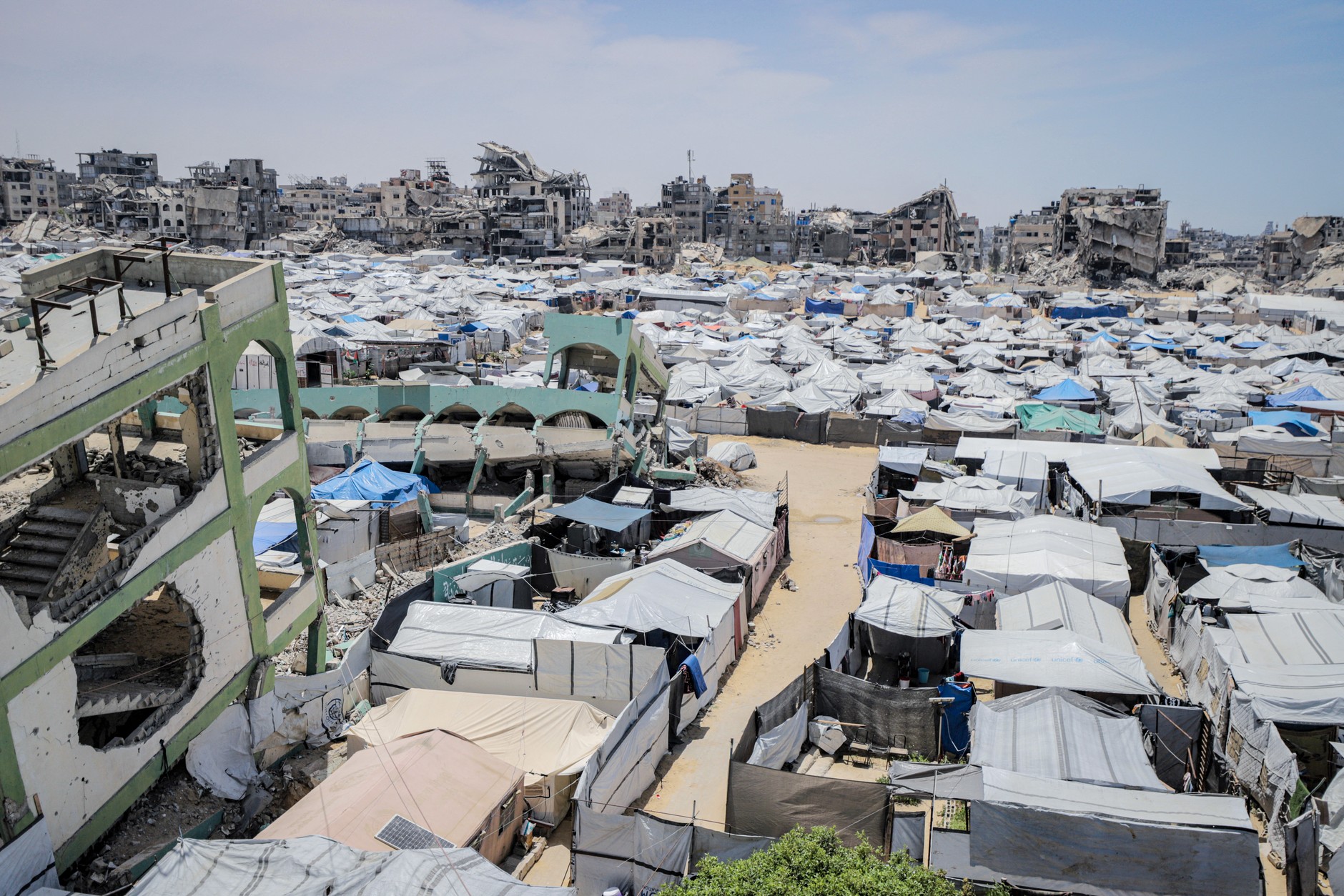
Tents in which displaced Palestinians found shelter in the western part of Gaza CityAhmed Al Arini / Middle East Images / AFP
“A shocking report”
Małgorzata Olasińska-Chart emphasizes that everyday life is a nightmare. — I read the report of the UN agency for Palestinian refugees and it is truly shocking. First of all, the problem is the health service, which has practically stopped functioning. There is a complete collapse – both in terms of the destruction of hospitals, clinics and medical points, as well as the blockage of medicine supplies. Border crossings are blocked, and only a few trucks with aid reach Gaza, including medicines later distributed by WHO. As a result, more and more infections appear, disease outbreaks spread, especially among children, and may turn into epidemics. – he reports.
In addition, there is the problem of parasites, insects and the diseases they transmit. — Living conditions are extremely difficult – I would even say primitive. Water is practically not available, and the inability to maintain basic hygiene means that the weakest groups, especially children, fall ill more often. Skin infections and fungal infections appear, he says.
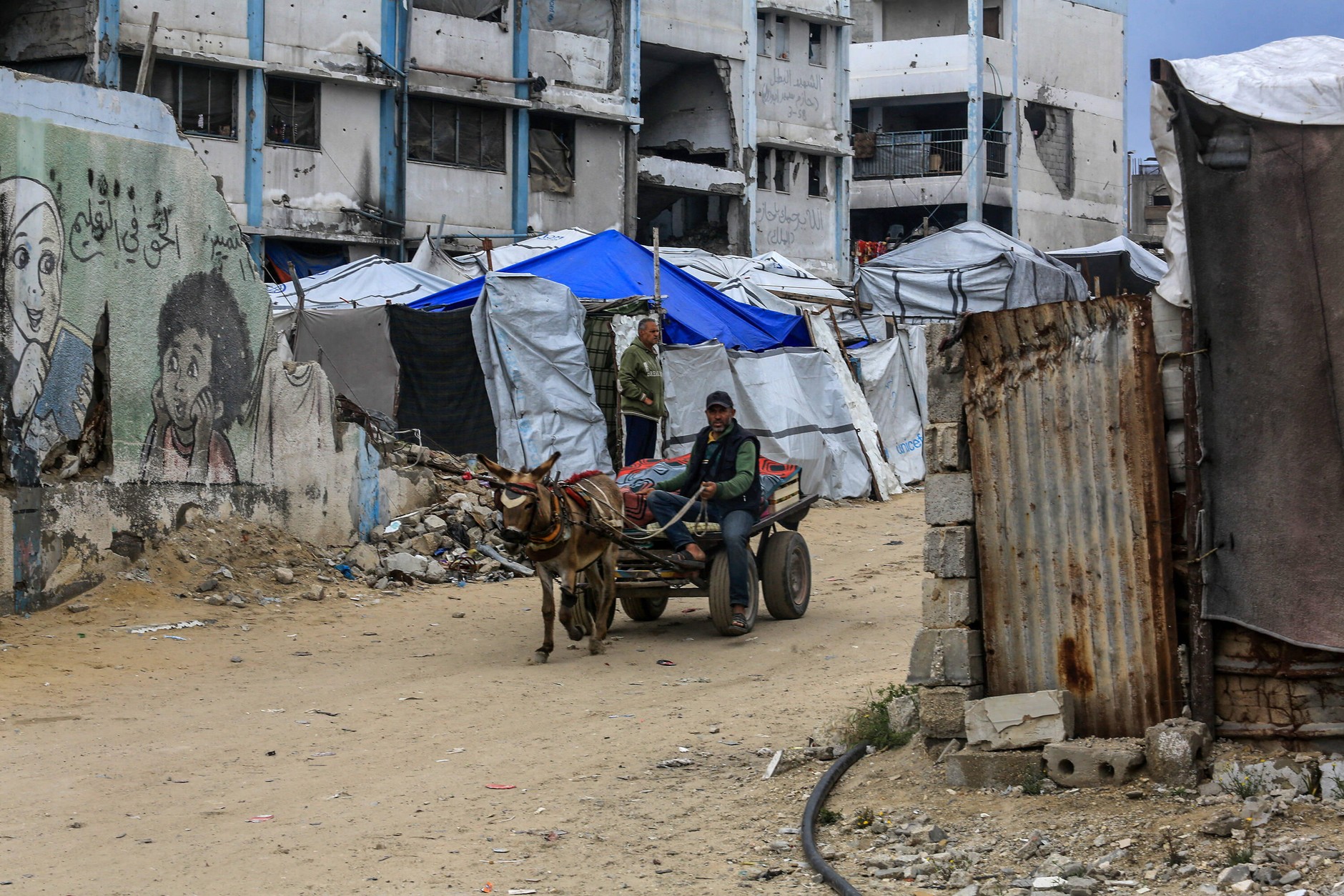
Makeshift tents and temporary shelters in Khan Yunus, GazaAA/ABACA / PAP
As Dr. Akihiro Seita, director of health at UNRWA (United Nations Relief and Works Agency for Palestine Refugees in the Near East), warned, “the current spread of rodents and infections is not only a health problem, but a clear signal of the vulnerability of the Gaza Strip and the almost complete collapse of its health care system.”
“The spread of rodents and disease-carrying insects is fueling a growing public health crisis and further worsening already very difficult living conditions. Rodents are appearing en masse in emergency shelters, resettlement sites and makeshift tents, biting people and polluting the spaces in which they live,” UNRWA warns.
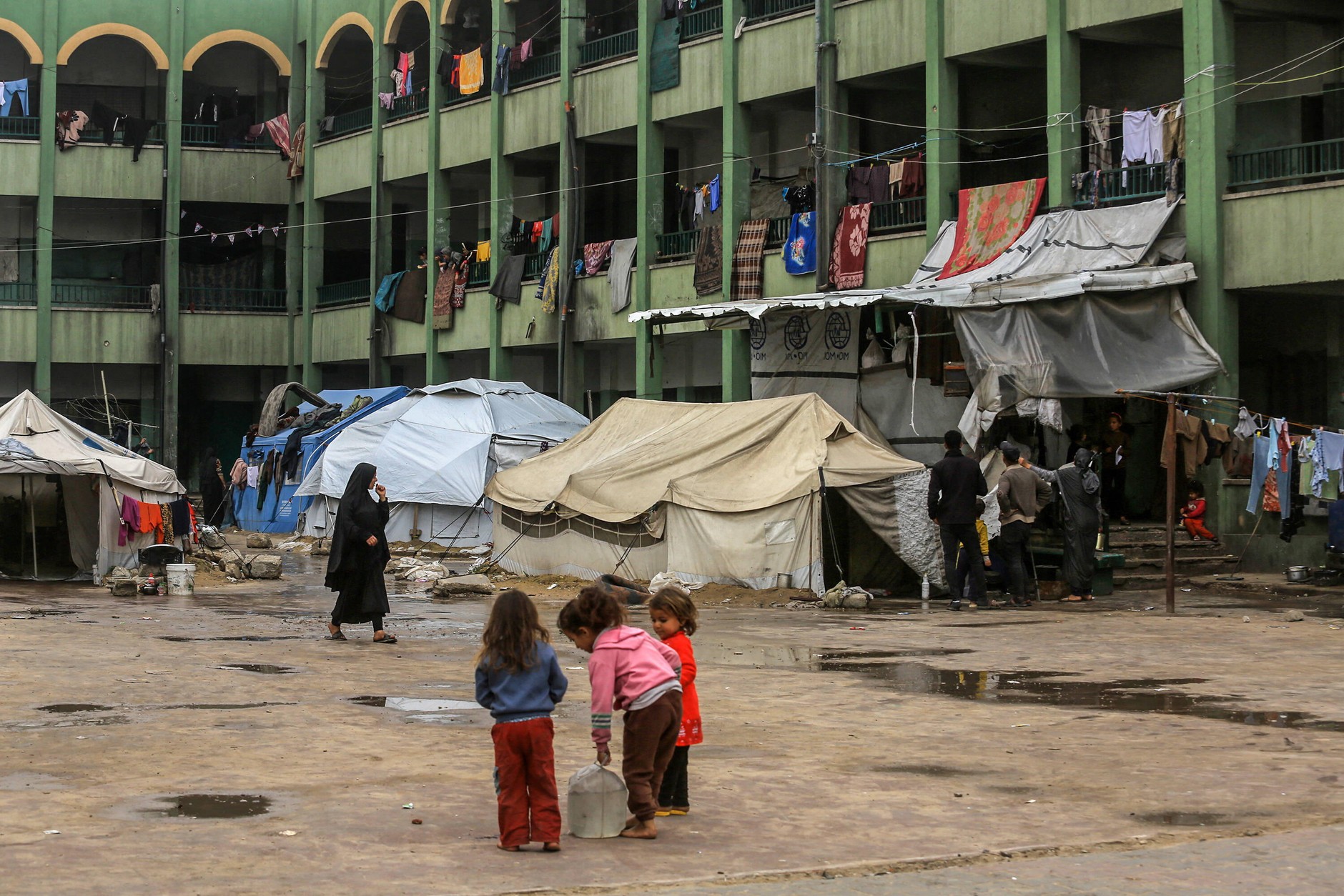
Everyday life in difficult conditions in Khan Yunus in the Gaza StripAA/ABACA / PAP
My interlocutor emphasizes that only certain organizations operate in the Gaza Strip – either local, Palestinian, or those that managed to register before the crisis broke out. Only they are able to function on site today.
— We cooperate mainly with the Palestinian Medical Relief Organization (PMRS) and the Glia organization, which is formally registered in Canada by Palestinian doctors. Glia currently runs a rehabilitation and wound care clinic in one of Gaza's hospitals – it is a separate part of the existing facility. We, in turn, are conducting a collection for the purchase of wound treatment products, because this is crucial. Thanks to this, amputations in children can be avoided if infections are controlled early enough, he says.
“Prices are unaffordable”
The report mentioned at the beginning of the text says a lot about the destruction of buildings in the Gaza Strip. I ask my interlocutor where people live there.
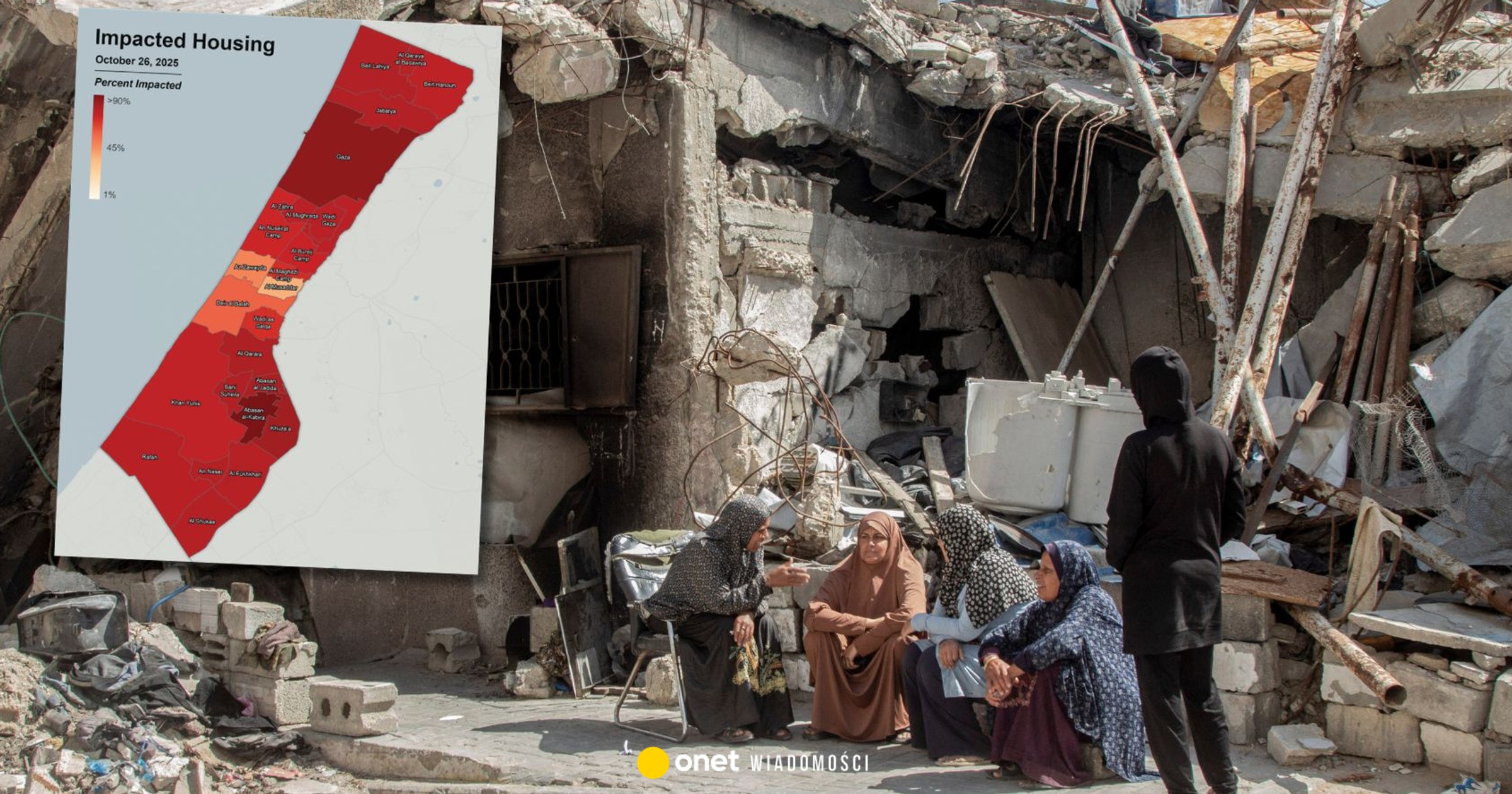
— People live in makeshift shelters or in ruins. They are building some temporary roofs out of tarpaulins, pieces of corrugated iron, and boards — anything you can find. These are very primitive conditions. They often choose dilapidated buildings that local engineers have deemed relatively safe—those that won't collapse. In practice, this means two walls and a roof, and they simply live there, says the director of PMM.
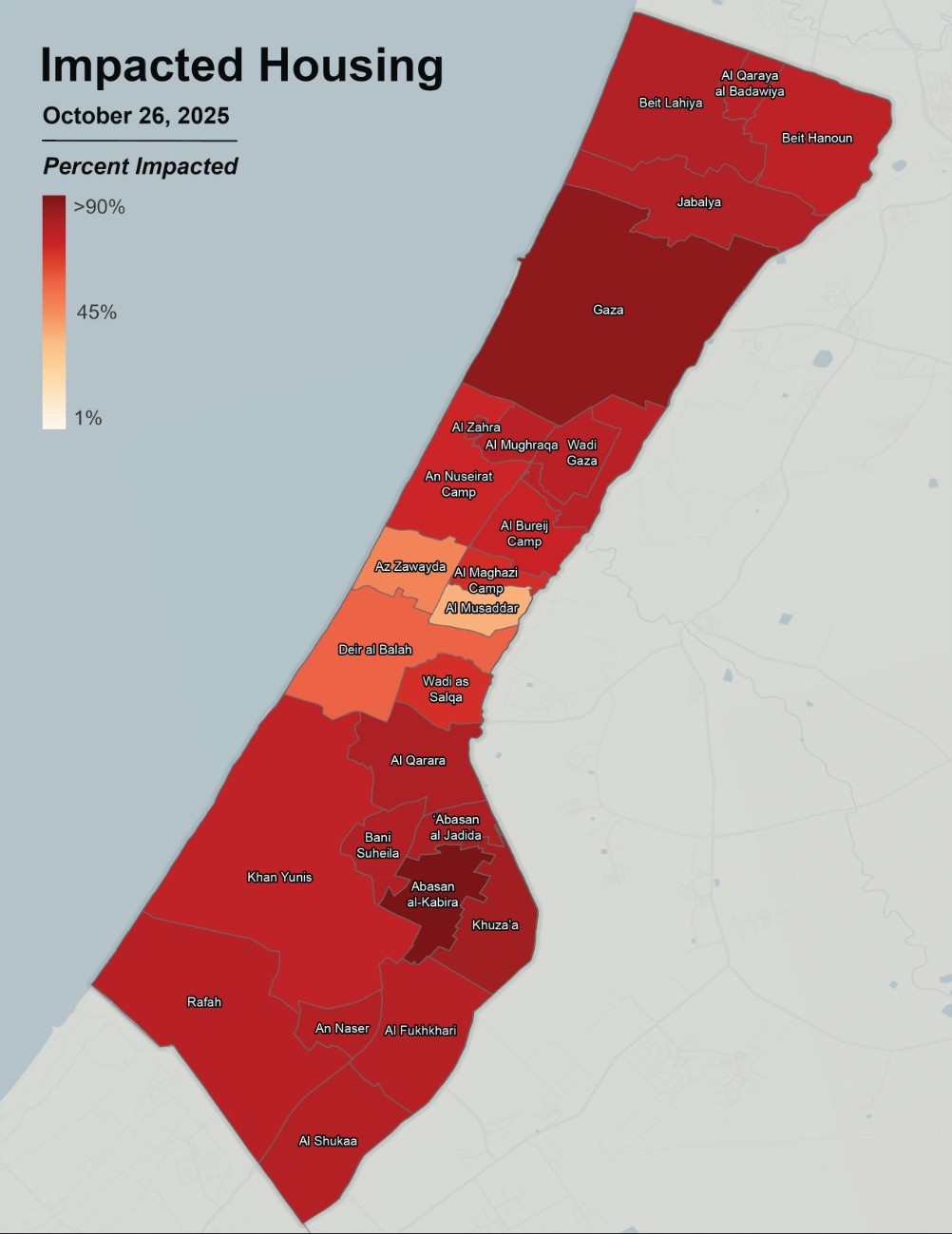
The scale of destruction of residential buildings in the Gaza Strip (as of October 26, 2025)UN, World Bank and EU report
Małgorzata Olasińska-Chart adds that another huge problem is the dramatic lack of food. — Aid distribution is very limited because Israel blocks the entry of free humanitarian food into Gaza. Food is available, but for commercial sale – it is mainly Israeli products, with Israeli labels. The problem is that the prices are unaffordable for most Palestinians. For example: a kilogram of tomatoes can cost about $20, and a kilogram of flour can cost several dollars. Nobody can buy it. In practice, Gaza was dependent on food deliveries organized by the World Food Program and UNRWA – and these deliveries have largely ceased, he says.
“Three Separate Islands”
Onet's interlocutor notes that in order to move between parts of Palestine – the Gaza Strip, the West Bank and East Jerusalem – you must enter the territory of Israel. — These three areas are like separate islands, not connected to each other. And Israeli regulations and the checkpoint system make it virtually impossible for Palestinians to move freely. This means very specific situations: if you have family in Jerusalem but you live in the West Bank, you cannot visit them – even if they are sick. If you have a sick child and need a specialized hospital in Jerusalem, you cannot go there. Likewise, it is impossible to move from Gaza to Ramallah at all. This is a real limitation of access to medical care, education and normal life, he reports.
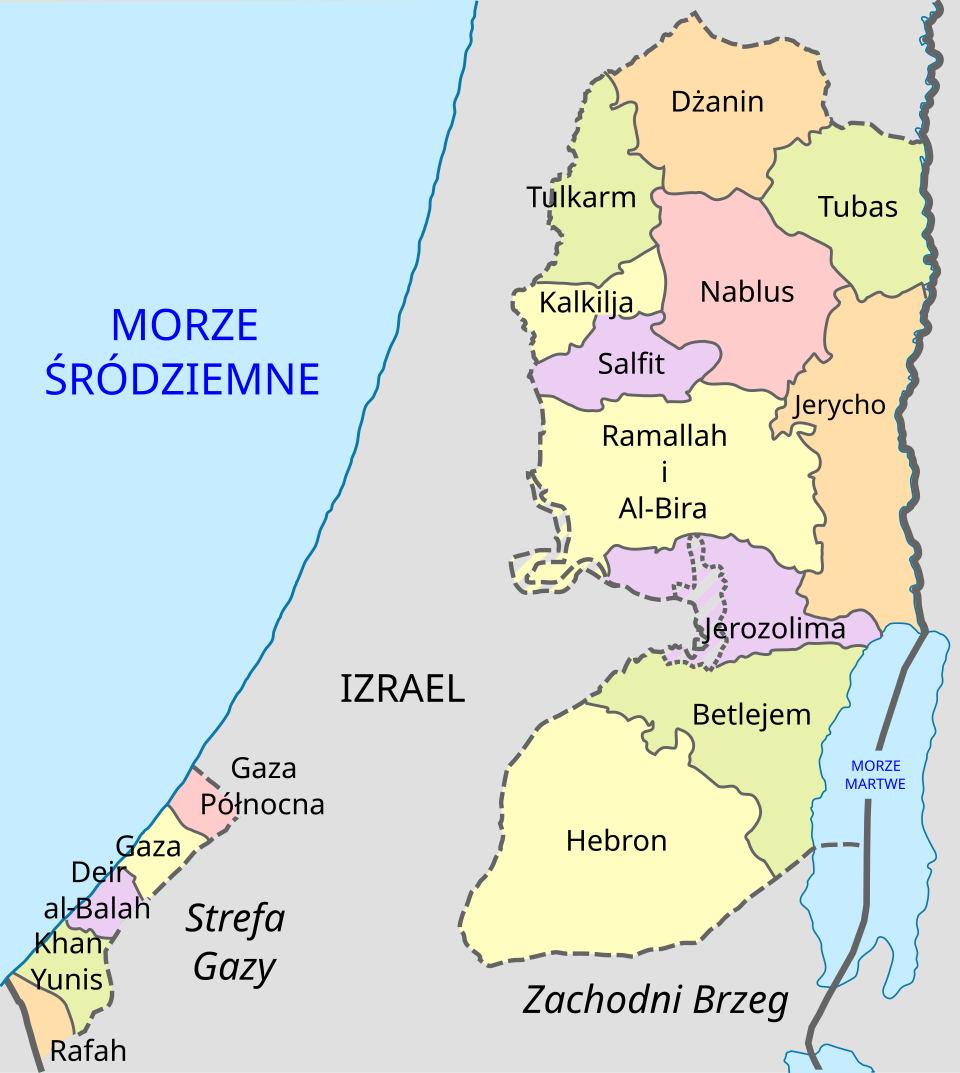
The Palestinian Territory includes the area of the Gaza Strip and the West Bank, including East JerusalemWikipedia (public domain)
Roads are often blocked – children have difficulty accessing schools, and entire towns are sometimes cut off.
– I saw it with my own eyes. In the West Bank, roads are blocked with huge concrete blocks placed across the asphalt. As a result, you travel thirty kilometers instead of three kilometers. Parents often cannot afford fuel to take their children to school on such detours. In one area there is one school for several villages, located several kilometers away, but due to blockades this distance is dramatically longer. So children take shortcuts – sometimes literally through sewage pipes, in very poor conditions. These are really difficult, depressing stories, says Olasińska-Chart.
Added to this is the destruction of livelihoods. — Olive trees, which are one of the last sources of income for Palestinians in the West Bank, are being uprooted by bulldozers. There are also attacks on families at night by settlers. There are entire villages forced to leave their homes. In one of the towns we work with, residents were pushed out because the Israelis wanted to expand a settlement built on Palestinian land. The pressure was so great that people just left – he concludes.
***
Support the assistance of the Polish Medical Mission in the Gaza Strip:
- set up a recurring payment in your bank for PMM activities or at https://pmm.org.pl/wplacam/
- make a donation to the account number of the Polish Medical Mission: 40 1030 1508 0000 0008 2378 3004
- donate via BLIK to the office number of the Polish Medical Mission: 575 222 705