After news broke Thursday that US President Donald Trump had pardoned Changpeng Zhao, the founder of the cryptocurrency platform Binance, the White House presented Trump's decision as an act of clemency, but also as a statement of support for the industry, Yahoo News reports.
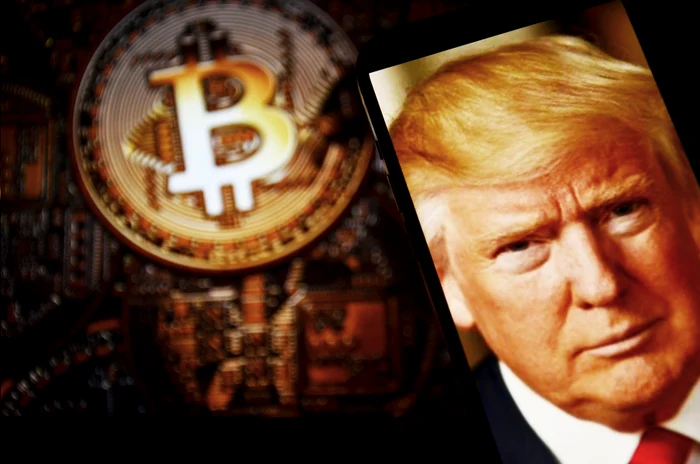
Trump has changed his opinion about the crypto world PHOTO SHUTTERSTOCK
“This was a case that was excessively prosecuted by the Biden administration,” White House press secretary Karoline Leavitt told reporters. “The previous administration was very hostile to the cryptocurrency industry. So the president wants to correct this injustice of the Biden administration by exercising his constitutional authority to do so”
But detractors believe that the decision to pardon Zhao – a billionaire of Chinese origin, nicknamed “CZ”, considered the richest man in the field of cryptocurrencies – denotes a possible conflict of interest.
“CZ pleaded guilty to money laundering and was sentenced to prison,” Democratic Sen. Elizabeth Warre wrote on X. “But then he bankrolled President Trump's cryptocurrency and lobbied for a pardon. Today, he got it. If Congress doesn't stop this kind of corruption, he will.”
The debate sparked by Zhao's pardon brings to the fore a larger issue: Trump and his family's ties to the cryptocurrency industry and the potential conflicts of interest those connections would create.
Founded by Zhao in 2017, Binance is the world's largest cryptocurrency exchange, a platform where customers can buy, sell, and own popular cryptocurrencies like bitcoin and ethereum, as well as hundreds of other lesser-known currencies.
In November 2023, Zhao and Binance pleaded guilty to charges of violating anti-money laundering rules. According to then-Treasury Secretary Janet Yellen, Zhao was essentially allowing “illicit actors” — including countries and sanctioned groups like Hamas, al-Qaida, and the Islamic State — to “trade freely” on Binance, “supporting activities ranging from child sexual abuse to illegal narcotics and terrorism.”
Zhao's sentence was relatively light: four months in prison. But the Justice Department fined it a record $4.3 billion and imposed onerous controls on Binance — effectively banning the company from operating in the United States after it caused “significant harm to U.S. national security,” according to prosecutors.
The Trump family's cryptocurrency business
Zhao was released last September. On September 16, 2024, Trump's sons Eric and Don Jr. launched the cryptocurrency firm World Liberty Financial with their father and Zach Witkoff (son of Steve Witkoff, special envoy of the US president). Since then, World Liberty Financial has sold billions of dollars worth of digital currencies – 75% of which went to a business entity linked to the president.
Shortly after his release, Zhao, who is friends with Zach Witkoff, according to World Liberty, began lobbying for a pardon. To that end, the Binance founder hired Witkoff's lawyer (Teresa Goody Guillén) and Donald Trump Jr.'s (Ches McDowell) hunting partner. The latter was seen just last week at the White House with the president's son.
Binance has become “one of the main drivers” of World Liberty's growth, according to the Wall Street Journal.
In May, Zach Witkoff announced that Binance would receive a $2 billion investment from an Emirati venture fund backed by the government of Abu Dhabi — and the payment would come in the form of World Liberty's USD1 cryptocurrency.
“It's just the beginning,” Witkoff said at the time.
Three months later, the Wall Street Journal reported that “the Trump family's crypto investment has generated more revenue since the election — about $4.5 billion — than any other part of the president's business empire.”
A “major reason” for the Trump family's meteoric success in cryptocurrency, the Journal explained, was “a partnership with a discrete trading platform managed discreetly by Binance” called PancakeSwap, which had “sparked interest among traders in using coins issued by … World Liberty Financial.”
Representatives of the Trump family have also discussed taking a stake in Binance's American branch, according to the WSJ. Pardoning the platform's founder could facilitate Binance's operations in America.
Changing attitude towards cryptocurrencies
Trump is a relatively recent convert to cryptocurrency.
“I'm not a fan of Bitcoin and other cryptocurrencies, which are not money and whose value is highly volatile and based on nothing,” he said in a series of social media posts in 2019. “Unregulated crypto-assets can facilitate illegal behavior, including drug trafficking and other illegal activities.”
Bitcoin “just seems like a scam,” Trump added in 2021; cryptocurrencies are a “disaster waiting to happen”.
“I think they should regulate them very, very strictly,” he concluded.
However, Trump changed his mind on the campaign trail last year, eventually promising to turn the United States into the “crypto capital of the planet.” The crypto industry spent tens of millions of dollars to help Trump win, then donated $18 million to his inauguration.
Just before returning to the Oval Office, Trump began selling $TRUMP, a so-called meme coin — that is, a type of cryptocurrency “based on an online joke or celebrity mascot” with no real use “beyond speculation,” according to the New York Times. First Lady Melania Trump issued her own meme coin that same weekend.
Investors from foreign countries, some of whom have openly admitted they want to influence the president, have rushed to stock up.
In May, Trump directed his followers on Truth Social to a raffle of sorts: by buying enough $TRUMP coins they could be among his top 220 investors, with the opportunity to attend an “intimate private dinner” with the president; by buying enough coins to become one of the top 25, you will win a “White House VIP Tour”. (The words “White House” were later deleted from the site.) Another round of speculation ensued.
In total, the paper value of Trump's crypto empire is now approaching $6 billion, according to the Wall Street Journal.
Meanwhile, the Trump administration disbanded a Justice Department unit dedicated to investigating cryptocurrency-related crimes; declared that meme coins are no longer subject to regulation; and agreed to drop a fraud case against a top crypto tycoon who invested $75 million in Trump tokens.