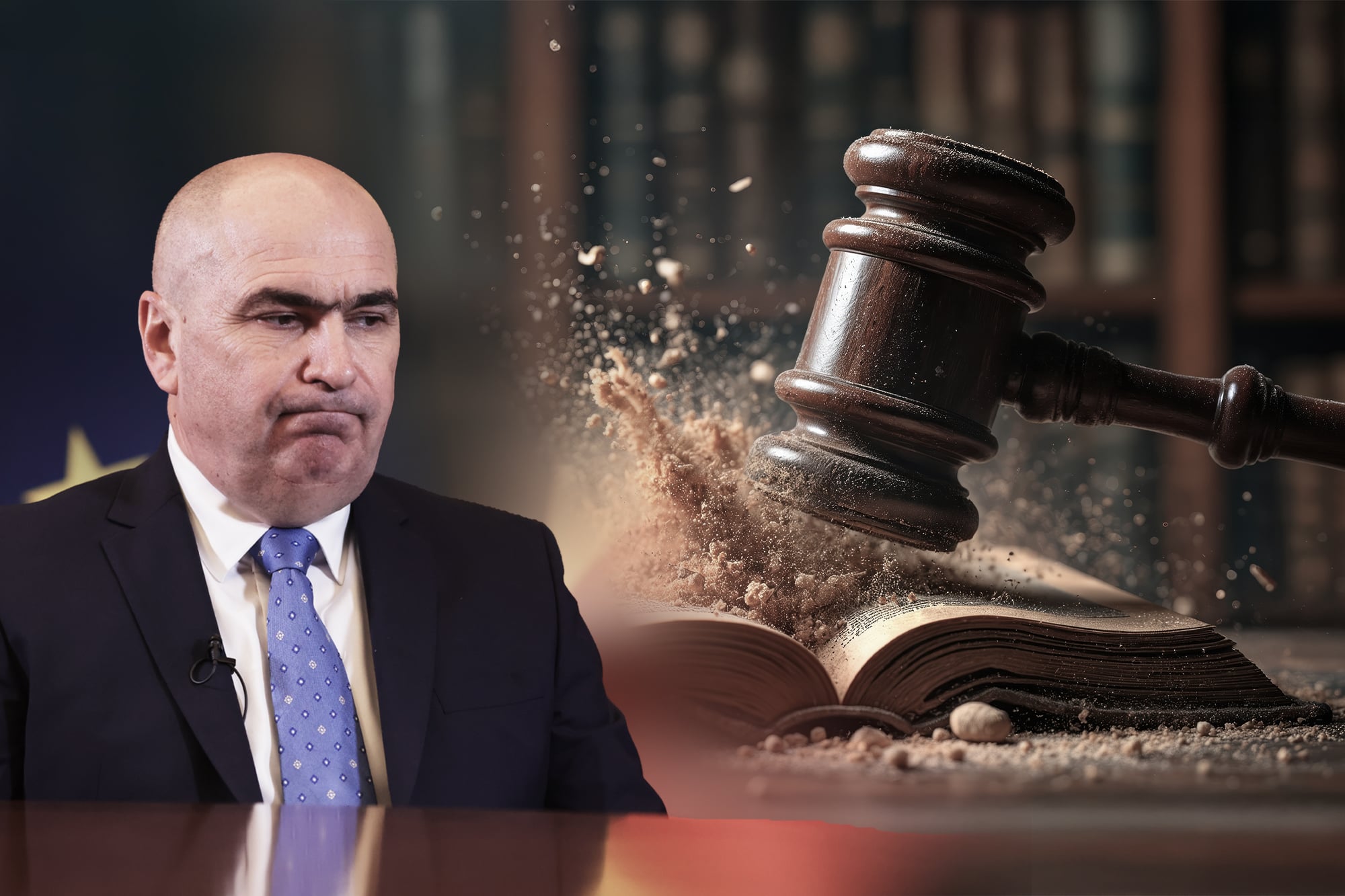
How does CCR explain the rejection of the law on the amendment of magistrates' pensions / Reactions of Dan, Bolojan and Savonea / What's next


What do both the “winners” from the High Court and the “losers” from the Government say, after the Constitutional Court of Romania decided on Monday in favor of the appeal submitted by the High Court to the law of the Ilie Bolojan Government regarding the reform of magistrates' pensions.
The CCR explained, in a first reaction, that it declared the law unconstitutional on formal grounds, namely on the lack of the opinion of the Superior Council of Magistracy. The government had the obligation to wait for the CSM's opinion, for the issuance of which the CSM had 30 days at its disposal, according to the law, the CCR said in a statement.
The first reactions were:
Judge Lia Savonea, president of the ÎCCJ: “The independence of the judiciary is not a privilege”
The President of the High Court, who filed the appeal, reacted to the decision taken by the CCR judges with a majority of 5 to 4 by saying that “the independence of the judiciary is not a privilege of the magistrates”.
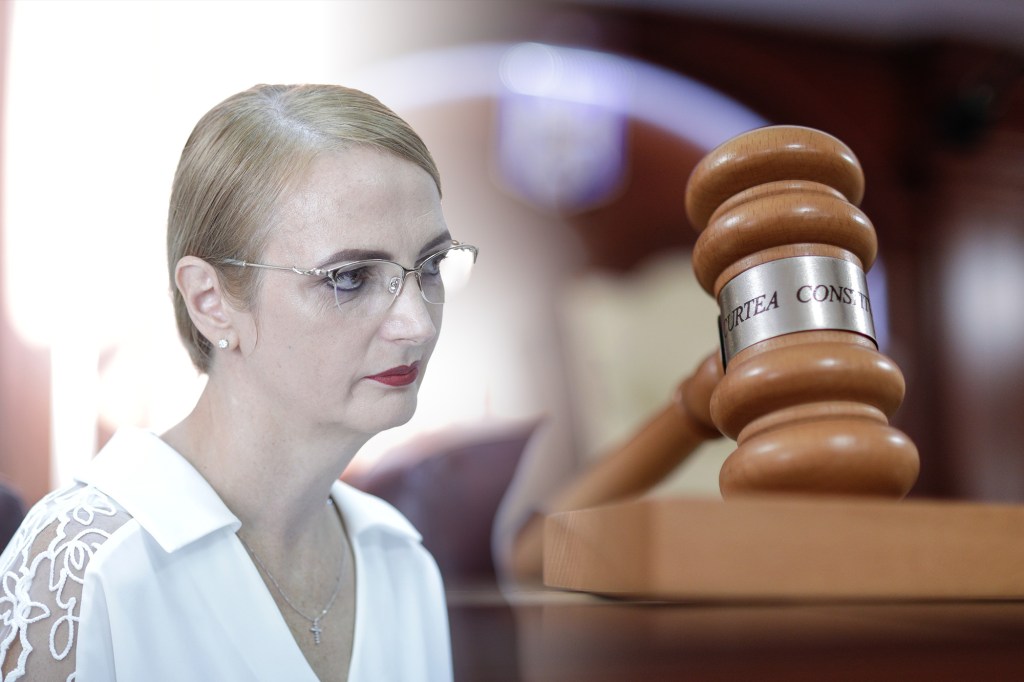
“The judiciary does not negotiate and does not submit to political pressure. The admission of the exception of unconstitutionality confirms that the independence of the judiciary is not a privilege of magistrates, but a guarantee for citizens,” Savonea said, according to Euronews.
“The CCR decision shows that the rule of law is defended by the Constitution, not by political attacks. Faced with the attacks and pressures of the last months, this decision shows that the constitutional foundation of the rule of law remains solid, beyond any political dispute,” she added.
Bolojan: Nowhere in the world does one retire like this
Prime Minister Ilie Bolojan announced on Monday evening, approximately five hours after the Court rejected the proposal assumed by the government in Parliament, that this reform remains “a firm objective for the Government, assumed by the entire coalition”.
“The CCR did not fundamentally reject the project of this reform, the objection was purely procedural, so the Government can resume the approach, which is a necessity,” said the head of the Executive.
“Nowhere in the world does one retire at the age of 48-50 and do not take a pension equal to the last salary. These are not political issues, but are socially and budgetaryly unbearable privileges. Not the Government, not a politician or a party need this reform, but Romania needs it”, the prime minister said.
 DOCUMENT. The Ministry of Labor requested the opinion of the CSM for the project to modify the magistrates' pensions, but “Bolojan preferred not to wait for it” – political sources
Nicușor Dan: My message to the Romanians is that this is a problem
President Nicușor Dan was convinced on Monday evening that the law on magistrates' pensions will be changed during this year, saying that he noted that there is “political will” in the coalition to solve the problem. In this context, the head of state sent a direct “message” to the Romanians.
“It's an emotional moment, because there was a lot of public expectation for this law. There were several versions in recent years that, however, had various problems, some were also declared unconstitutional, but what's important, in my opinion, is that there is a will at the level of the governing coalition for this problem to be solved,” said the head of state, in an interview given to the “Observator” show on Antena 1.
“Today, the Constitutional Court found, and we respect the decisions of the Constitutional Court, a formal objection, an opinion was not expected. Several of the coalition representatives have already come out and said that they will come back with a project that will comply with this opinion. So, my message to the Romanians who are looking at us is that this is a problem, the fact that pensions are equal to the salary and does not stimulate people to stay working, but incentives to get out of the system right when they are in power, it's a problem for the justice system and it's a social justice problem and it will be solved. No doubt here,” the president added.
The law was analyzed by the CCR only on grounds of form, not on content
CCR invokes only extrinsic criticisms of unconstitutionality, i.e. related to the form of the law, not the content, because the constitutional judges did not analyze them.
The CCR press release, in full:
“The Constitutional Court established that, in the present case, the Government undertook its responsibility over the Law for the amendment and completion of some normative acts in the field of service pensions in compliance with art. 114 of the Constitution, as it regulated a homogeneous field of social relations and justified both the urgency and the necessity of adopting the law.
It also found that it is the competence of the legislator to assess the frequency of changes made in the field of service pensions and, therefore, the criticized law does not violate art. 1 para. (3) and (5) related to art. 16 and art. 124 para. (3) of the Constitution. The lack of the CSM's opinion, combined with the Government's failure to wait for the entire 30-day period necessary to obtain it, violates art.1 para.(3) and (5) related to art.133 para.(1) and art.134 para.(4) of the Constitution.
Regarding the criticisms of extrinsic unconstitutionality, the Court found that:
- – the engagement of the Government's responsibility before the Chamber of Deputies and the Senate, in a joint session, on a draft law is a constitutional aspect of the relations between the Government and the Parliament, thus achieving both parliamentary control and the act of legislation itself. The adopted regulations are the subject of a single draft law, have a unitary object and purpose, respectively measures related to the reform of service pensions in the justice system. The urgency and necessity of adopting the law had in mind the avoidance of accentuating the budgetary imbalance and the obligations assumed through the normative framework for the implementation of the National Recovery and Resilience Plan;
- – the successive character of some legislative reforms or developments is not in itself contrary to legal security as long as the Parliament coherently aims to achieve a rational purpose, which organically integrates the legislative solutions promoted in the positive law. Legal security does not reject legislative developments, even if they are the result of successive changes to the laws, on the contrary, it allows them on the condition that they do not have a rapid succession in time and do not show an arbitrary element or endanger fundamental rights or freedoms or constitutional standards, principles, values. Moreover, no constitutional provision establishes a temporal prohibition on Parliament to successively legislate in a certain area;
- – since Law no. 305/2022 establishes a 30-day deadline for issuing the opinion by the CSM, the Government, as the initiator of the criticized normative act, has the obligation to respect it.
The decision is final and generally binding”.
How the vote was divided in the CCR
The vote in the CCR was 5/4 for admitting the appeal to the Supreme Court, sources from the Constitutional Court told HotNews.
According to HotNews sources, the five judges who voted for the admission of the appeal of the unconstitutionality of the law on magistrates' pensions are: Cristian Deliorga, Gheorghe Stan, Mihaela Ciochină, Bogdan Licu and Marian Busuioc.
Meeting at the Coalition on Tuesday
According to the PSD leader, Sorin Grindeanu, the coalition will meet on Tuesday in the first meeting after the decision of the Constitutional Court. Asked if, in his opinion, the resignation of Ilie Bolojan is required, the PSD leader said that the prime minister should not leave.
Until now, Prime Minister Bolojan has not reacted. The spokeswoman of the Government, Ioana Dogioiu, said that the Government will issue a point of view after the Constitutional Court sends the communique to officially announce the declaration of the law as unconstitutional.
On September 2, a day after holding the Government accountable in Parliament for the package of measures, Prime Minister Ilie Bolojan was asked by HotNews in a press conference if he would resign if the bill on magistrates' pensions failed at the CCR.
“When you have an important project that is a milestone for making other similar decisions, if it doesn't pass, it's hard to assume that the Government still has the legitimacy to come up with similar measures in other areas,” answered Bolojan.