57 municipalities and 146 cities in Romania no longer comply with the minimum population criteria. What savings can the state make by relegating them


The Ministry of Development analyzes the ranking of localities in Romania. A reclassification according to the number of inhabitants could reduce posts and salaries in local administrations, where they are not already correlated.
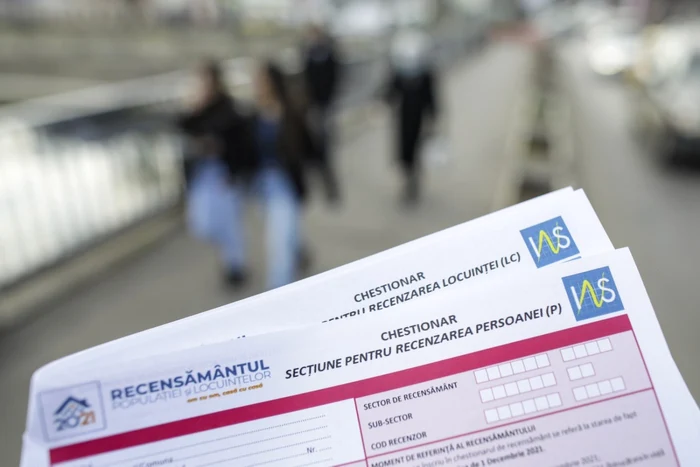
Population census PHOTO: Inquam Photos
The analysis is already completed, and the Minister of Development, Cseke Attila, explained that it is based on the data of the last census and on the criteria provided by the law on the National Territorial Development Plan. According to the minister, almost half of the municipalities and a large part of the cities in the country no longer meet the legal population thresholds, writes Mediafax.
“At the Ministry of Development, we carried out a strictly professional analysis, without political criteria, based on Law 351 regarding the National Territorial Development Plan. Of the 103 municipalities, 57 no longer meet the criterion of 40,000 inhabitants, and of the 216 cities, 146 are below the threshold of 10,000 inhabitants”. the minister declared on Friday, in Sebeș, for Alba24.
The number of inhabitants dictates the maximum salary limits
An administrative reclassification, according to the actual number of inhabitants – whereby some municipalities could be reclassified as cities, and some of the cities could become municipalities – has direct effects on the organization charts in the town halls and on the salary level, where they have not already been correlated with the current population.
According to the Framework Law on the remuneration of staff paid from public funds, with subsequent amendments and additions, the allowances of mayors and vice-mayors are calculated by applying a coefficient established according to the number of inhabitants of the locality to the gross minimum basic salary per country. At the same time, the salaries of the employees of the mayor's specialized apparatus cannot exceed the level of the deputy mayor's allowance, according to the legal provisions in force. In other words, the number of inhabitants dictates the maximum salary limits.
In the case of an administrative reclassification – for example, when a municipality is reclassified as a city – the salaries and allowances of the staff in the administrative apparatus are adjusted according to the new locality category, within the maximum limits established by law, if the mayor's office has not previously operated the updates according to the actual number of inhabitants. But there are also localities that, following population growth, could be promoted to the rank of city or municipality, with the opposite effect.
Analysis, based on the census
Also, the reclassification also has an impact on the maximum number of positions in the mayor's specialized apparatus, as the personnel regulations are established according to the population of the administrative-territorial unit, according to the provisions of the Administrative Code and subsequent acts.
Cseke Attila pointed out that currently the analysis is “strictly professional, carried out without taking into account any criteria other than technical and legal ones”, being carried out mainly on the basis of data from the Population Census.
However, the official admitted that it exists “a significant difference between the current administrative status and the demographic reality reflected in official data”.
Changing the rank of localities is done only by law
The transition of a locality to a higher rank is carried out only at the initiative of the local authorities, under the conditions provided by Law no. 351/2001 regarding the approval of the National Territorial Development Plan. The procedure involves the adoption of a decision by the local council, the organization of a local referendum for the consultation of the population, the submission of the request to the Government, which analyzes the fulfillment of the criteria set out in the annex to the law (number of inhabitants, infrastructure, public services, economic development, etc.), and the adoption of a special law by the Romanian Parliament, which approves the new administrative status.
The downgrading of a locality to a lower rank can be done, however, when it is found that it no longer meets the legal criteria for maintaining the current status, the number of inhabitants being one of the main criteria. Although the law does not provide for an automatic mechanism for changing the rank, the Ministry of Development periodically monitors local indicators (number of inhabitants, facilities, infrastructure, etc.) and can propose the initiation of a reclassification bill when it is found that the legal conditions are not met.
A decision with political and economic stakes
The findings of Minister Attila Cseke show that a significant number of cities and municipalities no longer comply with the minimum demographic criteria provided for by law, but no legislative measures for reclassification have been initiated.
The reasons are mainly political, but also economic. Downgrading a city to commune status, for example, is a sensitive decision, perceived by the population as a loss of status, and the loss of urban status could affect access to government or European funding programs.