This bread is the pride of Samarkand. Doing it has become the meaning of life for us
– says Davronov Okhun, the baker.
How are the legendary loaves of bread made?
We visited Samarkand to see how these loaves are made and what is needed to bake them in such large quantities. Making these loaves starts by combining 62 kg of flour, water, salt and yeast in a mechanical mixer. After about 40 minutes, the dough is taken out, kneaded and left to rise for four hours. It is then cut into 1.5kg balls which rest and rise for another hour and 20 minutes.
— The whole process takes us six hours. It takes five hours for the dough to form a loaf. First, fermentation takes place in the form of a dough for four hours, and then in the form of a loaf for an hour, explains Davronov.
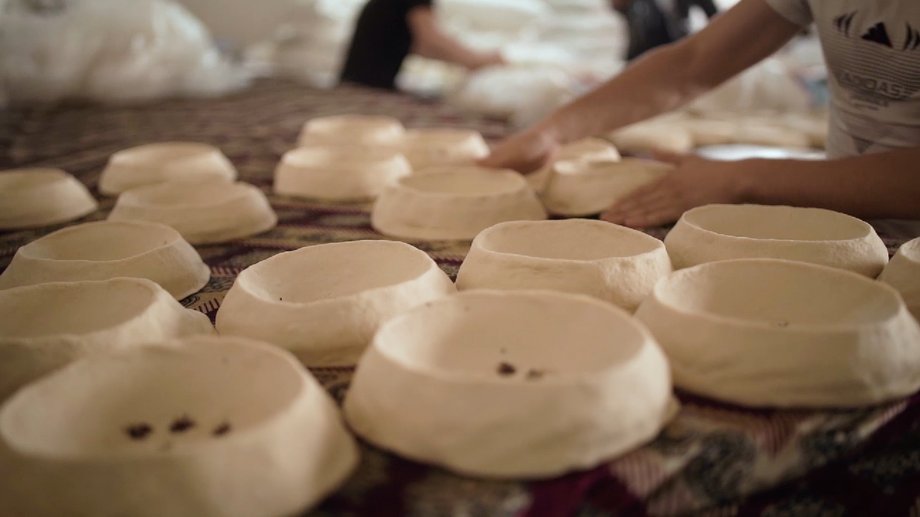
Bread from Samarkand is the pride of Uzbekistan
|
Business Insider
Once the dough has risen, it can be shaped. That's when master baker Davronov Okhun steps in. She has been baking bread for eight years and can make 600 loaves a day during her 12-hour shift.
– Now we take this loaf and press the edges to make it flat and round. We use such a device to give it a shape. We then stamp the center of the bread using a device called a manpa, explains the baker.
Similar to scoring bread before baking, workers use needles to make small holes in the center of the loaf. During baking, steam can escape from these holes and prevent the center of the bread from rising. However, there is more than just functionality behind these cuts. They also have a decorative function and are the bakers' signature. After the loaf is rounded and stamped, sesame seeds are pressed inside.
“We dip our fingers in water so that the grains stick well to the dough,” he says.
There have been accidents where bakers have fallen into the oven
While the bread waits, giant tandoor ovens are heated. Once hot, they are sprayed with water and lowered to a more ideal temperature. Maintaining the appropriate oven temperature is done entirely by feel and is one of the most important parts of the baking process.
We heat the tandoor and assess the temperature – if it is too hot inside, the bread will not stick to the oven, and if it is not warm enough, we will not peel it off.
— explains Davronov.
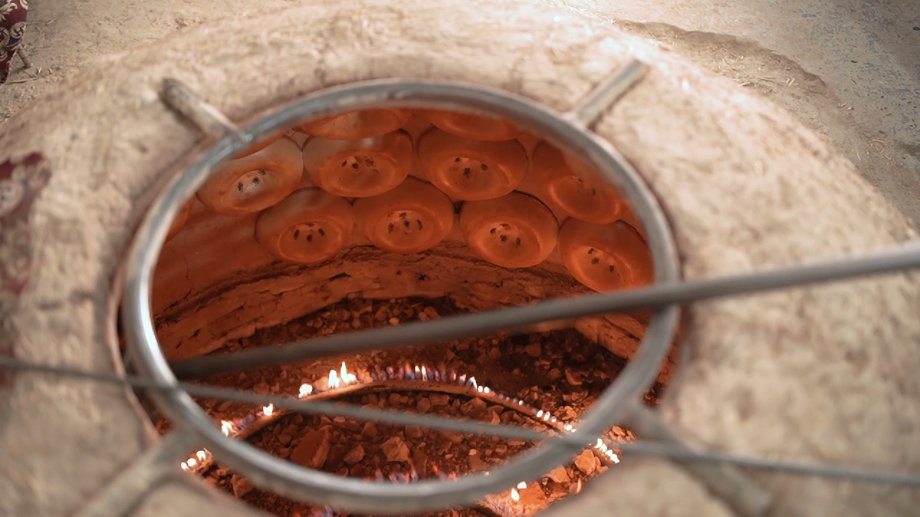
Each of these ovens can accommodate approximately 56 large loaves or up to 72 small loaves at a time
|
Business Insider
Before the bread goes into the oven, bakers rub a small amount of water on the bottom of the loaf to make it stick better to the walls of the tandoor. Bakers grab the bread through the fabric and dive deep into the oven to stick on loaf by loaf until every inch of the oven is filled. However, such “acrobatic” baking is not without risk.
It's dangerous. There were situations where people fell inside because the tandoor was old and collapsed
– he recalls.
Read also: Internet users are demanding price reductions. What's the deal with oxtail?
Falling into the oven is rare, but bakers must be extremely precise in aiming and sticking the bread. One wrong move and they could lose the loaf or, worse yet, get burned.
Each of these ovens can accommodate approximately 56 large loaves or up to 72 small loaves at a time. Due to the high temperature, these breads only need a few minutes to bake. When the center is crispy and the sides are puffed up, the bread is ready to be taken out. Unlike conventional stoves used in the West, tandoor stoves retain heat for longer periods of time and require less material to fuel the fire.
The use of such vertical furnaces is believed to have originated with the Semitic peoples who spread throughout the Middle East and Central Asia. Relics of such furnaces date back to 5050 BC
—We have many tandoors. If we used all of them at the same time, we could bake 15,000. loaves, says the man.
Once baked, the breads are loaded onto delivery trucks and taken to the local market. Here, locals can buy produce and this legendary bread for about $1 to $2. The price depends on its weight.
It is a famous and unique taste. This bread is very popular and tastes delicious
It is high-quality and tasty bread
– praise customers.
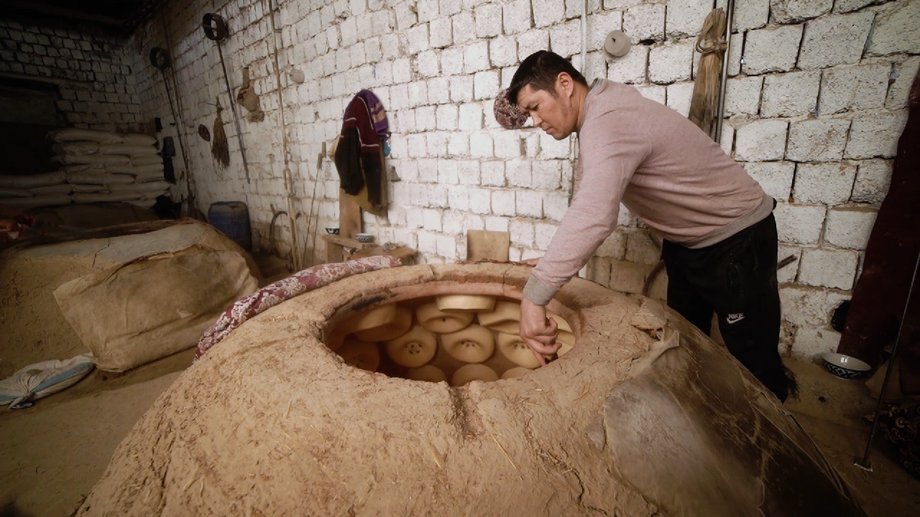
Maintaining the appropriate oven temperature is done by feel
|
Business Insider
Read more: Chip wrappers – a disaster that producers are silent about. Who will stop this plastic nightmare?
Why is this bread from Samarkand so popular?
Legend has it that the air in Samarkand gives this bread its unique texture and taste. In addition to its unique taste, this bread also has symbolic meaning. Huge loaves are often split in half during wedding ceremonies, symbolizing unity between families, and Uzbek children are often taught to pick up bread from the floor so that not a single crumb is wasted.
Freshly baked bread is usually served with butter and jam. After a few days, the harder loaves are broken into pieces that can be dipped into hot soups and sauces. Fortunately, Samarkand breads have a long shelf life and can last up to 10 days. So if you ever need bread that can be mailed, or you plan to travel for an extended period of time, this may be your best choice.
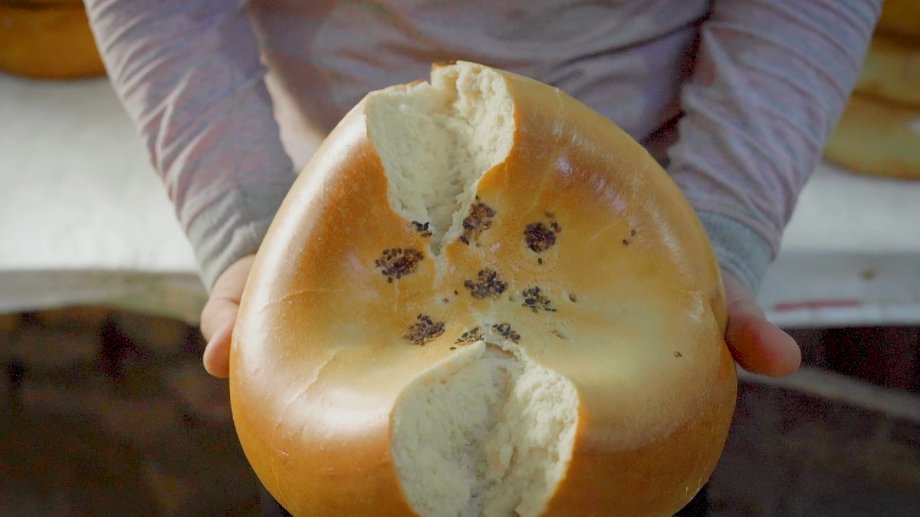
The legendary circular loaves are dense, chewy and have a golden crust
|
Business Insider