While the United States warns against reaching for frozen Russian assets, the European Union is pushing to unlock billions of euros for Kiev — revealing an increasingly clear rift between the U.S. and Europe over financing Ukraine's resilience.
The United States reportedly urged several European governments to do so rejection of the EU proposal using frozen assets of the Russian central bank as security for a multi-billion dollar loan to Ukraine, known as a reparations loan.
The behind-the-scenes of diplomatic pressure from overseas sheds new light on America's war strategy. It is Russian billions that are becoming a bone of contention in Europe – and the real clash is taking place behind the scenes.
The planned loan – strongly rejected by Belgium, which fears legal risks because its Euroclear securities depository holds most of Russia's assets – would involve using those funds and redirecting them to support Ukraine. Ukraine would only have to repay it if Russia pays reparations in the future.
According to Bloomberg, citing anonymous diplomats, the Americans are lobbying several EU governments to block this project.
The interlocutors – who requested anonymity – say US officials argue that these funds should be kept for the purposes of a future peace agreement with Moscow, and not spent on activities that they believe could prolong the conflict.
If these reports are accurate, the American push comes at a moment's notice growing differences in a transatlantic approach to ending the war and utilizing Russian assets, while Kiev faces increasing financial pressures. The US State Department refused to comment to Bloomberg on diplomatic contacts.
This week, the EU presented a plan for a reparations loan, in which the frozen Russian assets of the central bank would constitute security for a loan worth EUR 90 billion (approx. PLN 391 billion) intended to support the Ukrainian economy and army in the next two years.
Currently, approximately EUR 210 billion (approx. PLN 913 billion) of Russian funds are frozen in the EU – most of them in Euroclear – and most of this pool could be used after 2028.
The talks are taking place at a sensitive time for Kiev – the US is pressuring Ukraine to move towards a peace agreement with Moscow, which many European diplomats believe could be unfavorable for Ukraine. With most U.S. aid currently on hold and funds likely to run out early next year, Europe is forced to shoulder a greater burden of support.
Merz strikes back from Berlin
Washington also suggested that Russian assets could be used after the war for investment projects under American supervision – which has become one of the key sticking points in ongoing negotiations.
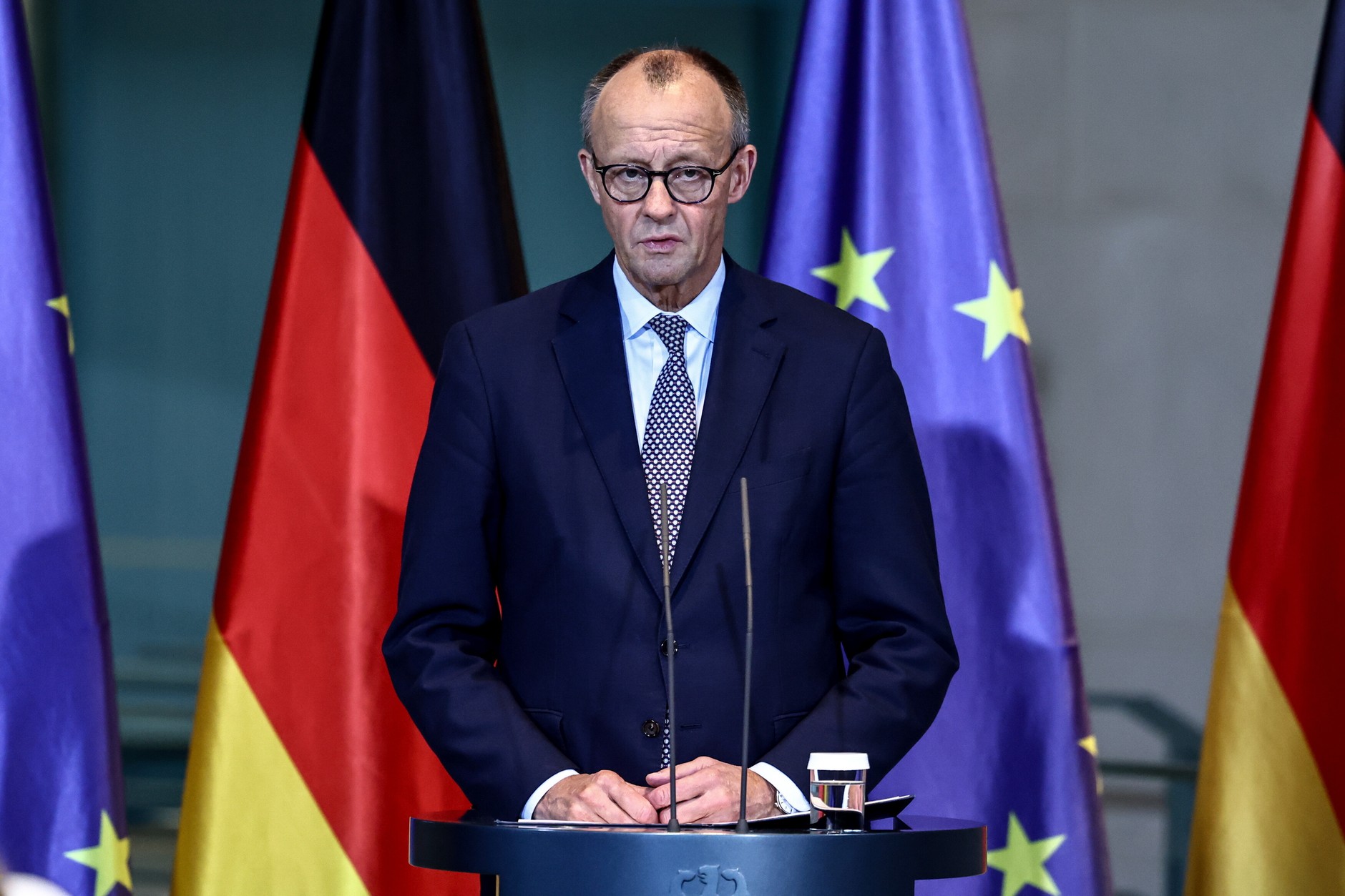
German Chancellor Friedrich Merz speaks during a press conference after the 48th session of the German parliament, the Bundestag, in Berlin, Germany, December 5, 2025.PAP/EPA/FILIP SINGER / PAP
German Chancellor Friedrich Merz publicly countered the American position on Thursday, December 4 in Berlin, stating that the decision to use these assets rests with Europe and that the United States is aware of the German approach.
This is a European issue and I do not see any scenario in which the funds we mobilize would reach the United States in economic terms.
– he said, adding that yes, the American interest in economic benefits “is understandable”, but it is not in line with the goal of the European initiative.
– This money must go to Ukraine and support Ukraine – he emphasized, describing the EU plan as crucial for Kiev to survive the winter and possibly “the next two-three years”.
Currently, the reparations loan is one of two solutions considered to cover Kyiv's financial needs in 2026–2027.
The Belgian Wall in Brussels
Belgium is the main obstacle at the moment in the adoption of the EU plan. It warns that releasing the assets could expose it to Russian retaliation and potential financial liability if Moscow demands their return.
Brussels receives significant tax revenues from the frozen funds, but maintains that they use them for support related to Ukraine.
Merz is scheduled to travel to Brussels on Friday, December 5, for talks with Belgian Prime Minister Bart De Wever and European Commission President Ursula von der Leyen to break down resistance ahead of a key EU summit scheduled for the end of the month.
Speaking about De Wever, Merz said he did not intend to “persuade him, but to convince him that the path we are proposing is the right one.”
Plan B?
If the EU does not reach for the frozen assets, the loan could be secured by the EU budget or guarantees from member states, and the Russian funds would remain frozen.
Ukraine would only have to repay the funds if Russia agrees to finance reconstruction and pay compensation for war damage.
Hungary opposes the plan, and Slovakia signals that it will not support solutions that involve military support from Ukraine. A qualified majority is needed to adopt the project, but the political consensus remains fragile.
If an agreement cannot be reached, The European Commission suggested taking out the debt together. However, several countries – including Germany – reject the idea of new shared debt, and the unanimity requirement makes this option even less likely.
I’m Ashley Davis as an editor, I’m committed to upholding the highest standards of integrity and accuracy in every piece we publish. My work is driven by curiosity, a passion for truth, and a belief that journalism plays a crucial role in shaping public discourse. I strive to tell stories that not only inform but also inspire action and conversation.