The biggest challenge for Ukrainian frontline soldiers on a battlefield saturated with drones


Drone pilots in Ukraine must coordinate the routes their drones can take safely to avoid friendly fire, Business Insider reports.
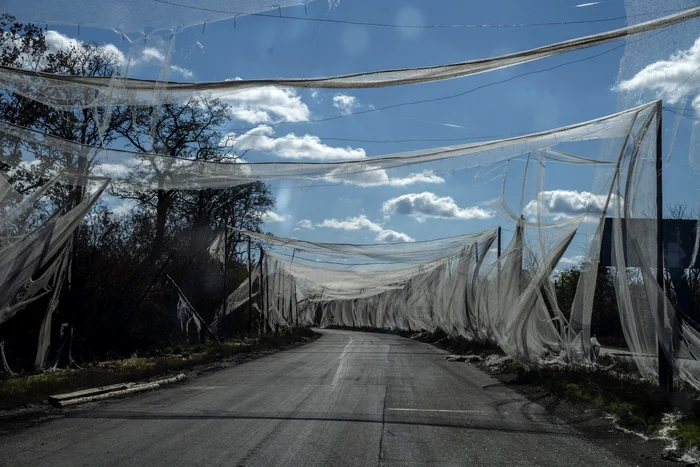
Ukrainian drone pilots told Business Insider that they have to constantly communicate with nearby units to reserve flight “corridors” and avoid having their drones shot down by their own electronic warfare.
“We have to coordinate, announce when we're going over the front line,” explained Dimko Jluktenko, a pilot with the Unmanned Systems Forces of Ukraine
The two armies are also waging a battle in the realm of electronic warfare, an invisible battle for control of the electromagnetic spectrum that grows fiercer as the drone war rages.
According to Jluktenko's testimony, one of his tasks is to identify Russian electronic warfare assets in order to take them out of the game and thereby ensure even a temporary advantage on the battlefield.
A Ukrainian drone operator who spoke to Business Insider on condition of anonymity to discuss sensitive operations revealed that pilots often have to coordinate not only with each other, but also with other units operating in a given area. Electronic warfare devices are active on certain portions of the front, so in order to send their drones into an attack pilots must negotiate a passage with their own comrades.
“We have to somehow resolve this issue by agreeing on what route we can take,” he said, adding that such coordination is not always easy.
An acute problem on a front saturated with drones
Jakub Jajcay, a former Slovak army officer who spent six months in the Ukrainian military, explained to Business Insider that the sometimes desperate attempts to stop Russian drones mean that jamming systems and equipment to physically stop the drones are everywhere, and while Ukrainian operators do their best to coordinate their flights, this is not always possible.
“You had no way of identifying every infantry unit in the area you were operating in,” he said, so you could under any circumstances send the message, “Guys, one of our drones is going to fly over, don't shoot it down.”
“Drone operators and soldiers of similar rank “definitely did not control electronic warfare systems. That was a decision made at a much higher level,” he added, recounting his own experiences.
“Sometimes we could request them to be off or on when we needed them, but that was kind of out of our control. There wasn't much we could do about it,” he said.
A drone operator in Ukraine's Separate Presidential Brigade, who spoke on condition of anonymity for security reasons, told Business Insider that his unit typically gets approval from commanders overseeing electronic warfare to avoid friendly fire incidents.
Still, he said, the system isn't perfect, and problems occasionally arise, such as when Russia attacks with swarms of FPV drones or hover bombs, and electronic warfare must remain active to counter immediate threats.
A huge number of drones
Drones have become essential amid shortages of other types of weaponry, from artillery shells to precision-guided munitions. They are used for intelligence gathering as well as for attack, and come in a variety of forms, from small, standard drones to huge, military-grade drones, as well as drones equipped with explosives, machine guns, and grenades, among others.
More recently, drone interceptors have appeared.
At the same time, they are present in huge numbers on the battlefield, which makes maneuvering difficult, creating real challenges for both infantry and vehicles. Soldiers often cannot identify with certainty whether a particular drone flying above them belongs to their military or the enemy side. Some panic and open fire on any drone they see.
Jajcay said that at other times, Ukrainian soldiers, unaware that friendly drones were passing through the area, “didn't wait to find out if it was theirs or not. They just shot it down.”
“Imagine you're an infantryman,” he said. “You see an FPV drone flying towards you and you literally have no idea if it's a Russian one coming from behind or a Ukrainian one.” A soldier in charge of an electronic warfare system could “literally hit all the frequencies, jamming them all with fear,” Jluktenko previously explained
Both developments in drones and electronic warfare are part of an arms race essential to this war. Many innovations are designed precisely to prevent jamming. These include non-GPS drones, i.e. drones controlled by fiber optic cables, drones with artificial intelligence, and drones that skip frequencies to try to avoid jamming.
But new technologies don't come to the front overnight, and both sides are constantly adapting to counter them. As a result, Ukrainian troops often find themselves juggling state-of-the-art tools and antiquated equipment in the same battlespace, caught in a race of mutual jamming that shows no signs of slowing down and still requires substantial communication and coordination to keep up in real time.