The international order built after the Second World War, under the leadership of the United States, is facing an unprecedented erosion, according to the conclusions expressed in early 2026 at two of the most important global meetings: the World Economic Forum in Davos and the Security Conference in Munich.
In Davos, the Prime Minister of Canada declared that the global order guaranteed by the USA “has come to an end”/FOTO:X
The tone of the discussions was sober. The idea that economic interdependence guarantees peace—a central tenet of postwar architecture—is increasingly contested. Some leaders argue that the rules-based system championed by Washington for eight decades no longer works as it is known.
“The Era Is Over”
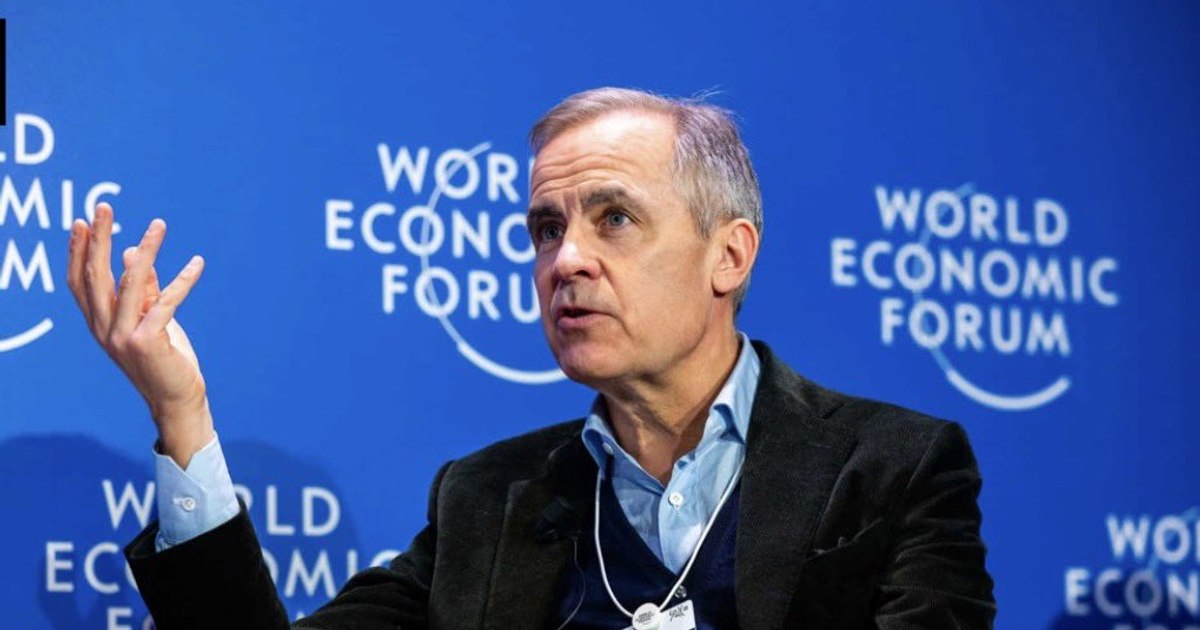
In Davos, Canadian Prime Minister Mark Carney said the US-backed global order “has come to an end”. He said that major powers are increasingly using economic tools — tariffs, financial infrastructure, supply chains — as levers of geopolitical pressure.
“We have to choose between competing for the favors of the great powers or building a third way with real influence”he said, suggesting the need for new alliances and partnerships.
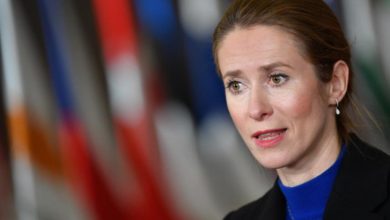
A few weeks later, in Munich, German Chancellor Friedrich Merz warned that “the international order based on law and norms is breaking down” and the United States' claim to leadership is “challenged — or perhaps already lost.”
A report prepared for the conference explicitly stated that the US-centric system, built over 80 years, is disintegrating.
Washington policy and international reactions
US President Donald Trump has repeatedly argued that allies have taken advantage of US security guarantees and the open market without giving enough in return. Critics say Washington set many of the rules of the global order but broke them when it saw fit.
Fears about US tariffs have reportedly led to the acceleration of trade deals, including between the European Union and India. Other states — such as Canada, South Korea or Brazil — have intensified dialogue with China, in search of a strategic balance.
However, building alternative alliances proved difficult. The trade deal between the EU and the Mercosur bloc, originally negotiated in 2019, has encountered significant political obstacles in Europe.
What the world loses
Despite all the accusations of hypocrisy and the imposition of will “at the barrel of a gun”, especially in Latin America, the American-centered order has provided a number of real social benefits. Among them:
-the system of rules and dispute resolution mechanisms that supported the global liberal economy;
– the dollar as a global medium of exchange;
-low-risk US Treasury bonds for governments and investors around the world;
-a collective security regime from the Balkans to the Pacific Ocean.
To lose all this is to find yourself in a void. And there is no one to fill it. China, the only state comparable in power to the United States, does not seek to assume the role of global hegemon and defend the multilateral liberal order. Its own mercantilist model – from undervaluing the currency to subsidizing exporters with a closed domestic market – makes Beijing an unreliable leader in the eyes of Europe and Latin American countries, which are drowning in Chinese goods.
Japan, one of the world's largest economies, is too dependent on American security guarantees to openly ignore Washington. The European Union, which by some measures is the economic equal of the US, is also unable to step out of the American shadow, especially given its reliance on the US to contain Russia and protect Ukraine. NATO Secretary General Mark Rutte put the optimists to shame: “If anyone here thinks that the EU or Europe in general can defend itself without the US, let them keep dreaming. We can't. We need each other.”
Canada, despite its rhetoric about independence, sends two-thirds of its exports to the United States. Even French dreams of “strategic autonomy” are shattered by reality: Europe simply does not produce the weapons necessary for true independence. The recent controversy over the Franco-German fighter jet project has only served to underline that the political will for such projects is woefully lacking.
But Carney is probably right: this is a “pause, not a transition.” Even if Trump is succeeded by “a reasonable person who understands the value of mutually beneficial international relations,” it will be extremely difficult to convince countries that have spent four years defending themselves from American aggression to simply return to US influence.
The most likely scenario is not a new order but complete chaos: no agreed rules for international trade, finance and a common understanding of sovereignty. A possible division into spheres of influence: most of the weaker countries will find themselves in a “vassal” dependence on China or the United States, while some major players of the “global south” – Brazil, India, Indonesia – will try to balance between the two poles.
The new reality will be more expensive and dangerous for everyone. Abandoning global supply chains and common institutions means: increasing costs for businesses and consumers, shrinking markets, and every country will be forced to seek protection against threats: economic, environmental and security.
“We will regret choosing this path”summarizes The Guardian. After all, “the strong can do what they want, but the weak must endure the inevitable” – this thesis of Thucydides is becoming a reality again.
In the absence of a consensus on global rules, forum participants say, the politics of force risks coming back to the fore.
The question that remains, some leaders have concluded, is not just who will rule, but whether the international system will continue to be governed by common rules—or by vested interests.