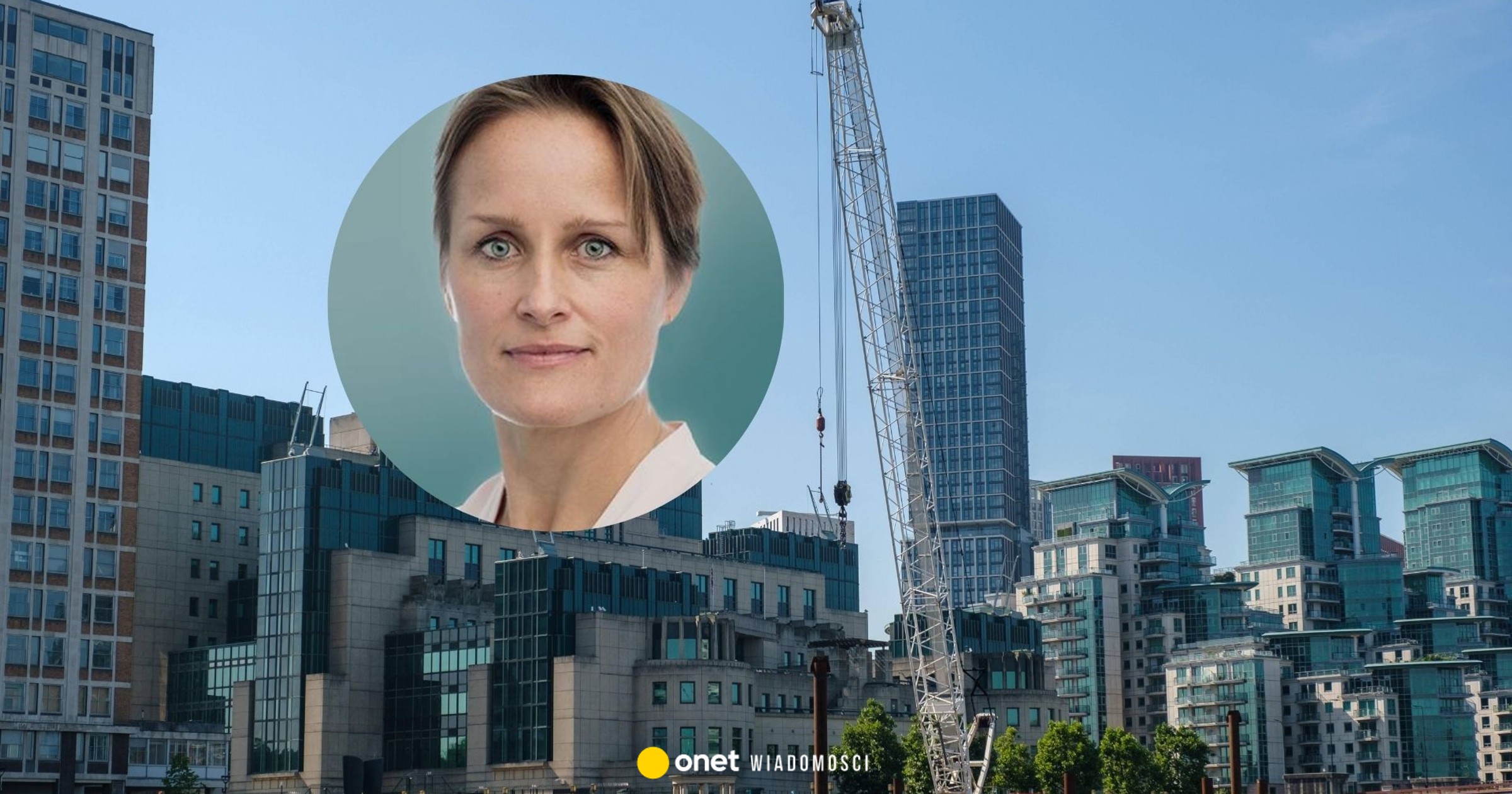
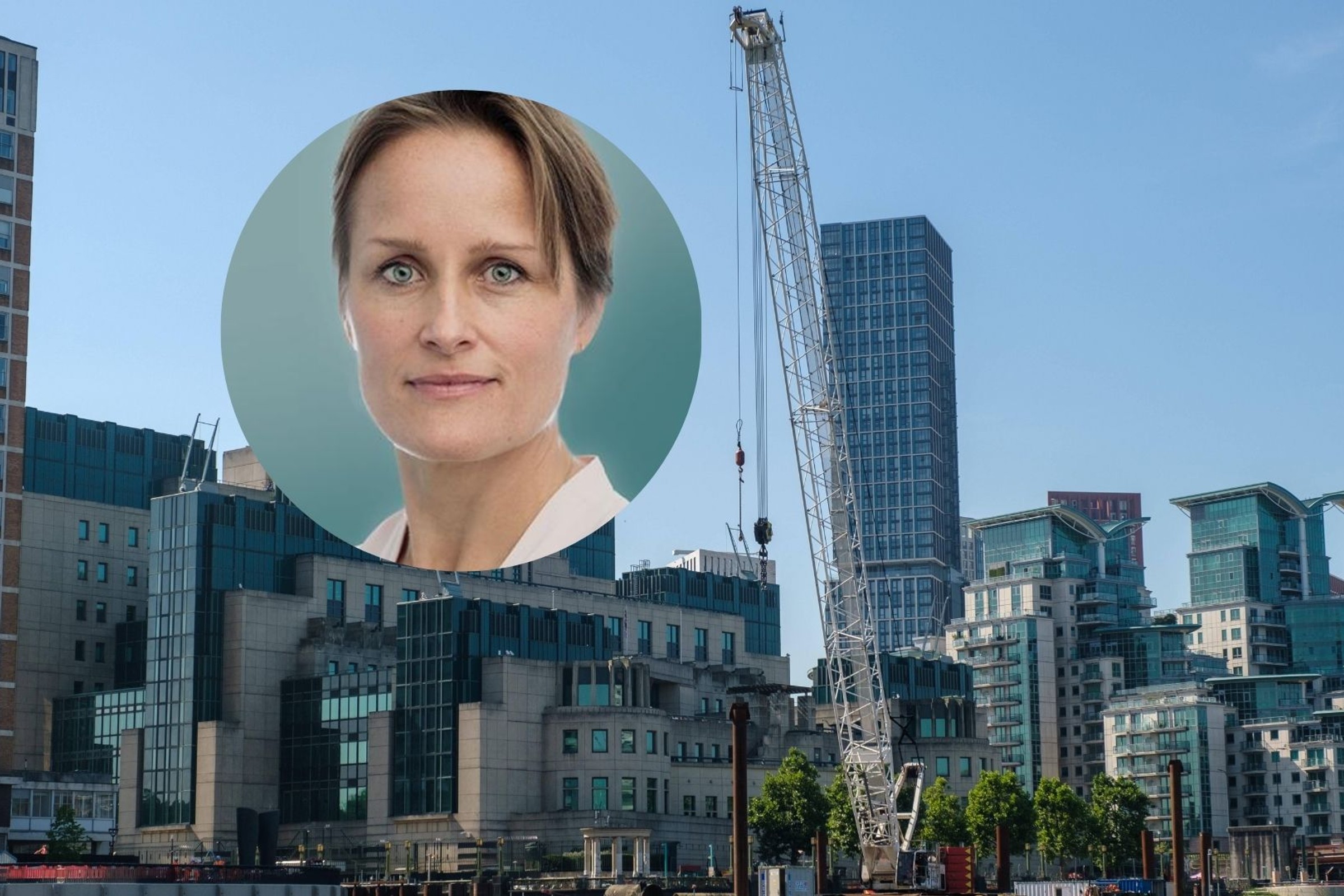
A woman became the head of British spies. Who is Blaise Metreweli?

“Let us be more open so that we can remain secret,” Sir Richard Moore, who ruled the British intelligence service, known as MI6, until the end of September 2025, repeatedly said. It wasn't just a slogan – for the past five years, Moore had been implementing a plan whose main goal was to bring the role of MI6 to the public and give a human face to this shadowy service.
During his term, he was extremely active in the media, and before leaving, he made sure to leave the service with an Instagram profile. He became the head of MI6 as a recognizable person – although he had a career in the secret services, he also held official positions for a number of years, including that of British ambassador to Turkey. Meanwhile, the figure of his successor, Blaise Metreweli, emerges from the fog of secrets that for many years surrounded her, even among her friends. What do we know about the new head of one of the most powerful intelligence services in the world?
“Intelligence Officer to the Bone”
Those who know her say that if she had not been in the world of real spies, she could have won the casting and become the first agent 007 in history.
48-year-old Blaise Metreweli is a graduate of anthropology at the prestigious University of Cambridge, she easily makes contacts, and is also an accomplished athlete. Despite the multitude of responsibilities, he has been practicing rowing and taking part in competitions for over a quarter of a century.
She always wanted to be a spy. Already as a child, she used techniques known from the world of real secret services – she exchanged correspondence with her friends, using simple ciphers and hiding places. In 1999, with a degree from Cambridge University, she became an employee of the Secret Intelligence Service, better known as MI6.
“Intelligence Officer to the Bone” – former head of MI6, Sir Richard Moore, described it in his farewell speech. Blaise Metreweli worked as an operational officer for many years and traveled the world in search of valuable, often top secret information. She knows Arabic and served, among others, in the Middle East, during the difficult period of the wars in Iraq and Afghanistan.
Not just MI6
She was probably directly involved with agents whom she either recruited herself or other MI6 officers did. She met with recruited people in difficult conditions, abroad, while observing strict rules of conspiracy. Although we only recently learned her name, in recent years she has spoken anonymously to journalists with the consent of her superiors. “I did extraordinary things in extraordinary places” – she confessed in 2022 in an interview with Helen Warrell from the Financial Times.
She didn't just serve in MI6. It is known that a few years ago she held one of the highest positions in MI5. This is the service responsible for the internal security of Great Britain – primarily tracking down foreign spies and fighting terrorism. Metrewela's activities protected societies against threats of a diverse nature – from attacks carried out by Russian military intelligence to the theft of intellectual property by Chinese secret services. “We need people in academia and industry to understand what the risks are and not be naive.” — this is how she warned the British against conducting dialogue and trading with inappropriate people during an anonymous conversation with the Daily Telegraph.
Her conversations with journalists served exactly this purpose – reaching those who downplay threats on a daily basis. The interviews were intended to increase trust in the secret services and society's knowledge of the important role they play.
Technology in the service of intelligence, or four years as “Q”
Her period of service in MI5 undoubtedly made her a very versatile officer – today she has extensive knowledge and experience gained from both intelligence and counterintelligence.
For the past four years, Blaise Metreweli has been back at MI6 – this time running the all-important technology and innovation division. During this period it was referred to as “Q”. The duties of an officer in this position are exaggerated in James Bond films. “Q” regularly gives Agent 007 the latest inventions – especially those that shoot and explode in spectacular ways.
Even though the film fiction differs significantly from the truth, Blaise Metreweli undoubtedly had experience with surprising gadgets. Sir Richard Moore, who passed the baton to her, emphasized in his speech: “She spent four years as “Q”in addition to shaping our approach to rapidly evolving technologies such as AI. She also provided innovative technological solutions for our agents' officers, based on her deep understanding of agent intelligence.”
Working with people, unchanged for tens or even hundreds of years, is one of the pillars of intelligence, even if officers and their colleagues are supported by modern technologies. Blaise Metreweli's experience in this field cannot be overestimated. “She understands the essence of spying,” Sir Richard Moore said last month.
“The Silent Courier”
Blaise Metreweli takes over as head of MI6 at a unique moment in history, which is why her equally unique experience is so important. There are many countries she will be looking at, but it cannot be denied that Russia is at the top of the list. To obtain important information about her plans, officers under Metreweli's leadership will have to use all possible tools.
The Instagram profile is not the only novelty that Moore leaves for her successor. To ensure the inflow of new sources of information, in the second half of August MI6 launched a unique project called “Silent Courier”. This is a portal available through the so-called dark web, i.e. a “dark corner” of the Internet that can be opened through special browsers, guaranteeing greater anonymity. In a clip recently posted on YouTube, Sir Richard Moore encourages everyone with access to information that is important from the point of view of MI6 to contact them safely via the “Silent Courier”. “We need your help,” he says to the camera.
The video advertising “The Silent Courier” itself, certainly not by accident, shows a character reading a text written in Cyrillic.
“Russia is not Putin. And not all Russians subscribe to Putinism. Some keep their heads down and try to live their lives as best they can. Some, like Alexei Navalny, resist openly and die for their beliefs. But some do it in secret, cooperating with MI6,” Sir Richard Moore said in August.
The tabloids caused dark clouds to hang over her
Metrewela's appointment as head of MI6 was announced in June this year. Shortly thereafter, the British tabloid “Daily Mail” looked into German archives and revealed that her grandfather was Konstantyn Dobrowolski – a spy who willingly collaborated with the Nazis during World War II.
Dobrowolski was the son of a Ukrainian woman and a man with Polish-German roots. In 1941, he deserted from the Red Army and joined the forces of the Third Reich. He spied for the Nazis for money, using, among other things, pseudonyms “Rzeźnik” and “Agent 30”. Documents indicate that he participated in the Holocaust and boasted about it in letters to his Nazi principals. He also allegedly laughed when he saw the rapes of women imprisoned by the Nazis. In the 1960s, he was still on the KGB's wanted list.
The “Daily Mail” text caused great controversy, but if we take a closer look at Blaise Metreweli's biography, it quickly turns out that the new head of MI6 has little in common with her grandfather. The post-war fate of Konstantyn Dobrowolski remains unknown and it is possible that the man died in the Warsaw Uprising. His son, the father of the new head of MI6, was born in Ukraine in 1943 and after the war he came to Great Britain with his mother. Although his surname was Dobrowolski for many years, he changed it to Metreweli – the Georgian surname of the man his mother married in the late 1940s.
The British government quickly reacted to the confusion caused by the tabloid's revelations. A spokesman for the Foreign, Commonwealth and Development Office said Blaise Metreweli did not know her grandfather and that her “complicated background” contributed to her decision to devote herself to defending Britain from modern threats and preventing conflict.
“Poland far beyond Western European standards”
— The nomination of a woman trained, experienced and committed to the work of her service to the position of head of this formation always arouses in me enthusiasm, pride and great respect, says Major Dr. Anna Grabowska-Siwiec, a retired ABW counterintelligence officer and lecturer at the Faculty of International Relations at the University of Białystok, to Onet. — Women as heads of secret services are something newrelated to general changes in social life and standards of treatment of women. This is a manifestation of the real implementation of women's equality also in the security sector, perceived as the domain of men. Of course, this is not a worldwide standard. Poland still remains far beyond Western European standards in terms of equal treatment of women in the structures of secret services.
The first Polish woman to head the intelligence service is Col. Dorota Kawecka, who has headed the Military Intelligence Service since the end of 2023. However, according to many experts, it is not necessarily an example of a positive change. Col. Kawecka appeared suddenly in the minds of SWW officers and she has no experience in operational work. Many people consider her nomination a decision based on political needs.
— Appointment of women to the positions of heads of SWW and CBA [od grudnia 2023 do lutego 2025 r. CBA kierowała Agnieszka Kwiatkowska-Gurdak — przyp. red.] after the last parliamentary elections in 2023, it had a purely political context and was definitely related to the need to build the image of the new government – says Major Dr. Anna Grabowska-Siwiec, who closely monitors changes in the Polish secret services.
The expert emphasizes that in order to attract the best candidates to the secret services, which regularly struggle with recruitment problems, they should be given an example to follow:
— Women as committed and experienced as Blaise Metreweli become role models for young generations of girlswho dream of serving the state in their lives and doing important, necessary and unique things. They must have role models to believe that it is worth committing and putting effort into their development and service activities. It's hard to dream about something you can't see. The lack of women in high management positions in the secret services, including chiefs, information about which is made public, translates into a lack of motivation to apply. If we want the best, including the best women on the labor market, to aspire to join the secret services and want to dedicate their lives to them, we must set good examples for them.