“The more a food is far from how nature did it, the less good nutrients.” 3 simple rules to teach children to recognize foods that make them sick


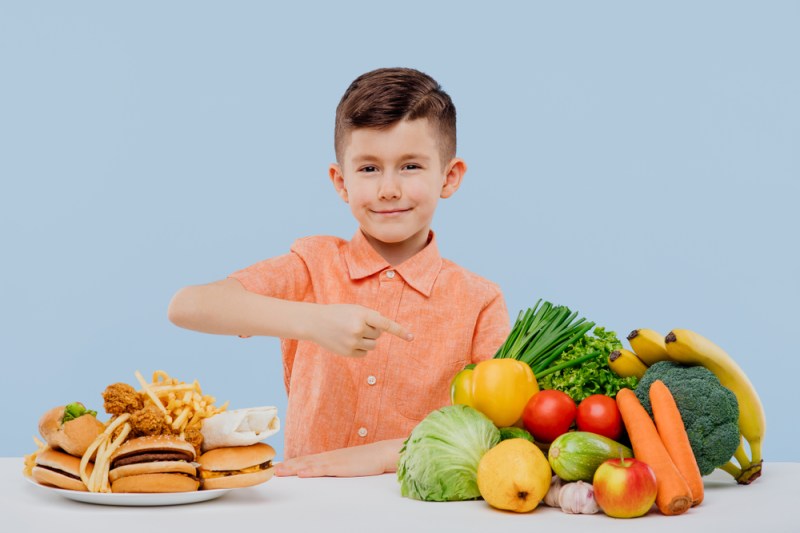
Experts recommend parents to start food education from three basic notions: there are unprocessed (healthiest) foods, processed and ultra -home/ photo: shutterstock
Why donuts, fruit yogurts, ham and cola without sugar are not healthy food for children and how do we teach them to identify the food they need to keep?
When a child tells you that he “ate healthy” because he has taken a strawberry aroma and a cereal stick, is the time for a discussion about what processed foods really means. Many children do not know what to eat, actually. A recent poll shows that young generations frequently confuse products with fruit packaging with healthy variants. Equally misleading are the dough – rich in hydrogenated fats and additives -, seed donuts, which seem better, but are made of white flour, margarine, salt and sugar (sometimes also glucose syrup), that is a combination that offers pleasant taste and crisp texture, but without real nutrition. Either the sugar -free cola, where the sugar was replaced with artificial sweeteners that maintain the addiction to the sweet taste. And the lack of food education becomes a public health problem. Dr. Raluca Bidiga, a pediatrician, explains what rule to apply to keep our children from metabolic diseases.
What does processed and ultra -processing food mean
The survey, published in December 2024 and quoted by the Medscape Medical Platform (“Your Patients May Know Which Foods has ultra -vancosed” – It is possible that your patients do not know what foods are ultra -home), it shows that most of the young participants have failed to identify the processed meat (ham, salami or brain) as a processed food. More serious, few have associated these products with an increased risk of type 2 diabetes, cardiovascular disease or colorectal cancer – although scientific data clearly confirm these links.
“The more a food is far from how nature did it, the less good nutrients and more substances that deceive our taste buds,” explains Dr. Raluca Bidiga. She recommends parents to start food education from the basic notions:
- Unprocessed or minimally processed. It comes almost directly from nature. Foods as nature gives them or almost – just washed, cut, cooked or frozen. Examples: raw apple, raw carrot, simple yogurt (milk + ferment), boiled rice or baked potatoes.
- Processed. It was a little changed to hold more or be tastier, but it can be recognized by ingredients: handmade bread (flour, water, yeast, salt), sweet cow cheese, telemea, canned vegetables, smoked muscles, boiled ham, cooked food at home. Example: pasta with tomato sauce made in the house.
- Ultra -processing. It was made in the factory, with ingredients and additives that you do not have in the kitchen. It is kept long and it is very tasty, but it does not bring good nutrients: carbonated drinks, fast food, sausages, salami, chips, yogurt with flavors or dyes, “cereals” for breakfast.
Why is the frequent consumption of processed and ultra -home foods dangerous in children
This confusion is not just theoretical. Adolescents who build their daily diet on processed and ultra -processing foods have nutritional deficits, unstable energy and increased risk of obesity and chronic inflammation – increasingly common factors in pediatric offices.
The processed meat (ham, salami, crenvurști) was classified by WHO as carcinogenic for humans (group 1), based on evidence that increases the risk of colorectal cancer. Meta-analyzes and cohort studies show that both processed and unprocessed meat are associated with a higher risk of type 2 diabetes and cardiovascular diseases. The effects are, on average, stronger for processed meat.
Ultra -home foods are linked to cardiometabolic risks, common mental health and mortality disorders. In adolescents, a large intake of such foods correlates with excess weight, studies show. Drinks with calorie -free sweeteners are not a solution. The WHO guide recommends not to be used for weight control due to uncertain benefits and possible long -term side effects – changes the balance of bacteria that form microbiota, influencing how the body processes glucose, fats and hunger hormones. “If you often eat sausages, your heart and body get tired faster and break like an engine that receives inappropriate fuel,” synthesize the pediatrician.
How do we teach children to read tags
Food education begins at home, and the example of the parent matters more than any formal lesson. “Children learn a lot of parents' example: read the labels when you go shopping and discuss them together,” says Dr. Bidiga.
The pediatric proposes a practical set of rules:
- Read the list of ingredients. “If they are over 5 and you don't know what they are, put the product back.”
- Check the first ingredient. “If it's sugar, syrup or fat, it's not a good choice.”
- Apply your grandmother's test. “If my grandmother recognized the ingredients and could do that preparation at home, then it's fine,” says the pediatrician.
Examples are revealing:
- Simple yogurt (milk + ferment) versus Strawberry yogurt (dyes, syrups, gums).
- Homemade bread (flour, water, salt, yeast) versus Croissant packaged (over 15 ingredients).
- Boiled ham versus industrial salami.
- Tomato juice made in the house versus ketchup.
For a healthy sandwich, the pediatrician recommends simple alternatives:
- Ou boiled with raw cheese and vegetables (peppers, red)
- Hummus or avocado paste with egg or tone
- Chicken breast cooked at home, oven or barbecue
- Vegetable pate from lentils, wrapped or peas
- Cow cheese with tomatoes and aromatic herbs
These combinations provide real proteins and fibers without additives or excess salt. In addition, children can be involved in their preparation – a concrete step towards awareness.
When the doctor is needed and how the change begins
Quick weight gain, modified blood tests, lack of energy or constant hunger are alarm signals that require medical consultation. For larger teenagers, accustomed to the intense taste of ultra -voices, Dr. Bidiga recommends a gradual strategy:
- Write down everything that eats one day and mark healthy foods vs. ultra -home.
- Gradually replace snacks with nuts, seeds, popcorn made at home, and sweet cereals with oatmeal.
- Change sausages with cold steak or chicken breast.
- Offer water with fruit, not juices.
- Plan the meals together and give up the continuous grinding.
The first results can occur in 8-12 weeks: more energy, low sweetness and fast food preparations, better sleep and a general condition. “It is important that the change is not about guilt or frustration, but about balance and knowledge,” stresses the doctor.