A recent report indicates that Poland recorded a surplus of €58.7 billion in its EU membership financial balance, but leaving the bloc could lead to an annual loss of approximately €90 billion. This warning comes from the Employers and Entrepreneurs Association (ZPP), emphasizing that the current economic development model requires significant changes.
The report titled “From Assembly to Management: Poland’s Journey from the Periphery to the Heart of Europe – A 22-Year Membership Balance and Future Horizon” states that Poland’s real GDP has grown by 115% since joining the EU. However, the authors point out that the model based on relatively low labor costs and the use of EU funds is gradually becoming unsustainable. They argue that Poland should increase investments and engage more actively in shaping the common market principles.
ZPP Challenges the Idea of Poland as a Net Payer
The ZPP also contests the notion that Poland is a net contributor to the EU budget. Between 2004 and 2025, the balance of transfers between the Polish budget and the EU budget is projected to amount to €167.9 billion in Poland’s favor, primarily allocated for investments that have modernized infrastructure and enhanced economic competitiveness.
After considering capital flows, the financial balance of EU membership remains positive. ZPP analysts estimate that after accounting for payouts to foreign capital, including net dividends and interest, and considering new foreign direct investments, Poland gained a total of €58.7 billion.
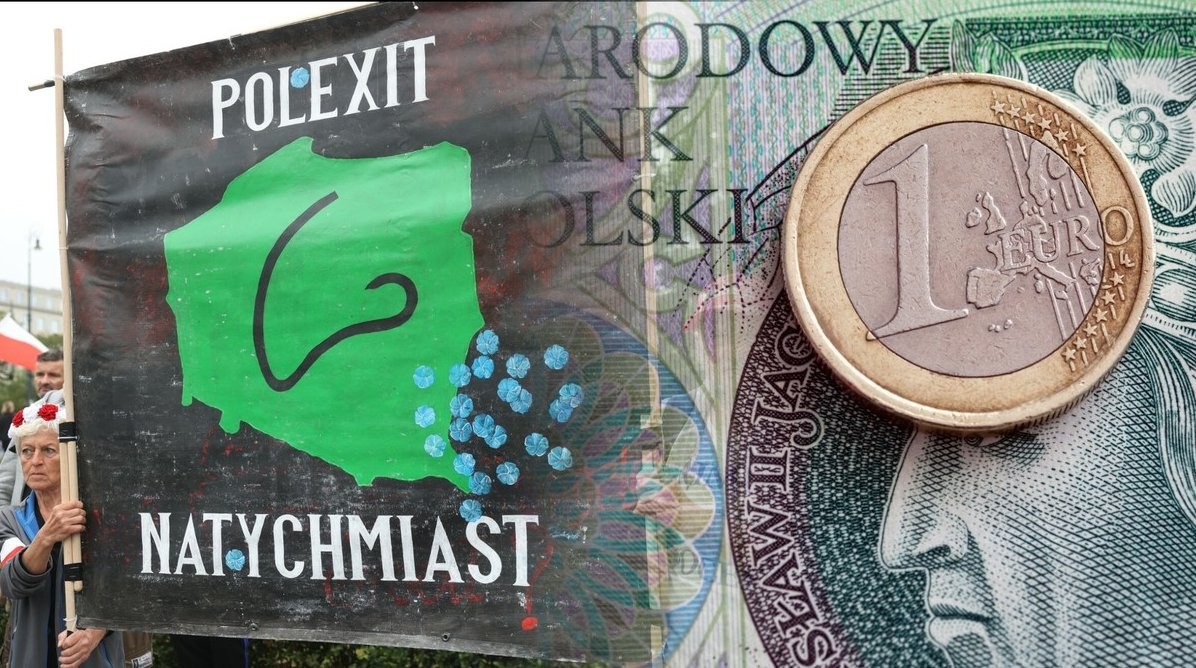
Consequences of Polexit Could Be Severe
Economists suggest that exiting the EU would have more serious consequences for Poland than Brexit had for the UK, primarily due to Poland’s strong dependence on the EU market, where over 70% of its exports are directed.
The report estimates that Polexit could potentially impact about 10% of GDP over 15 years, translating to an annual loss of €90 billion by 2025.
The authors also explored how Poland’s economy would have developed had the country not joined EU mechanisms in 2004, or had only joined the European Economic Area (EEA) without full EU membership. In the first scenario, Poland’s real GDP in 2025 would be 54% lower than in the actual scenario. If only EEA membership were considered, GDP growth during that period would have reached 72%, compared to the actual 115%.
The ZPP highlights that Norway, often cited as a model for benefiting from access to the European market without full EU membership, must adopt about three-quarters of EU legislation, including rules related to the ETS system, while lacking any voting rights in EU institutions.
Need for a New Economic Development Model
The authors of the report indicate that while the previous model has brought significant benefits to the Polish economy, as of 2023, the balance reflecting both budget transfers and capital flows has turned negative. Experts believe this signals that existing methods of catching up to Western Europe are no longer sufficient.
The ZPP calls for Poland to more effectively prepare its own solutions and build support for them within the EU. It is also crucial to establish alliances with other countries to help translate Polish proposals into EU regulations.
Recommendations include funding Polish analytical centers operating in the country and in Brussels, as well as establishing a permanent working group comprising experts, business representatives, and government officials. This group’s task would be to prepare strategic proposals for Poland.