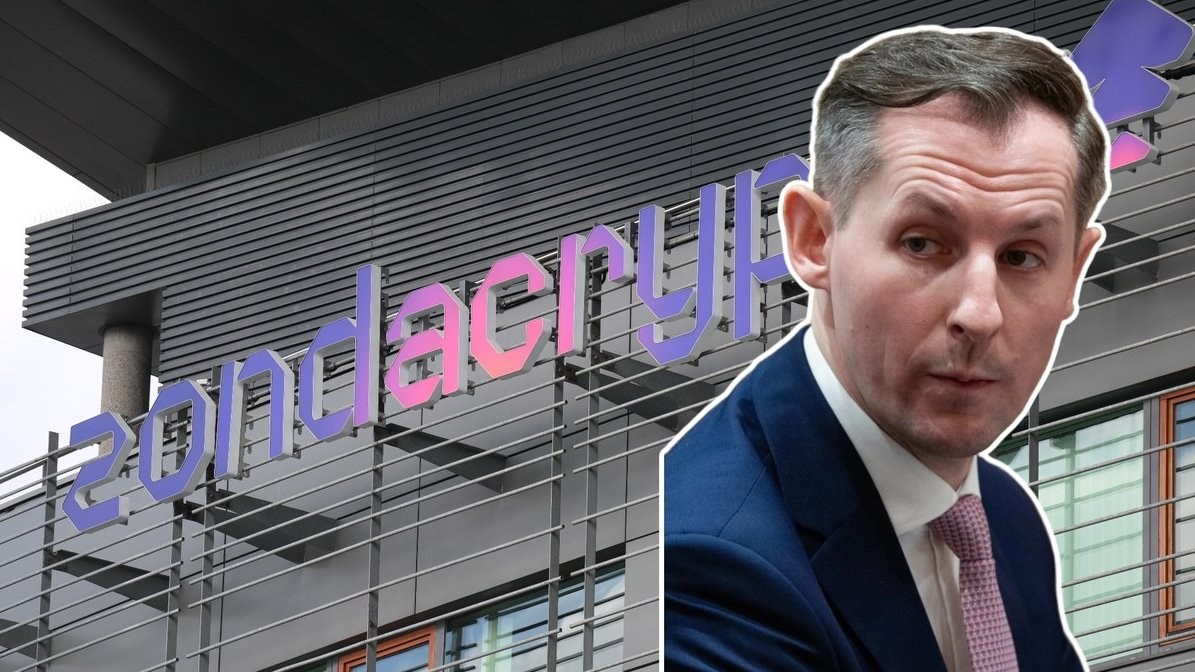
An investigation into Zondacrypto has raised questions about whether the platform’s collapse could have been prevented. Tomasz Chróstny, head of the Office of Competition and Consumer Protection (UOKiK), revealed that he had alerted the Internal Security Agency (ABW) a year prior, suggesting a probe into the flow of money.
Since the platform lost liquidity in April, many clients have faced losses estimated to be in the hundreds of millions, possibly even billions. Despite years of criminal allegations and prosecutor investigations surrounding Zondacrypto and its predecessor BitBay, the cryptocurrency business continued to operate.
Concerns over Zondacrypto began surfacing well before its downfall six months ago. Chróstny noted that investigations into the company, particularly around the disappearance of one of its founders, have been ongoing for several years.
He referenced the case of Sylwester Suszek, the exchange’s president, who went missing in March 2022, as well as an attempt to bribe journalist Michał Fuji of TVN24 two years ago to cease inquiries into the crypto business.
UOKiK’s Scrutiny of Zondacrypto
The UOKiK has been investigating Zondacrypto since early 2025, especially after Radosław P., the president of the Polish Olympic Committee, was implicated in a corruption scandal involving the exchange. Reports suggest he received a watch worth around €40,000 from Zondacrypto’s CEO, Przemysław Kral, in exchange for allegedly resolving regulatory issues. Radosław P. denied these claims and asserted that he paid for the watch in cash, although he has been charged with abuse of influence.
Chróstny has denied any personal connections with Radosław P. regarding Zondacrypto matters. Notably, in 2022, UOKiK imposed a substantial fine on the Polish Basketball Association and 16 clubs, totaling nearly a million zlotys.
UOKiK started formal proceedings concerning Zondacrypto in January 2025, primarily investigating contractual clauses and the operational regulations of the exchange after receiving numerous complaints—about 800—mainly related to issues with withdrawals.
Although some complaints referred to contractual terms, Chróstny emphasized that these clauses did not cause the losses suffered by Zondacrypto clients. He mentioned serious allegations of criminal activity, money laundering, and large-scale fraud that fall under the jurisdiction of law enforcement rather than UOKiK.
Investigating Financial Flows
In early September, police, acting on a prosecutor’s directive, entered UOKiK and the Polish Olympic Committee to secure documents. This intervention came a year after UOKiK shared its findings with special services.
Chróstny noted that the UOKiK could not clarify certain issues due to the complexity involved. He stated that there were significant doubts regarding criminal activities that required examination by the prosecutor’s office and ABW.
He highlighted the necessity for a thorough analysis of financial transactions through ABW, with support from the Main Inspectorate of Financial Information (GIIF), to determine the true scale of operations and the fate of funds.
Over the past few years, various investigations related to Zondacrypto and BitBay have unfolded, with some cases being dismissed. Following Zondacrypto’s collapse, investigators have intensified their efforts regarding the platform and the case of Suszek’s disappearance. A special team, led by prosecutor Marek Wełna, was established in early October to address these matters.