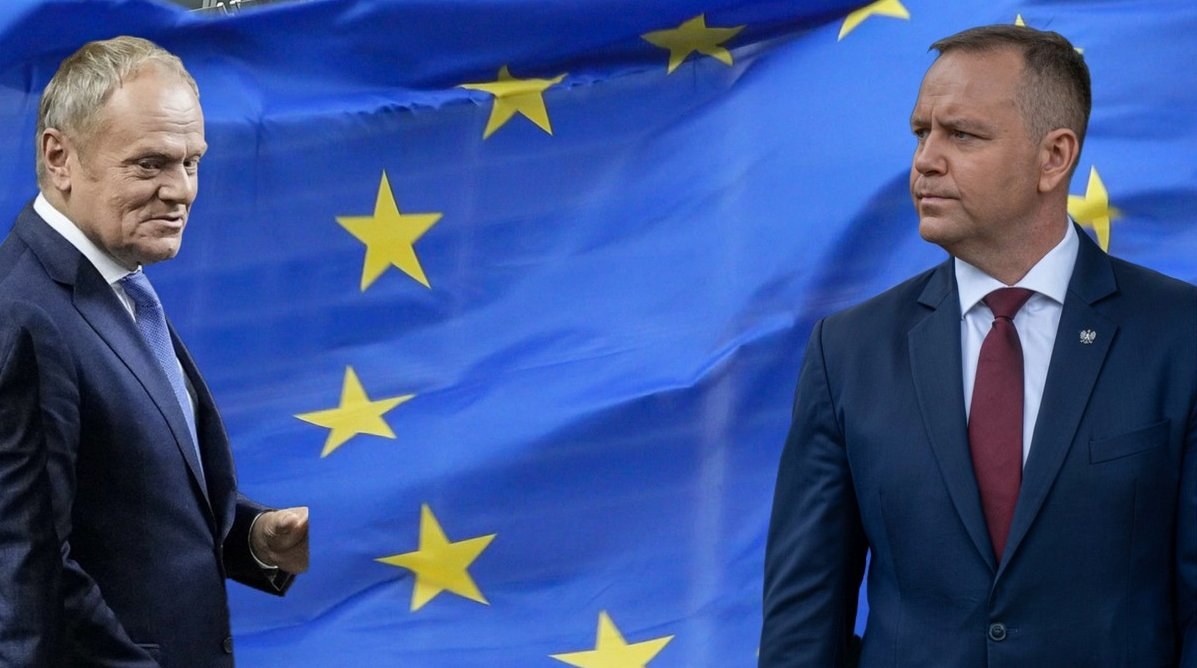
The European Commission is pressing for clarity from Poland regarding the absence of regulations governing cryptocurrency oversight, rather than engaging in the political stalemate within the country. With the Zondacrypto scandal highlighting significant issues, Brussels is beginning to raise questions about the lack of regulatory measures.
Poland’s government is poised to make a fourth attempt at establishing regulations for the cryptocurrency market, following three previous unsuccessful attempts that faced presidential vetoes from Karol Nawrocki.
The absence of these regulations poses significant challenges not only for the cryptocurrency industry and its clients but also for Poland on the international stage.
According to sources close to the Ministry of Finance (MF), the European Commission has informally inquired why the MiCA (Markets in Crypto-Assets) regulation, which is set to regulate the cryptocurrency market across the EU, has not yet been implemented in Poland. This lack of implementation could lead to a formal complaint against Poland at the Court of Justice of the European Union (CJEU) and the potential for financial penalties.
Enacted in June 2023, the MiCA regulation aims to enhance consumer safety on cryptocurrency exchanges and mitigate risks associated with fraud and money laundering. It is scheduled to come into force at the end of 2024, but Poland has not yet aligned its national laws with MiCA, resulting in a lack of a regulatory body overseeing the cryptocurrency sector.
Currently, companies wishing to establish cryptocurrency exchanges in Poland cannot obtain a national license and must operate under licenses from other EU countries.
In May 2025, the European Commission initiated legal proceedings against Poland for failing to meet its obligations, followed by an additional call for compliance in June 2026. These proceedings are not focused on the core elements of MiCA but rather on ancillary issues related to whistleblower protection directives and capital requirements.
Reports from Brussels indicate that EU officials are also inquiring about the delayed implementation of supervisory regulations for the cryptocurrency sector.
New Powers for Regulatory Bodies
Government spokesperson Adam Szłapka has confirmed plans for a fourth attempt to pass cryptocurrency market legislation. Informally, sources within the ministry suggest that significant modifications to the proposed law are unlikely since it is essentially an implementation of EU regulation.
Possible changes could include criminal sanctions related to market irregularities. While there are discussions about altering the supervisory authority from the Financial Supervision Authority, there are no current plans to do so. However, incorporating controls over transfers is vital to combat money laundering, terrorism financing, and evading sanctions, which are commonly associated with cryptocurrencies, according to an MF insider.
No specific information has been provided regarding which authorities will oversee the transfer controls at cryptocurrency exchanges. Potential candidates include the General Inspector of Financial Information, responsible for combating money laundering and terrorism financing, or the National Revenue Administration.
Media reports suggest that the government may delay implementing MiCA in its current form as the EU is reviewing these regulations, and changes are anticipated.
The review and any potential legislative initiatives are expected to emerge no earlier than mid-next year, with subsequent consultations likely extending the process over two to three years. However, insiders argue that waiting this long to establish oversight for the cryptocurrency market is not feasible.
Presidential Vetoes Create Roadblocks
Work on implementing cryptocurrency oversight regulations began in early 2024. To date, President Nawrocki has vetoed the proposed legislation three times, preventing the ruling coalition from overriding his decisions.
The current political climate, with right-wing politicians and President Nawrocki blocking regulatory measures, may serve as a political boon for Donald Tusk’s government, especially as the Zondacrypto scandal reveals close ties between right-wing politicians and the now-defunct exchange, resulting in significant losses for its customers estimated in the hundreds of millions of złoty. The bankruptcy of Zondacrypto, which occurred in early April, has led to reported losses potentially reaching 700 million euros, approximately 2 billion zł.
Former exchange president Przemysław Kral is currently cooperating with prosecutors in the ongoing investigation.