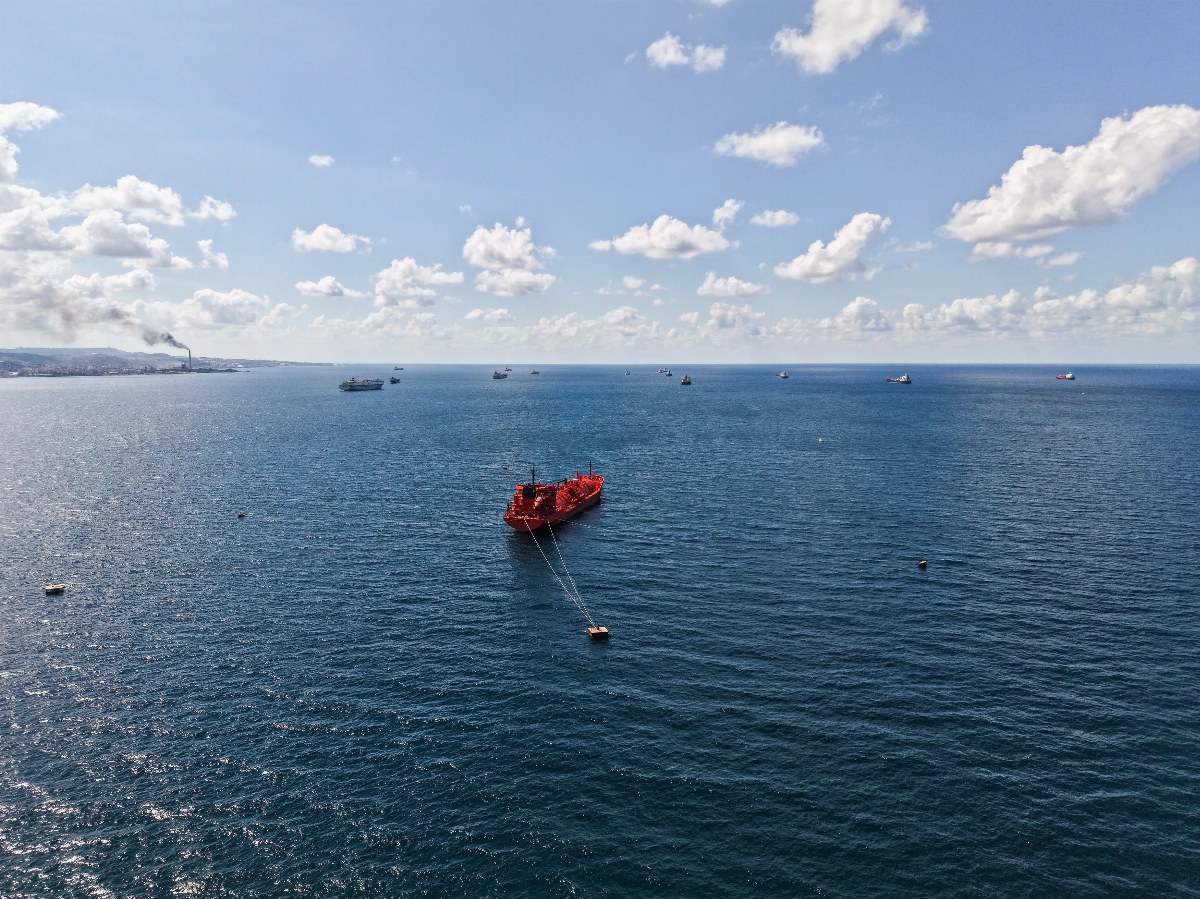
Oil exports from the Middle East have recently exceeded pre-war levels for four out of the seven days in the last week of September, according to maritime transport data released on Monday, despite ongoing attacks on vessels crossing the Strait of Hormuz, as reported by Reuters.
The region’s crude oil exports surpassed pre-war figures on September 24 and from September 27 to 29, reaching between 19.5 million barrels per day and 22.5 million barrels per day, based on preliminary data from the maritime monitoring firm Kpler.
Prior to the outbreak of the war between the US and Iran, the average export volume from March 2025 to February this year was around 18 million barrels per day. The seven-day moving average of crude oil exports stood at 18.5 million barrels per day as of October 1, including transit through the Strait of Hormuz, the Red Sea, terminal exports, and ship-to-ship transfers in the Gulf of Oman.
Liquefied Natural Gas Exports Also Increase
The overall total of crude oil, petroleum products, chemicals, and liquids not including gas averaged 22.4 million barrels per day during the week leading up to September 30, according to Kpler data.
The number of liquefied natural gas shipments leaving the Strait of Hormuz also rose in September, reaching the highest monthly level since February.
Moreover, statistics do not account for ships that may have crossed the strait with Automatic Identification System (AIS) transponders turned off to evade detection.
Before the war with Iran erupted on February 28, the strait typically managed about 125 large commercial vessels daily, including oil tankers, gas transporters, bulk carriers, and container ships, which represented approximately 20% of the world’s daily crude oil and LNG supply.
Attacks on Vessels Persist
Despite the surge in exports, attacks on oil tankers have continued in the Strait of Hormuz and its vicinity, with at least seven incidents reported, according to maritime intelligence firm Marisks in a report released on Saturday.
The large-capacity tanker Kazimah III was reportedly struck by an unknown projectile on October 1 while operating in the strait, causing a fire onboard, the report noted.
“All crew members were reported safe and were subsequently evacuated from the vessel,” Marisks stated.
Kpler data indicates that the Kazimah III was last seen unloading 2 million barrels of Kuwaiti crude at the port of Ras Markaz, on the coast of Oman, on September 17.
The UK Maritime Commercial Operations Agency reported at least one attack per day in the Strait of Hormuz or the Gulf of Aden over the weekend.
Marisks noted that commercial vessels transiting the Strait of Hormuz face an “increased and increasingly unpredictable kinetic threat,” given the recent surge in traffic.
“Current information suggests that the recent pattern of incidents may not necessarily represent the deliberate targeting of individual commercial vessels,” Marisks explained. “Instead, available information indicates the possibility that Iranian forces may launch rockets within a pre-established engagement area (kill box), with weapons capable of detecting and engaging radar signatures present in that area.”