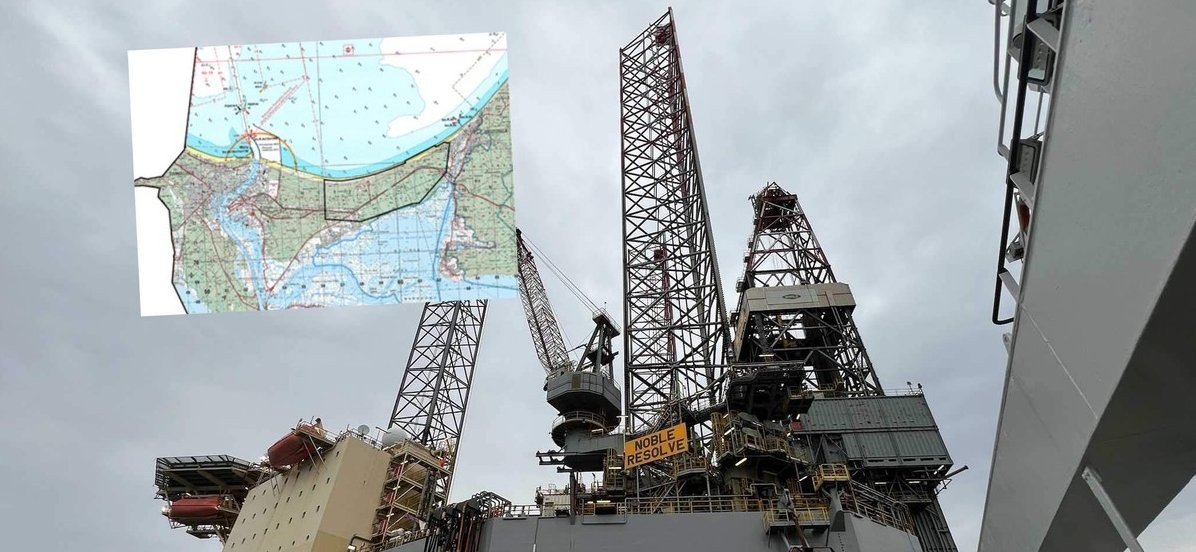
German environmental organizations have formed an alliance and collected 88,000 signatures to prohibit oil and gas extraction near Swinoujscie. Reports indicate that a drilling platform has resumed operations in the Baltic Sea off the coast of Swinoujscie, close to the island of Uznam, commissioned by the Canadian company Central European Petroleum (CEP).
A spokesperson for the company confirmed to the German Press Agency (dpa) that the platform is operating under CEP’s directive. The firm estimates the potential of the entire “Wolin” concession area at over 22 million tons of oil and 5 billion cubic meters of gas that could be economically exploited. This output could contribute 4-5% of Poland’s annual demand.
In comparison, Poland’s other recoverable resources amount to 19.5 million tons of oil and 150.4 billion cubic meters of gas, meaning this discovery could potentially double the country’s existing reserves.
Community Reactions from Heringsdorf
Central European Petroleum conducted exploratory drilling six kilometers from Swinoujscie, later announcing a significant oil discovery deemed promising. This project has faced criticism in Germany concerning environmental impacts.
The company’s spokesperson indicated a focus on a second well, mandated by authorities as part of ongoing procedures, which are expected to last several days.
The earliest realistic timeline for starting commercial extraction is projected for 2028-2029, as forecasted by the country’s chief geologist following the discovery.
German Oil Fields in the Baltic
Interestingly, CEP is also active along the German coast. After receiving its first concession in 2007, the company held up to eight exploration concessions at its peak, covering approximately 1.5 million acres (around 600,000 hectares) in the federal states of Mecklenburg-Western Pomerania and Brandenburg.
In 2022, CEP sold 100% of its Guhlen concession to the French company 45-8 Energy, which recognized potential for helium and gas production in the same area. The French company plans to drill its first well in this concession by 2028, with the goal of launching its first pilot facility by 2030.
Contention Over Swinoujscie Projects
Oil extraction is not the only initiative facing opposition from German environmental groups. Another contentious project is the construction of a container port in Swinoujscie, which could threaten Hamburg’s position and reroute some transport activities to Poland.
Poland’s Supreme Administrative Court dismissed a complaint from a German organization at the end of September, allowing the Pomerania Cape construction to proceed as planned.
This marks another instance of rejected complaints concerning the expansion of port infrastructure in Swinoujscie. In August of the previous year, the Provincial Administrative Court in Warsaw also dismissed appeals regarding the environmental decision issued by the General Directorate for Environmental Protection. At that time, the German organization Lebensraum Vorpommern, supported by some Polish environmental groups, raised concerns about insufficient investigations into the seabed of the Pomeranian Bay regarding the presence of munitions and potential impacts of the investments on the Baltic environment and protected areas. However, similar concerns did not obstruct the earlier execution of the Nord Stream and Nord Stream 2 investments.