Iran has submitted a proposal to the United States for the reopening of the Strait of Hormuz within a period of seven days, as announced on Friday by the Iranian foreign minister, Abbas Araghchi. He added that the “decision now lies with Washington.”
“The seven-day countdown will commence as soon as the United States agrees to this plan,” Araghchi stated on the sidelines of the United Nations General Assembly in New York, according to AFP.
The reopening of this strategic waterway, crucial for global oil and liquefied natural gas trade, is central to the ongoing conflict between Tehran and Washington, which escalated in late February when the U.S. and Israel conducted airstrikes against Iran.
Araghchi explained that Iran’s proposal, conveyed through intermediaries, stipulates that if certain conditions are met, the Strait of Hormuz would be reopened at the end of the seven-day period, and negotiations would resume.
He emphasized that the measures required from the United States are not new and are already outlined in the agreement protocol signed in June, which has faced differing interpretations from both sides, intensifying hostilities in the strait following a ceasefire.
Among the conditions set by Tehran in June were the unfreezing and payment of Iranian assets, as well as the lifting of economic sanctions.
For decades, Iran has been subjected to U.S. sanctions that have hampered its economy and international transactions. Furthermore, Tehran has seen its overseas assets frozen following the Islamic Revolution in 1979.
While no official figures are available, local media estimated in spring that these assets could amount to between $100 billion and $123 billion.
Iranian state media reported on Friday that among the conditions for reopening the Strait of Hormuz communicated to the U.S. by Abbas Araghchi are the immediate lifting of the naval blockade imposed by the U.S. military on Iranian ports, as well as the cessation of the war on all fronts.
Araghchi indicated that he is awaiting a response from the U.S. and assured that Beijing supports this proposal.
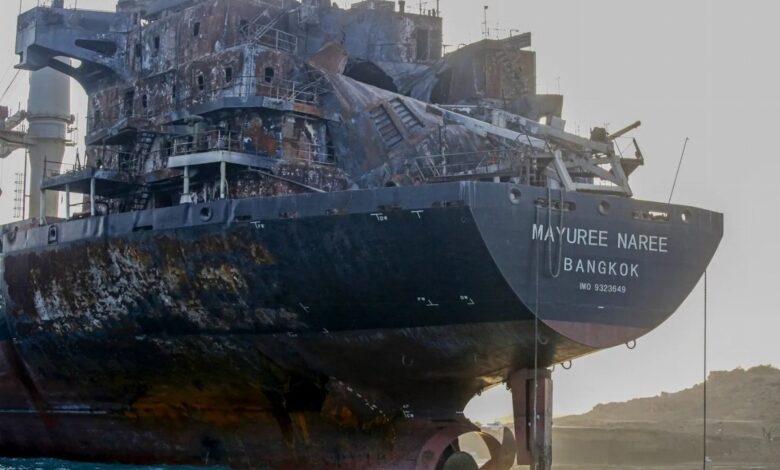
Currently, Tehran requires vessels wishing to transit the Strait of Hormuz to obtain Iranian authorization, citing security and sovereignty issues. Vessels that do not comply are regularly attacked, and the U.S. military conducts sporadic bombings along the Iranian coast.