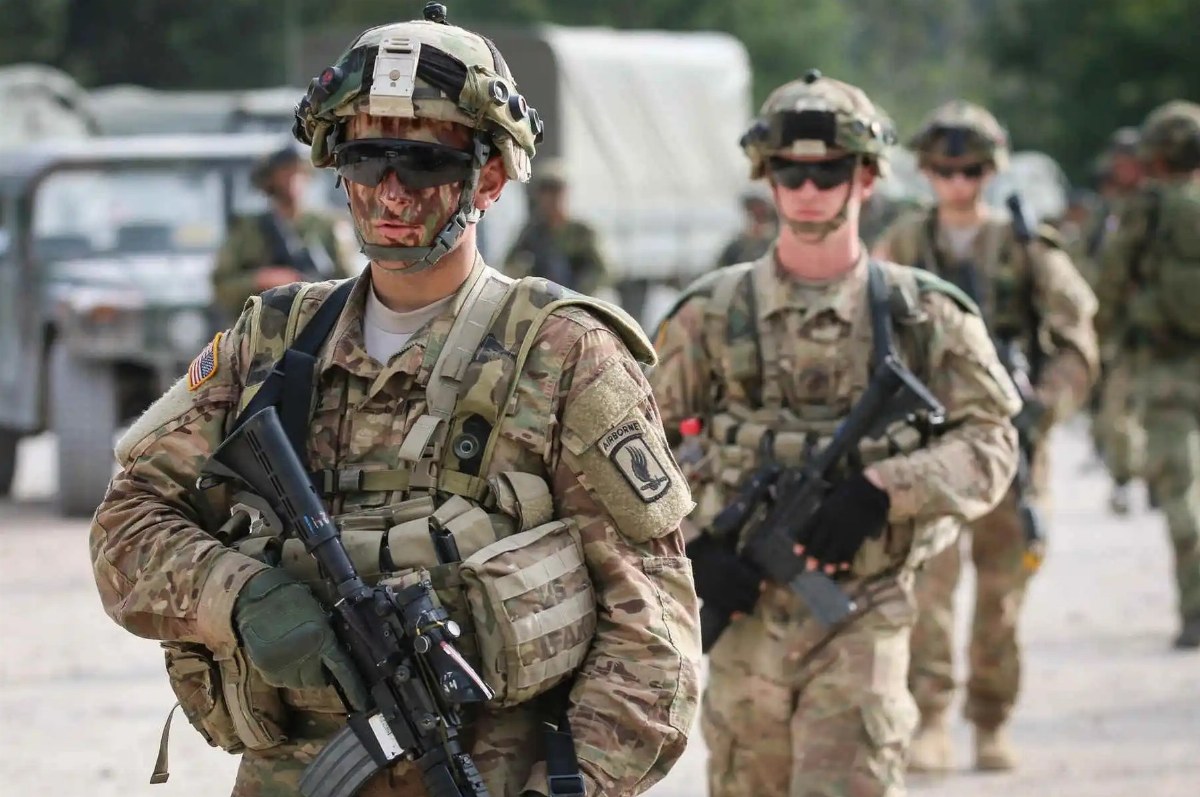
The Pentagon is conducting a review of the U.S. military presence in Europe, slated to produce at least four options for Defense Secretary Pete Hegseth by November 6. This analysis will occur well in advance of a December deadline for its completion, according to a document obtained by Reuters.
NATO allies are concerned that this review, first announced in June, could lead to significant troop reductions, potentially impacting around 80,000 American soldiers stationed across Europe. Critics, including former President Donald Trump, have argued that this could penalize countries that have not adequately supported U.S. efforts in conflicts such as the one against Iran.
The Pentagon’s “terms of reference” for the analysis, previously unspecified, outline the process for the internal review and the criteria to be used for assessing U.S. military base decisions across Europe. Notably, the document reveals that the highest-ranking American general in Europe will join a briefing on these decisions by September 18, alongside Elbridge Colby, the Pentagon’s policy chief.
U.S. Expectations from European Allies
During the announcement in June, Hegseth criticized certain NATO allies for “free-riding” on U.S. defense efforts. He stated that the review aims to establish “clear delineations of access, bases, and overflight rights” for U.S. forces. The terms of reference elaborate on these expectations, asking for explicit access rights, stationing, and overflight permissions from NATO member countries.
Additionally, the Pentagon is examining the spatial, cyber, and informational architectures that underpin U.S. global power projection. A senior official noted that the definition of access rights has been broadened to ensure all forms of support from NATO allies are considered.
The review also seeks to evaluate whether allies have credible strategies to meet their NATO spending commitments and address gaps in NATO’s crisis forces, especially following recent announced reductions by the U.S.
Reports indicate that a questionnaire has been sent to allies to aid this assessment, covering issues from defense spending to strategic priorities and procurement. The U.S. is questioning allies about any restrictions they might place on U.S. access and overflight rights, as well as their willingness to adjust such restrictions.
U.S. Discontent and European Skepticism
Elbridge Colby is expected to discuss the review with NATO ambassadors at the alliance’s headquarters in Brussels. However, several European officials have privately expressed concerns that decisions may have already been made by Washington.
The Trump administration has long signaled intentions to reduce military resources allocated to Europe, hoping that NATO allies would share more of the defense burden than they have historically. Trump has publicly criticized allies for relying on U.S. security guarantees while offering insufficient support in conflicts like the one with Iran.
Washington has expressed dissatisfaction over some allies’ slow responses to granting access to bases and overflight rights for American military aircraft.
NATO Secretary-General Mark Rutte acknowledged some of Trump’s frustrations but affirmed that the vast majority of Europeans have been supportive.
A Pentagon official stated that the Trump administration was clear in its intentions to provide “essential but limited support,” with allies taking a lead role. They emphasized that the review aims to offer a range of options based on the current situation.
Romanian Advisor Engages with U.S. Ambassador to NATO
On Wednesday, Marius Lazurca, national security and foreign policy advisor to Romanian President Nicușor Dan, met with U.S. Ambassador to NATO Matthew Whitaker in Brussels to discuss security in the Black Sea region and the review of U.S. military posture.
Lazurca stated on social media that, “President Trump is correct: every NATO member must share its fair share of this burden.” He emphasized Romania’s commitment to enhancing its role alongside the United States and allies to secure its population and contribute to conflict resolution.
Romania is fulfilling its NATO commitments and supports a strong transatlantic partnership, as echoed by Romania’s ambassador to NATO, Dan Neculăescu, who accompanied Lazurca in Brussels.