Dispute Over Investments in Lviv Intensifies as Mayor Responds to Polish Government’s Intervention

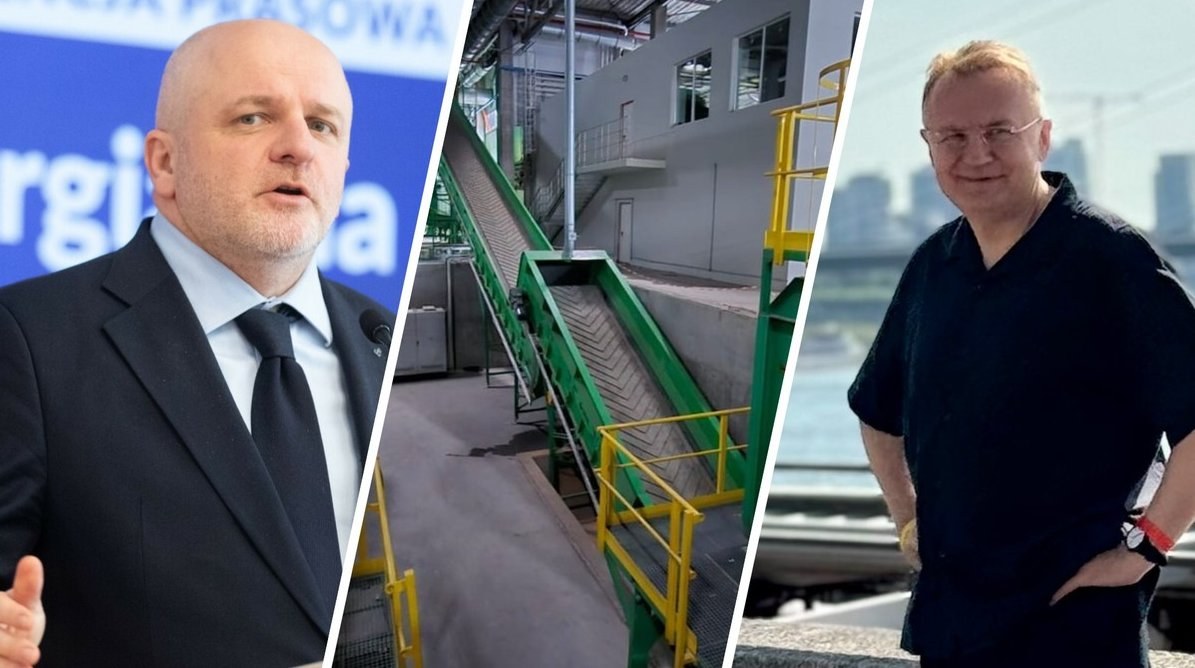
The ongoing conflict regarding investments in Lviv has escalated as the Polish Ministry of Foreign Affairs cautions Polish companies against participating in tenders in the city. The local residents might not realize that this could lead to higher costs for various projects. Lviv’s mayor, Andrij Sadowy, has adopted a strategy of dismissing judicial rulings, responding rudely to representatives of the Polish government.
At a conference regarding Ukraine’s reconstruction held in Gdańsk in late June, the absence of Ukrainian President Volodymyr Zelensky was noted, with only Prime Minister Julia Swyrydenko attending. This absence was linked to the removal of Zelensky’s Order of the White Eagle after he named elite Ukrainian military brigade members as “UPA heroes.”
Meanwhile, Mayor Sadowy attended the conference and boasted on Telegram of signing six contracts worth €2.5 million during his visit, none of which involved Polish parties. He insisted that he had not prioritized the main conference over a separate “Lviv Resilience Day” he organized in Gdańsk a day earlier.
Mayor Sadowy’s actions have led to a blockade preventing Polish firms from accessing construction sites, with Polish engineers denied entry. Notably, the city has failed to pay over €17 million owed, as confirmed by international arbitration rulings from London. “Courts are courts, but justice must be on our side,” a phrase reminiscent of a famous Polish comedy, reflects the mayor’s stance.
Pawel Kowal’s Intervention
The issue of investment execution in Lviv has been the subject of government discussions, including Minister Domański in Kyiv. However, Mayor Sadowy has taken an uncompromising approach, responding aggressively to attempts aimed at a civilized resolution of the conflict, disregarding decisions from mediating institutions outlined in international contracts. These decisions fully supported the position of a Krakow-based company.
Paweł Kowal, the head of the Government’s Council for Cooperation with Ukraine and known for his supportive narrative towards Ukraine post-Russian invasion, has called upon municipalities that previously provided financial and material aid to Lviv to engage in the matter. For instance, Warsaw allocated 2 million PLN for the Unbroken rehabilitation center in Lviv, while Gdańsk contributed 1 million PLN, and Wrocław also provided significant assistance, making them crucial sources of support for the city.
Sadowy’s Sharp Reply to Kowal
In an official response to Kowal, Mayor Sadowy omitted favorable decisions for the Polish firm by the FIDIC’s Dispute Adjudication Board (DAB) regarding the contract, asserting that the contract was dissolved correctly and that disputes could only be resolved through international arbitration. It is important to note that an initial ruling from an arbitration court in Paris indicated that the contract’s dissolution was unlawful. The judge emphasized that the city had no authority to force the contractor off the construction site and must adhere to the DAB’s decisions before appealing.
Additional insight into the situation was provided by the National Union of Architects of Ukraine, which includes prominent members of the Ukrainian architecture community.
Ukrainian Architects’ Chamber Confirms Polish Firm’s Validity
He clarified that the experts’ investigations did not aim to determine who was right, whether the Lviv side represented by the company Zielone Miasto or the investment contractor, Krakow’s Control Process.
“We utilized objective public documents. We also visited the construction site to assess the status of the project and its connection to Lviv’s road infrastructure and adjacent areas,” Gec detailed.
The experts analyzed documentation in the electronic EDSSB system, including building permits and all necessary documents for each construction stage. They also relied on three court expert opinions.
“There were also DAB decisions at FIDIC, the Dispute Resolution Commission. All decisions, from the first to the seventh, were favorable for the Polish firm. Additionally, we used technical agreements for connecting the facility to the water and sewage and electricity supply systems. We assessed the extent to which these technical agreements have been implemented. Only based on these objective documents and experiences did we base our conclusions and recommendations regarding the construction, commissioning, and operation of the facility to ensure it processes 250,000 tons of waste per year,” the expert described.
No Funds Available
“Such quantities of waste need to be introduced into the facility annually. There must be space to collect, transport, and store waste before processing. There should be roads to transport processed waste afterward,” Gec listed.
We arrive at the probable reason for Lviv’s firm opposition against Control Process: it concerns finances, or rather the lack thereof. The contract has already been delayed due to the war, and there were also issues with its valorization from the city’s side. The city itself was supposed to complete several tasks but has not done so.
“As of now, the necessary external electrical facilities have not been designed or built. The essential water supply and drainage systems have not been designed or constructed either. These installations require several kilometers of infrastructure. Designing and constructing these installations will take a minimum of two years, just as a starting estimate, as everything dependent on these networks must also be built,” the architect’s association expert explained.
“However, the most significant problem is the critical state of Lviv’s roads. For the facility to operate at its projected capabilities—requiring 250,000 tons of waste annually—Lviv will face a transport catastrophe due to road network issues. Currently, no waste trucks are operating in this area, and traffic already comes to a standstill during peak hours. Given this infrastructure, there won’t be a physical possibility to transport waste. Therefore, considerable funds and a long time will be needed to complete the project,” he elaborated.
He indicated that for the facility to process even 20,000 tons of waste, road investments would still be necessary. However, the city seems to be lacking funds. Furthermore, there is a corruption aspect to the entire situation.
Corruption Investigation Opened, but NABU Has Not Taken Action
Four criminal threads have arisen from the High Anti-Corruption Court’s decision. The court mandated that NABU (National Anti-Corruption Bureau of Ukraine), a specialized anti-corruption prosecutor’s office, initiate four criminal cases against Lviv Mayor Andrij Sadowy, the director of the municipal company Zielone Miasto, Oleksandr Johorov, and FIDIC engineer Sigitatas Paksys.
“These criminal investigations began in early November 2025. However, since then, the National Anti-Corruption Bureau of Ukraine has not addressed them at all, violating Ukrainian law. Even the mayor publicly confirmed in April during a city council meeting that these cases are ongoing and seemed unconcerned,” Gec stated.
He noted that the lack of progress in these cases emboldened the mayor and Zielone Miasto’s director to treat the Polish firm poorly.
“They simply expelled them from the construction site. This is audacious behavior. The General Prosecutor’s Office of Ukraine has, however, initiated a separate criminal case recently,” Gec pointed out.
“Due to NABU’s inaction, I filed a complaint with OLAF, the European Anti-Fraud Office, regarding the non-resolution of the criminal proceedings. I attached a substantial stack of documents totaling approximately 700 pages to substantiate my complaint. A similar document has been submitted to the European Commissioner responsible for anti-corruption actions in the European Commission,” he explained. A version of this report has also been sent to Prime Minister Tusk.
“We clarified the entire situation from the initial design of the construction and outlined what constitutes this entire offense,” the expert added.
This issue has persisted for years, while residents of Lviv have been forced to pay more for waste removal. The construction of the facility was intended to mitigate expensive transportation to distant landfills following the closure of Lviv’s overloaded landfill. Why are residents not protesting? According to Igor Gec, they have limited access to unbiased local media.
“All regional and local mass information resources are effectively controlled by Lviv authorities. […] For nearly two years, they have distorted information surrounding the construction of the Lviv waste processing facility and are simply lying. They openly lie,” Gec asserted.
Evidence can be found in a recent post on Andrij Sadowy’s Telegram profile, shared on the Lviv City Council’s profile. According to this post, the DAB’s ruling at FIDIC is described as the opinions of “experts engaged by Control Process,” while the ICC arbitration ruling in Paris, which clearly indicated that Lviv’s contract termination was invalid and that the city should adhere to the DAB’s decisions before appealing, was characterized as “unfavorable for Control Process.” At the end of his post, Sadowy added, “fact-checking isn’t that difficult.” The post received 249 thumbs up, 64 hearts, and two angry emojis from readers, possibly reflecting frustration towards the Polish company.
“If Ukrainians do not resolve this situation now, good relations between Poland and Ukraine will be entirely at risk,” the expert from the architects’ association concluded.