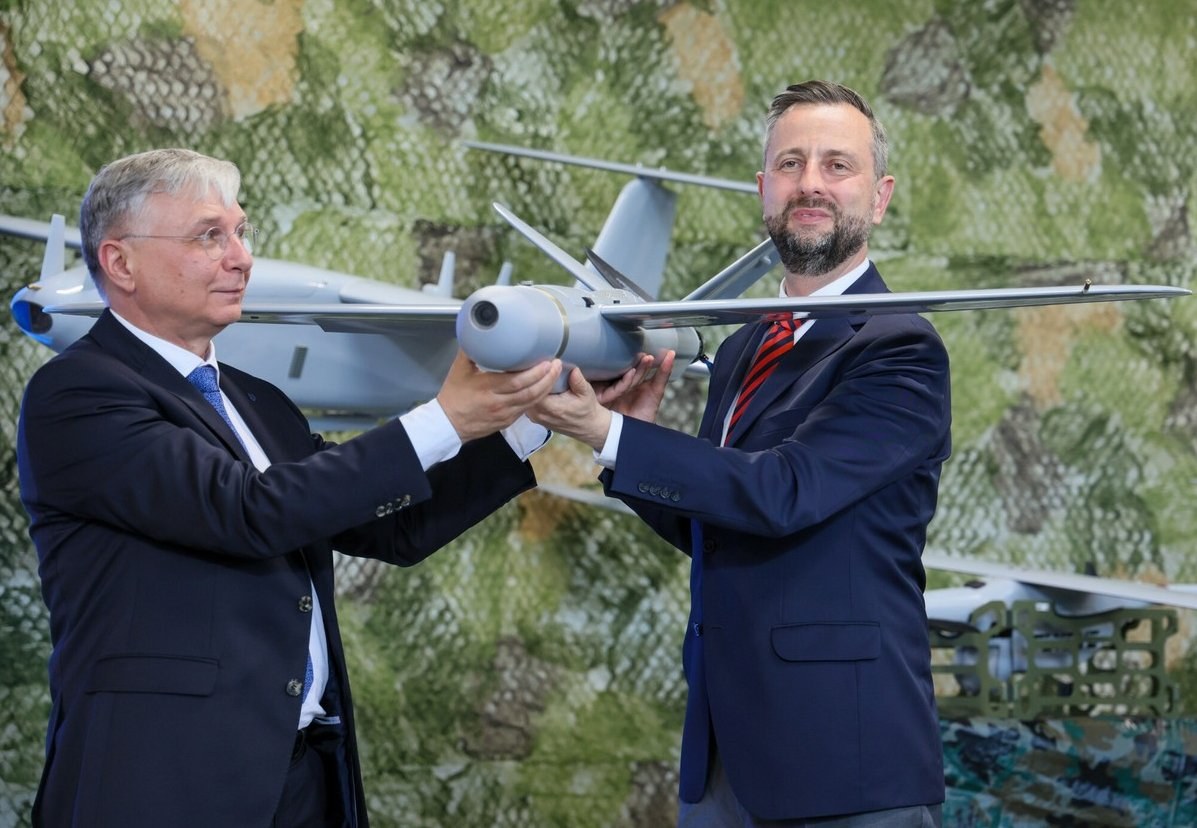
WB Electronics (WB) stands out as a success story in Poland’s defense sector, which is predominantly controlled by state-owned entities like PGZ. The company is primarily overseen by Piotr Wojciechowski, holding 45.49% of the shares, along with Adam Bartosiewicz, who possesses 28.09%. In 2017, the Polish Development Fund (PFR), controlled by the State Treasury, entered the shareholder mix with an investment of 128 million PLN, now holding 26.44% of the company.
WB’s significance is underscored by its inclusion in a government list of strategic entities, which are crucial to national security and the economy. Companies on this list cannot be sold without government approval.
Recently, WB has garnered attention not only for its defense activities but also due to speculation regarding a potential debut on the Warsaw Stock Exchange. Both Wojciechowski and PFR representatives have confirmed discussions about this possibility. It was reported that WB has engaged the legal firm White & Case as advisors, with the next steps likely involving selecting investment banks for the public offering.
According to sources, shareholders have decided to transfer shares into a family foundation, a move that may highlight serious intentions for a stock market entry, although final decisions among shareholders are still pending.
Shares to Family Foundation
The request submitted to the Ministry of National Defense (MON) raises questions. As the controlling authority over defense sector companies, MON’s involvement, while not mandatory for WB’s stock market plans, is seen as preparatory.
For the private owners of WB Electronics, moving shares to a family foundation offers numerous advantages, including legal and tax benefits relating to a potential public offering, alongside strategic reasons such as protection against hostile takeovers and ensuring succession.
Company Remains Silent Amid Speculation
WB Electronics has been approached for comments on the status of their preparations for a stock market debut and the timeline for selecting investment banks for the public offering, as well as the rationale behind transferring shares to family foundations.
The Ministry of Defense has confirmed the information regarding the family foundations. Recently, Mikołaj Raczyński, Vice President of the Polish Development Fund, spoke on the potential public offering, suggesting that a debut could occur by the end of this year or the start of next year. He noted that WB is currently focused on utilizing funds from the SAFE program.
Emerging Star in Defense Sector
WB Electronics is recognized as the largest private defense firm in Poland, specializing in military electronics, command and control systems, communication technologies, and drones. Its most notable offerings are reconnaissance and combat drones under the brands Warmate and FlyEye.
The company’s historical foundation lies in its command and fire control systems. The TOPAZ system, used for managing combat and artillery fire, is deployed in Polish military equipment like the Krab self-propelled howitzer, K9, Rak mortars, and Homar launchers, being one of Poland’s significant military products over the last two decades.
WB is also a leading producer of military communication systems in Central Europe. Wojciechowski has emphasized that the company possesses sufficient financial resources to proceed with a public offering without the pressure of urgency. He acknowledged, however, that while banks are ready to provide financing, a stock market entry represents an enticing opportunity for substantial growth.
According to estimates cited by “Parkiet” last autumn, in an optimistic scenario, the company’s valuation could surpass 20 billion PLN. Current discussions suggest a valuation between 30 and 40 billion PLN, though such predictions are speculative at this stage.
War Boosts Defense Companies
EU member states have significantly ramped up security spending, now amounting to hundreds of billions of euros. In Poland, defense expenditure has surged to nearly 5% of GDP in recent years.
Additionally, approximately 43.7 billion euros are available from the EU SAFE program for armaments, alongside over 20 billion PLN from the National Recovery Plan for security-related projects.
The increased defense spending has sparked a stock market boom for defense companies, with valuations soaring following Russia’s aggression towards Ukraine. For instance, German defense giant Rheinmetall has seen its stock price rise over 1000% since the onset of the war, boosting its market capitalization from approximately 8 billion euros to over 70 billion euros, making it a major beneficiary of the European arms boom.
Similarly, Czechoslovak Group (CSG), the largest private defense conglomerate in the Czech Republic, had a successful IPO this year, with its shares increasing significantly on their market debut, highlighting the growing interest in public offerings among defense firms like WB Electronics.