From a business point of view, the 2026 World Cup is the biggest sporting event in history. 48 teams (this number was increased from 32 at the last World Cup), over 100 matches, 16 stadiums, three hosts and absurdly high ticket prices. FIFA wants to make as much money as possible during the World Cup and makes no secret of it. We describe it extensively in Business Insider Polska.
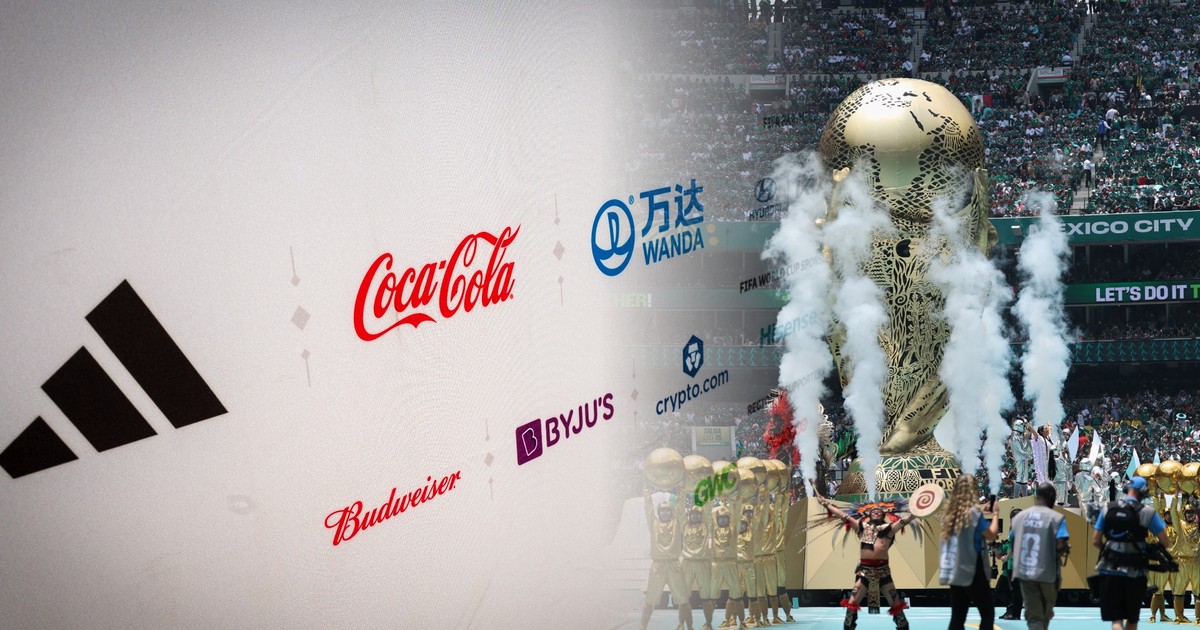
The World Cup also has sponsors – you can see them on banners at matches, on gadgets and in advertisements.
“The world's most valuable marketing platform”
As FIFA argues on its official website, World Cup sponsorship is one of the most prestigious and valuable marketing platforms in the world. “The tournament reaches hundreds of millions of fans in over 200 countries, providing partners with global brand exposure and the opportunity to build recognition on an unprecedented scale,” the organization says on its website.
Companies that obtain the status of official FIFA World Cup partners receive a wide range of marketing rights. As the organization writes, it includes, among others: the ability to use official signs and markings of the tournament, advertising presence in stadiums and in official FIFA publications, as well as exposure in the organization's digital channels. Partners are also included in FIFA's global communications programs, which highlight their commitment to the event.
As FIFA writes, an important element of the sponsorship package is also protection against the so-called ambush marketing, i.e. attempts to exploit the tournament's popularity by entities that are not official sponsors. “Additionally, companies gain access to exclusive hospitality programs, the possibility of conducting promotional activities related to the championships and preferential terms of purchasing advertising time during television broadcasts,” the organization states on its website.
Importantly from the sponsor's point of view, FIFA allows partners to adjust the scope of use of sponsorship rights to individual business goals and marketing strategy. “Sponsors can create their own promotional materials using the official tournament logos, as well as develop so-called composite logos, combining the sponsor's brand with the visual identification of the FIFA World Cup,” says FIFA.
This year, sponsors are an interesting and more diverse group than before.
It is worth starting with the fact that FIFA itself divides sponsors into several categories.
First category: partners
The most important and prestigious is FIFA Partners. These are the global elite – companies that spend the most money and in return receive the broadest possible marketing rights. Their contracts cover not only the World Cup itself, but all FIFA competitionsas well as the ability to directly link your brand with the entire organization. These are the companies that are the most visible – both in stadiums, broadcasts and official communications.
FIFA Partners are:
- Adidas
- ADI Predictstreet
- Aramco
- Coca-Cola
- Hyundai-Kia
- Lenovo
- Qatar Airways
- Visa
Today, this category includes both traditional World Cup sponsors and new players who treat football as a tool for building global influence. On the one hand, we have companies that have been involved in sports and consumption for decades – such as Adidas or Coca-Cola.
Coca-Cola has been associated with FIFA since 1974 (World Cup in Germany) and its presence is highlighted, among others, in special beverage packaging, on banners or in advertisingh. Coca-Cola also releases its own World Cup anthem every World Cup (during the 2010 World Cup in South Africa, it was the famous “Wavin Flag” by the Somali artist K'Naan). The global giant made a significant contribution to the commercialization of the World Championships and in a way paved the way for other brands.
Adidas has been cooperating with FIFA since 1970. (World Cup in Mexico), when he provided the official ball of the tournament for the first time. Since then, he has been continuously responsible for the equipment and balls used during the World Cup.
The official ball of the 2026 World Cup – Trionda. As always, brought to you by Adidas
|
Matt McNulty – FIFA / Contributor / Getty Images
Other partners include infrastructure and technology corporations such as Visa, Hyundai-Kia and Lenovo, which provide financial, logistic and digital support for the entire tournament.
On the other hand, entities linked to states and public capital are becoming more and more visible. Qatar Airways and Aramco are part of broader strategies of the Persian Gulf countries that build global recognition and influence through sport. The previous World Cup in Qatar was the best example of this – the tournament became the country's showcase and a way to show its ambitions on the international arena. Investments there went not only in infrastructure, but also in image, and the presence of state-owned companies among sponsors was part of the same strategy.
This trend will only accelerate. It is already known that the 2034 World Cup will be held in Saudi Arabia, which for several years has been consistently focusing on sport as a tool to build its position – from football, through boxing, golf, to Formula 1. In this context, the presence of Aramco among FIFA's most important partners is not an exception, but rather an announcement of the direction in which the entire sports sponsorship market will be heading.
Even less obvious companies, such as ADI Predictstreet (similar in concept to Polymarket), show the direction of change – the World Cup is today not only advertising, but also data, technology and the fight for the attention of a global audience.
- Read also: Collecting Panini stickers costs a fortune. Fans still want more
Second category: sponsors
The second, lower category is: FIFA World Cup sponsors.
Here you will find:
- AB InBev (Budweiser and others)
- American Airlines
- Bank of America
- Frito-Lay (Lay's)
- Hisense
- McDonald's
- Mengniu Dairy
- Unilever (Dove and others)
- Verizon
World Cup sponsors, i.e. companies whose rights are mainly limited to a specific tournament. In practice, this means that they are very visible and active in marketing during the World Cup, but their presence does not extend to other FIFA projects.. This is a compromise for many brands – lower cost than global partners, but still huge reach and the opportunity to take advantage of the boom around the tournament. Here, too, there is a lot of variability from tournament to tournament – the previous World Cup was in Qatar, so then there were more sponsors from the Middle East, now it is in North America, so there is, for example, American Airlines.
This category also includes global giants who conduct marketing offensives during the World Cup. Examples include Hisense, which brands its TV sets with the World Cup, or McDonald's, which has released a special collection of World Cup mugs included in the sets.
Third category: supporters
The lowest global level in the hierarchy of sponsors are the so-called “FIFA World Cup supporters”, i.e. supporting partners.
This year they are:
- DoorDash
- Marriott Bonvoy
- Rock-it Cargo
- Valvoline
These are companies that are less likely to fight for global visibility and are more likely to be responsible for specific elements of the tournament's operation. Their presence shows that the World Cup is not only a marketing platform, but also a gigantic logistical undertaking – including the transport of equipment, accommodation of thousands of people and technical support. For such companies, sponsorship is not only about building a brand, but also about entering the FIFA ecosystem.
Local sponsors. They even include universities
In addition to global partners and sponsors of the World Cup, FIFA is also strongly developing a network of regional and local partners (regional supporters), who are particularly visible in a tournament as dispersed as the one in North America. At the regional level, there are both global technology and financial corporations (such as Salesforce or Airbnb) as well as companies linked to state capital, including the Saudi PIF fund.
The list of local sponsors assigned to individual host cities (domestic sponsors) is even more extensive – from sports clubs and universities (e.g. University of Washington), through energy companies, to medical companies and developers. This shows the scale of the World Cup business ecosystem: the tournament is also a network of local economic projects in which hundreds of entities are involved, counting on tourists, investments and global exposure.
- Read also: World Cup 2026 in the USA with record travel prices. The fans are outraged
World Cup 1994 versus 2026. More and more companies from “new capital” countries
It is also interesting to compare sponsors from previous years. A good benchmark is the 1994 World Cup, which was also held in the USA. Back then, the banners were dominated by iconic Western brands, such as General Motors, Snickers, Phillips, Fujifilm, Gillette, i.e. brands from the USA, Japan and the Netherlands. This year there is more diversity – there is Qatar Airways, there is Chinese Hisense, Lenovo and Mengniu Dairy, and the previously mentioned Saudi Aramco.
It is worth noting, however, that FIFA has a restrictive approach to sponsors from outside its ecosystem. Many companies own the rights to stadium names – for example, the arena in California is called SoFi Stadium and in Atlanta it is called Mercedes-Benz Stadium. However, for the duration of the tournament, they will be called simply Los Angeles Stadium and Atlanta Stadium.
- Read also: Trade unions secure the World Cup. Landmark agreement in Los Angeles
Money making machine. Here's how much FIFA earns
There is enormous money behind the entire sponsorship ecosystem of football championships. FIFA currently earns billions of dollars from the World Cup – during the 2019-2022 cycle, the organization generated approximately USD 7.5 billion. revenuesa significant part of which came from sponsorship and marketing rights (the rest was mainly television rights). In the case of the 2026 World Cup, the amounts will be even higher – FIFA is already announcing record revenues, which is related to both the larger number of matches and the growing number of partners.
According to FIFA's official budget for the 2023-2026 cycle, the organization assumes: USD 11 billion in revenuesof which USD 2.693 billion comes from the sale of marketing and sponsorship rights. This means that sponsorship is responsible for approximately 24-25 percent. all FIFA revenues.
In 2023 alone, FIFA achieved $456 million revenues from marketing rightsand the largest part of this amount was generated by global partners and sponsors related to the World Championships.
- Read also: The Polish national team is out of the fight for the World Cup. Hundreds of millions are gone
How much does FIFA sponsorship cost?
How much does it cost to become such a sponsor? FIFA does not publish official price lists and contract details. The amounts are negotiated individually, but industry estimates show the scale of the investment.
According to information reported in 2024 by “The Guardian”, long-term FIFA partners such as Adidas and Coca-Cola have contracts worth approximately $70 million for a four-year cycle everyone. These are contracts covering a wide portfolio of FIFA competitions until 2030.
The French portal specializing in sports marketing, Mediapronos, estimates the cost of the package FIFA Partner on USD 50-100 million per cycle.
At the same time, other market analyzes indicate higher values. The SponsorFlo website reports that sponsors at the FIFA World Cup Sponsor level pay as much as USD 75-100 million, and FIFA's global partners are even higher in the hierarchy.
Additionally, the GlobalData portal calculated before the 2022 World Cup that the average value of a FIFA sponsorship contract is approx. $63 millionand seven partnerships exceeded USD 100 million.
As you can see, the World Cup is a money-making machine and a huge capital. In the light of these numbers and brands, as well as the inevitable and exceptionally loud political and geopolitical contexts this year, the question arises – where is sport in all this? This one will defend itself in the end, and this year's World Cup will probably break all viewership records.