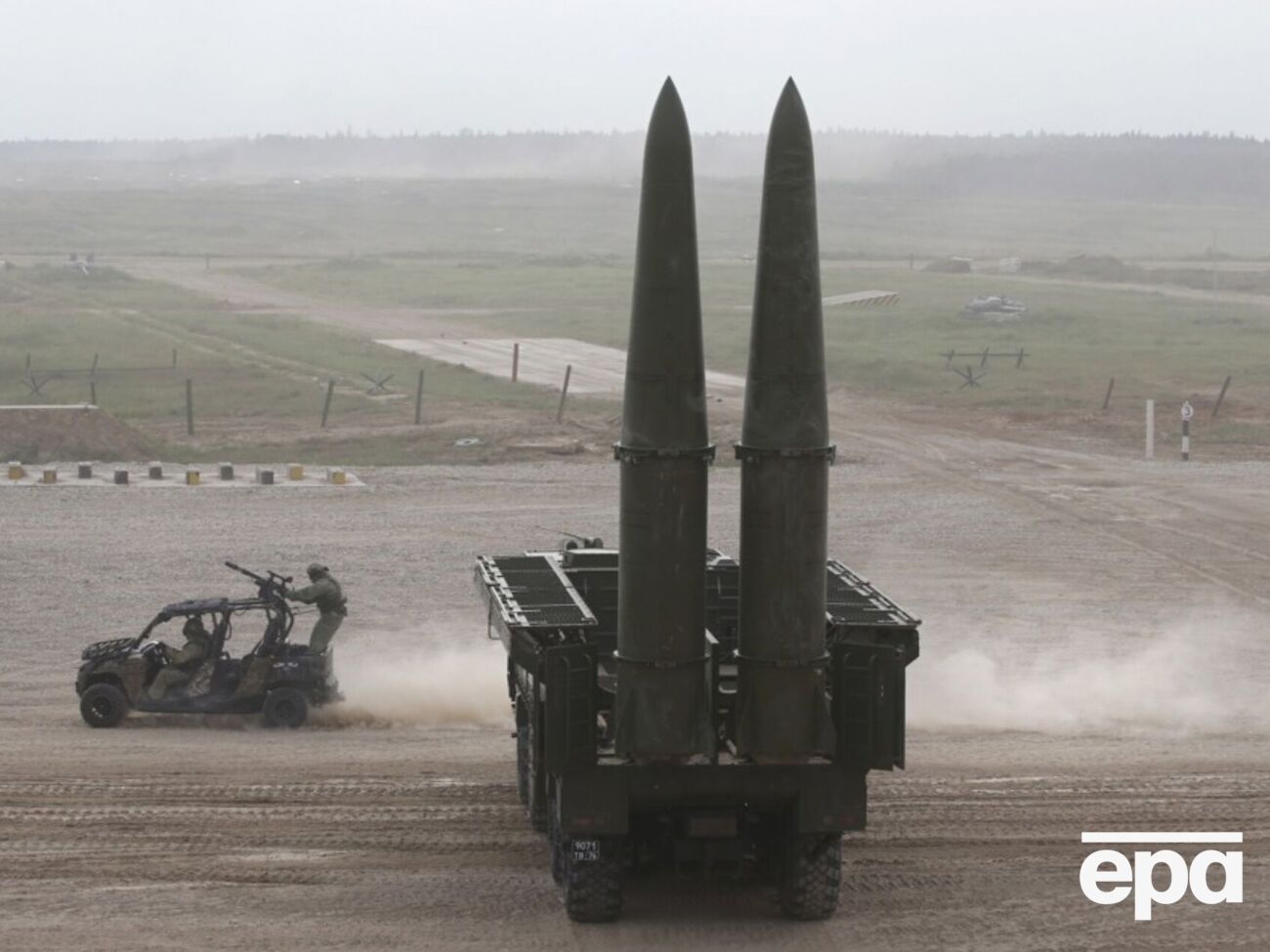
The aggressor country of the Russian Federation is modernizing the Kh-101 cruise missiles and Iskander-M operational-tactical systems to increase their ability to overcome Ukrainian air defenses. This was announced by the chief researcher of the State Research Institute for Testing and Certification of Weapons, Colonel Alexander Zaruba, who was quoted by Suspilne on June 13.
According to him, the Russians produce about 40-50 Kh-101 missiles and 60-70 Iskander-M ballistic missiles every month. The latter have seven variants of warheads, including concrete-piercing ones, and are used for attacks on military targets, including airfields.
The expert noted that Iskander-M has evolved into a quasi-ballistic system, which improves the capabilities of countering air defense directly during combat operations. Technical updates include a module for shooting decoys, as well as improved navigation and optical correction systems that increase the accuracy of destruction. The destruction range, according to him, can reach 1 thousand km.
Separately, Zaruba reported on the modernization of the X-101: the missiles were equipped with means of shooting thermal and dipole traps, as well as systems that make them difficult to detect and intercept. According to him, during attacks they can automatically activate protection when approaching the air defense coverage area.
“During the attacks of such a missile on Kyiv, we observed the dispersion of these dipole reflectors above us. It turns on automatically when air defense radars are detected or during approach to the target,” Zaruba said.
The expert also said that Russia is increasing the rate of missile production and continues to receive foreign microcomponents for their manufacture.
“Up to 80–90% of critical microelectronics are products of companies from the USA, Taiwan, Japan, Switzerland, the Netherlands, and Germany,” he specified.