Already at the entrance to the production hall, several employees are welding the wagon chassis. At the same time, work is being carried out on the side walls at the nearby station, and a dozen or so meters away, a machine is loudly cutting sheet metal that will be used in the construction of the wagon roof.
This is the first image that catches my eye after walking through the doors to the Vagonka production plant in the center of Ostrava. This facility is located only an hour away from Katowice and several dozen kilometers from the border with Poland.
Entrance to the Vagonka factory in Ostrava
|
Jakub Ceglarz / Onet
I ask Martin Bednarz, the head of the Ostrava factory, who accompanied the journalists during the on-site visit, or therefore among over 1,000 we will find Polish employees.
– Surprisingly not. In the last few years, maybe five people from your country have come here. Our crew consists mainly of Czechs, there are also some Slovaks and about 30 Ukrainians – he replies.
Handjob
This is a surprise to me. The border regions are famous for the fact that many Poles choose to work for our southern neighbors. But there is something that surprises me even more during my visit to the factory.
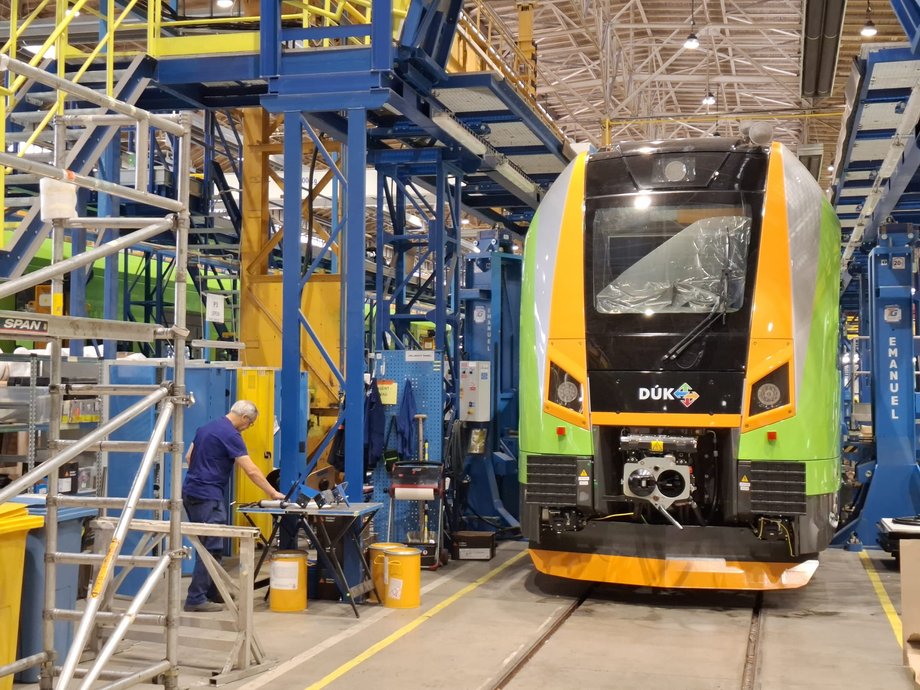
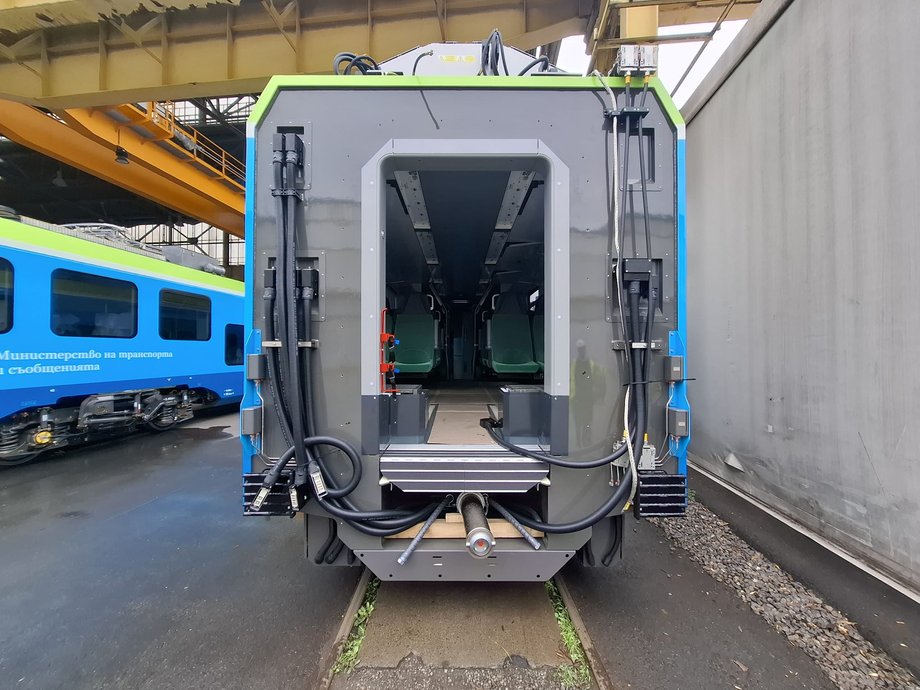
A train produced for the Bulgarian railways
|
Jakub Ceglarz / Onet
I mentioned the workers welding individual parts of the wagon. Further on, I see a young boy who, together with several friends, is busy assembling all the parts (floor, walls and roof) into one whole.
I move on, and there are several more workers polishing the already assembled wagon. Another room? A small man with a roller in his hand paints a vehicle in Bulgarian national colors. As I later learn, a train for the Bulgarian Railways is being assembled there today.
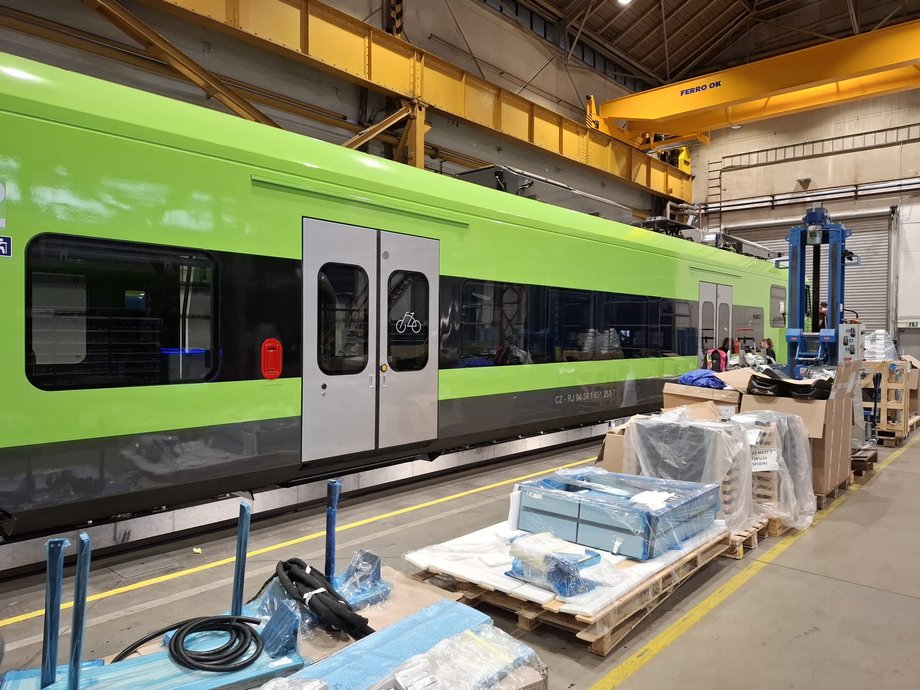
After entering a separate hall, I see the almost finished warehouses, where several employees with cloths in their hands are polishing them from the outside, and several others are installing electrical installations, insulation and seats inside.
The common denominator? Everything is taken care of by living people. There is no exaggerated automation or advanced technology.
|
Jakub Ceglarz / Onet
— Over 90 percent production is done manually. This results from the specificity of the industry. Customers expect different things, so it's difficult to standardize it all and make it work for machines. I can't imagine it, says Martin Bednarz.
As he adds, this particular factory produces, among others: trains that will later run in Bulgaria, Estonia and Latvia. — There are often several, a dozen or several dozen trains. Automating this process for each customer individually could take longer than manual work, says the factory manager.
See also: We know when the F-35s will arrive in Germany. Poland will sell Berlin
That's how many trains leave the factory every year
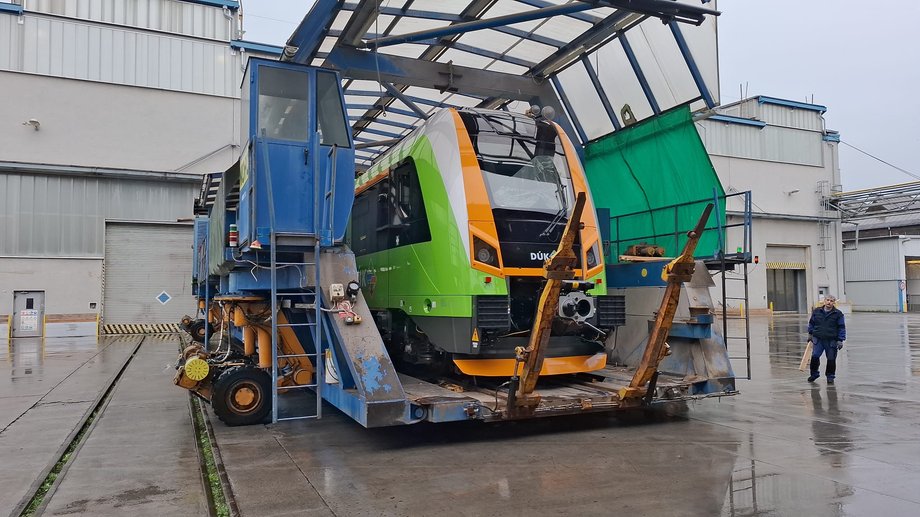
After assembling the raw elements, the train frame moves from one hall along the tracks, and then, using a special machine, the train is moved to the appropriate place. First it goes to the paint shop, and then for the final finishing inside.
|
Jakub Ceglarz / Onet
— On average, a finished product leaves our factory every four days. This gives us a processing capacity of 250 trains per year, says Martin Bednarz.
In addition to the hall I was in, there are three more production lines located a few kilometers away. 250 warehouses constitute the processing capacity for all Ostrava production lines in total.
As the head of the factory admits, in addition to the previously mentioned Bulgaria, Estonia and Latvia, the plant produces many trains for domestic tracks. Both for the state carrier and private ones – Arriva and RegioJet, known until recently from Polish tracks.
|
Jakub Ceglarz / Onet
Subsequent contracts include, among others: deliveries to Uzbekistan. However, Skoda is also targeting the Polish market, as the company's president, Petr Novotny, recently said in Business Insider Polska.
See also: Skoda wants to enter Poland more strongly. It targets one sector
— Poland is a model when it comes to using EU funds, which is visible at every step. You just need to come to your country to see it. Nothing but congratulations – he praised our country.